
Agra is not just the city of the Taj Mahal. It is the city of emperors — a place where the Mughal Empire reached its artistic and architectural peak over 400 years ago, leaving behind a collection of monuments so extraordinary that three of them carry UNESCO World Heritage status. The Agra Local Sightseeing Tour from Agra is your complete guided introduction to this remarkable city: a full-day private tour that takes you from the legendary Taj Mahal at sunrise to the imposing red sandstone ramparts of Agra Fort, from the delicate marble craftsmanship of Itimad-ud-Daulah’s Tomb to the tranquil riverside garden of Mehtab Bagh at sunset — all in the company of an expert local guide who brings every monument’s story alive.
Whether you are already staying in Agra or arriving from Delhi for the day, this Agra sightseeing tour is the single best way to see the city’s highlights in one well-paced day. Unlike rushed group tours, this is a private experience — your vehicle, your guide, your schedule. From the iconic to the overlooked, from crowded forecourts to peaceful riverside gardens, this tour reveals Agra in its full, magnificent depth.
This tour is part of our Taj Mahal Tour Packages from Delhi collection — browse the full range to find the Agra experience that fits your schedule perfectly.
What Makes Agra Special?
Agra served as the capital of the Mughal Empire for many years and remains one of India’s most historically significant cities. The city’s monuments reflect the artistic excellence and architectural achievements of the Mughal era.
The combination of the Taj Mahal, Agra Fort, and other heritage sites makes Agra an essential destination for travelers seeking to understand India’s royal and cultural history.
Why Choose This Agra Local Sightseeing Tour?
Agra’s major monuments are spread across the city — from the Taj Mahal in the south to Akbar’s Tomb in Sikandra on the northern outskirts, with Agra Fort, Itimad-ud-Daulah, and Mehtab Bagh in between. Navigating this independently means haggling with auto-rickshaws, standing in ticket queues, and missing the stories that make each site meaningful. Our private guided tour removes every obstacle:
- Three UNESCO World Heritage Sites in one day — Taj Mahal, Agra Fort, and Fatehpur Sikri (if included on your route)
- Private air-conditioned vehicle — comfortable, punctual transport between all sites with a professional driver
- Expert licensed guide — an Agra-certified guide who speaks your language and knows every story behind every stone
- Sunrise Taj Mahal visit — start the day at the world’s most beautiful building before the crowds arrive
- All entrance fees included — no surprise costs at any monument gate
- Hotel pickup and drop-off in Agra — door-to-door service from your Agra accommodation
- Flexible pace — spend more time where you want; your guide adjusts the schedule to your interests
Frequently Asked Questions
Is the Taj Mahal open every day?
The Taj Mahal is open every day except Friday, when it is closed to all visitors for prayers. On all other days, the monument opens at sunrise and closes at sunset. We recommend arriving at opening time to experience the Taj in the softest light with the smallest crowds.
How much time do I need at the Taj Mahal?
Most visitors spend between 1.5 to 2.5 hours inside the Taj Mahal complex — enough time to walk the gardens, enter the main mausoleum, view the reflecting pool from multiple angles, and hear the history from your guide. The Agra Local Sightseeing Tour allocates sufficient time at every site without feeling rushed.
Is Itimad-ud-Daulah’s Tomb worth visiting if I’ve already seen the Taj Mahal?
Absolutely yes. The Baby Taj is a completely different experience from the Taj Mahal — smaller, more intimate, and with a quality of marble inlay work that you can examine at arm’s length. It is far less crowded, and the delicate jali screens and pietra dura work are extraordinary up close. Most visitors say it is one of the highlights of their Agra day.
Can I visit Fatehpur Sikri on this tour?
Fatehpur Sikri — the abandoned Mughal capital 40 km from Agra — can be added as an en-route stop on this tour, typically visited between Agra and a return to Delhi or onward to Jaipur. If you are combining the Agra sightseeing tour with a Delhi or Jaipur connection, our Golden Triangle 4 Days 3 Nights Tour or Same Day Taj Mahal Tour from Delhi both include Fatehpur Sikri in a seamlessly planned itinerary.
Is this tour suitable for elderly travellers or those with mobility issues?
Yes, with some planning. The Taj Mahal complex involves a walk of approximately 400–500 metres from the entrance to the main mausoleum on a flat marble path. Agra Fort requires more walking on uneven surfaces and some steps. Itimad-ud-Daulah and Mehtab Bagh are both compact and manageable. Let us know of any mobility requirements when booking and we will plan accordingly.
Can I combine this with a Delhi departure or Jaipur onward journey?
Yes. Many travellers use this Agra Local Sightseeing Tour as part of a broader India itinerary. If you are arriving from Delhi, our Same Day Taj Mahal Tour and Overnight Taj Mahal Tour both include Agra sightseeing with Delhi pickup. If you are continuing to Jaipur, our Golden Triangle 3 Days 2 Nights Tour covers Delhi, Agra, and Jaipur in one seamless private package.
Explore More Agra & India Tour Packages
Browse our complete Taj Mahal Tour Packages from Delhi collection — every way to experience Agra and the Taj Mahal:
- Same Day Taj Mahal Tour from Delhi — Depart from Delhi, visit the Taj Mahal and Agra Fort, return the same evening
- Taj Mahal Sunrise Tour — The Taj Mahal at its most magical: first light of dawn, near-empty forecourt, glowing marble
- Overnight Taj Mahal Tour — Stay one night in Agra for a relaxed experience including Mehtab Bagh at sunset
- Golden Triangle 3 Days 2 Nights Tour — Delhi, Agra & Jaipur in 3 days with private guide, AC car & hotel
- Golden Triangle 4 Days 3 Nights Tour — The most popular India tour: the ideal balance of depth and pace across all three Golden Triangle cities
- Golden Triangle Tour with Ranthambore — The complete India experience: Taj Mahal, Golden Triangle & Bengal tiger safaris in 8 days
Morning:
1. Taj Mahal (UNESCO World Heritage Site)
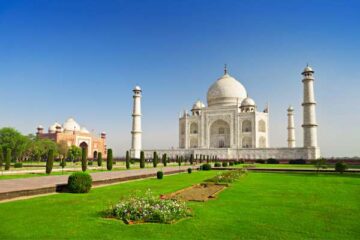
Start your day early with a sunrise visit to the Taj Mahal, one of the Seven Wonders of the World and the crown jewel of Mughal architecture. Built by Emperor Shah Jahan in memory of his beloved wife Mumtaz Mahal, the Taj Mahal is a stunning white marble mausoleum that symbolizes eternal love. The early morning light enhances the beauty of the monument, casting a soft glow on the marble.
- Key Highlights:
- Main Mausoleum: Admire the intricate inlay work of semi-precious stones, floral motifs, and calligraphy adorning the walls.
- Reflecting Pool: Take iconic photos of the Taj Mahal mirrored in the still water of the pool.
- Charbagh Gardens: Explore the beautifully manicured Persian-style gardens that enhance the grandeur of the structure.
Tip: Arriving early not only avoids the crowds but also lets you witness the mesmerizing effect of the rising sun on the Taj Mahal’s white marble.
2. Agra Fort (UNESCO World Heritage Site)
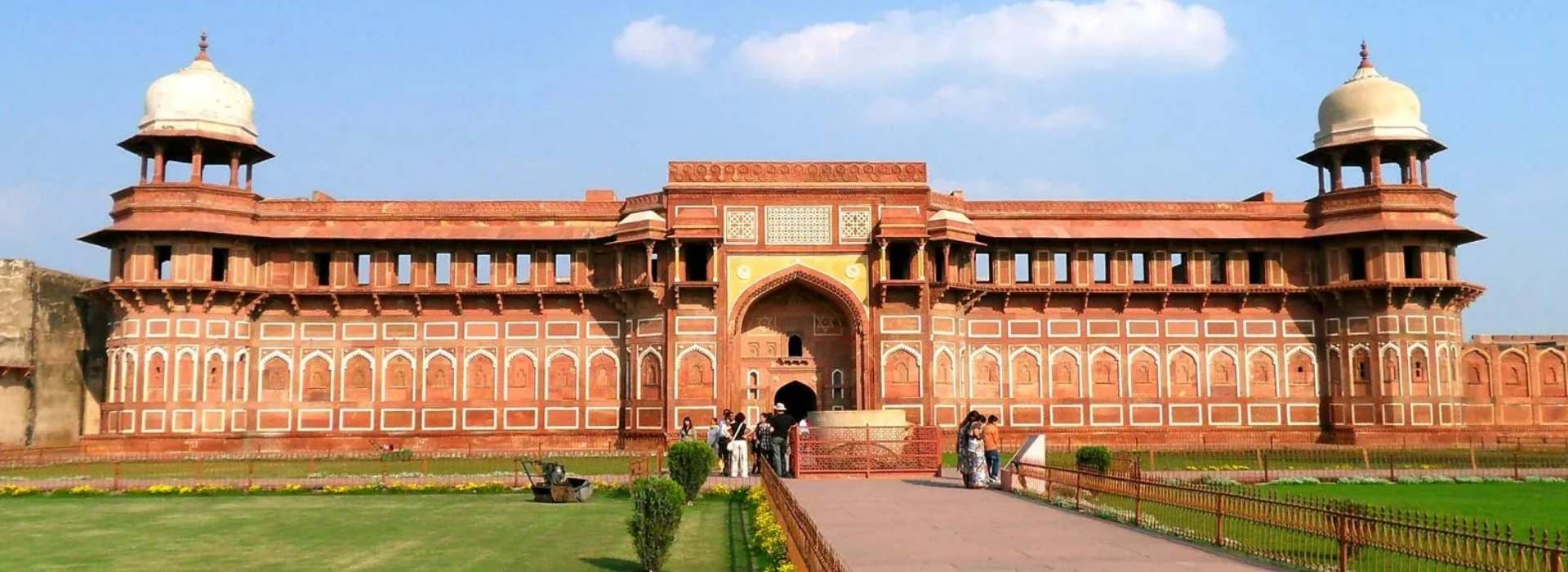
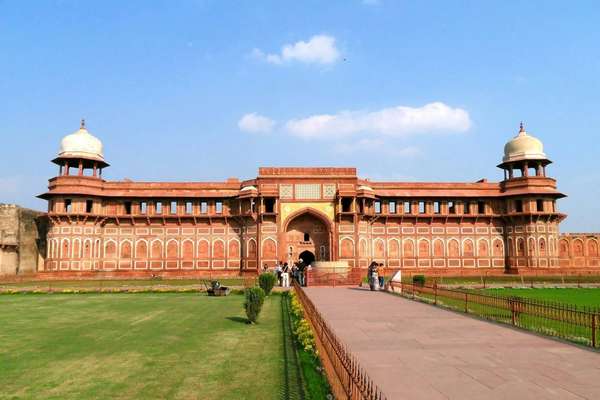
After the Taj Mahal, head to the imposing Agra Fort, located just 2.5 km away. This massive red sandstone fort was the main residence of the Mughal emperors before they shifted to Delhi. Built by Emperor Akbar in 1565, it combines military might with architectural beauty, reflecting Mughal power and elegance.
- Key Highlights:
- Diwan-e-Aam (Hall of Public Audience): Where the emperor would address the public and listen to their grievances.
- Diwan-e-Khas (Hall of Private Audience): A more intimate space where the emperor would meet important dignitaries.
- Jahangir’s Palace: An elegant structure with detailed carvings, used as a royal residence.
- Musamman Burj: A beautiful octagonal tower where Shah Jahan was imprisoned by his son Aurangzeb, with a view of the Taj Mahal in the distance.
Explore the fort’s maze of palaces, courtyards, and mosques, and imagine the grandeur of the Mughal empire at its peak.
Late Morning:
3. Itimad-ud-Daulah’s Tomb (Baby Taj)
Next, visit Itimad-ud-Daulah’s Tomb, often referred to as the “Baby Taj” because of its resemblance to the Taj Mahal. This beautiful white marble tomb was built by Nur Jahan, wife of Emperor Jahangir, for her father, Mirza Ghiyas Beg. Itimad-ud-Daulah’s Tomb is known for its intricate carvings, lattice screens, and inlay work, which served as a precursor to the more elaborate designs seen on the Taj Mahal.
- Key Highlights:
- Pietra Dura Work: Marvel at the intricate inlay work using semi-precious stones, which was later perfected in the Taj Mahal.
- Delicate Jali Screens: The delicate lattice screens allow light to filter into the tomb, creating a mesmerizing play of shadows.
This tomb is smaller and less crowded, providing a peaceful experience to admire Mughal artistry up close.
Lunch Break
Enjoy a delicious Mughlai lunch at one of Agra’s famous restaurants. Some popular dishes to try include Tandoori Chicken, Mutton Korma, and Biryani. For a sweet treat, indulge in Agra’s famous Petha, a traditional soft candy made from ash gourd.
Afternoon:
4. Mehtab Bagh
After lunch, visit Mehtab Bagh, a beautiful garden located on the opposite bank of the Yamuna River, offering a picturesque view of the Taj Mahal from a distance. This Mughal garden was designed as part of the Taj Mahal complex, and its perfectly aligned pathways provide a symmetrical view of the monument. It’s an ideal spot for photography, especially during sunset, when the Taj Mahal glows in the golden light.
- Key Highlights:
- Taj Mahal View: Enjoy a serene, crowd-free view of the Taj Mahal from across the river.
- Mughal Gardens: Stroll through the well-maintained Charbagh-style gardens, which provide a tranquil environment for relaxation.
Mehtab Bagh is a peaceful retreat, perfect for soaking in the beauty of the Taj Mahal from a unique vantage point.
5. Akbar’s Tomb, Sikandra
In the afternoon, visit Akbar’s Tomb in Sikandra, located on the outskirts of Agra. This magnificent mausoleum, built by Akbar himself and completed by his son Jahangir, is a blend of Hindu and Mughal architectural styles. The tomb is set in a large, beautifully landscaped garden that reflects Akbar’s vision of grandeur and inclusiveness.
- Key Highlights:
- Main Mausoleum: The tomb is a mix of red sandstone and white marble, featuring intricate carvings and geometric patterns.
- Four Gates: Each gate represents one of the main religions of Akbar’s empire: Hinduism, Islam, Christianity, and Sikhism, symbolizing his policy of religious tolerance.
- Peaceful Gardens: The surrounding gardens are home to deer, monkeys, and peacocks, providing a tranquil atmosphere for reflection.
Evening:
6. Local Markets & Shopping
Wrap up your day by exploring Agra’s bustling markets, known for their handicrafts, marble inlay work, leather goods, and jewelry.
- Sadar Bazaar: A vibrant market offering souvenirs, leather products, and local snacks.
- Kinari Bazaar: Famous for its textiles, jewelry, and traditional garments.
- Shahganj Bazaar: Known for its affordable handicrafts and household items.
These markets are perfect for picking up unique keepsakes or gifts that reflect Agra’s rich artistic heritage.
Optional Evening Activity:
- Kalakriti Cultural & Convention Centre: If time permits, attend the “Mohabbat The Taj” show, a theatrical performance depicting the love story of Shah Jahan and Mumtaz Mahal, along with the construction of the Taj Mahal. The show provides a deeper emotional connection to the monument and the era it was built in.
End of Tour:
After a full day of exploration, you’ll be dropped back at your hotel. This detailed one-day itinerary provides a well-rounded experience of Agra’s most important historical sites, offering insight into the grandeur of the Mughal Empire and the timeless beauty of its architecture.
Includes
Pick-Up and Drop-Off Service.
Private Air Conditioned Car with Driver.
Entrance Fees of Monuments.
Live Tour Guide Service in your Language.
Mineral Water Bottles.
Breakfast at 5 Star Hotel.
All Applicable taxes.
Excludes
Tips / Gratuities to guide and driver.
You May Also Like

Overnight Taj Mahal tour
- Delhi Agra Delhi
- 2 Days
- Pickup Available
- Skip the ticket line

Taj Mahal Sunrise Tour
- Delhi Agra Delhi
- 11 Hours
- Pickup Available
- Skip the ticket line
Tour Reviews
There are no reviews yet.
Leave a Review