<!-- wp:paragraph -->
<p>Every year, millions of travelers make their way to Agra just to stand in front of one of the world's most recognizable monuments. The Taj Mahal isn't simply a building — it's a 17th-century love story carved in marble, and for most first-time visitors to India, it sits right at the top of the must-see list. But here's something many travelers don't realize until they've already booked their trip: <em>when</em> you visit matters almost as much as visiting at all.</p>
<!-- /wp:paragraph -->
<!-- wp:paragraph -->
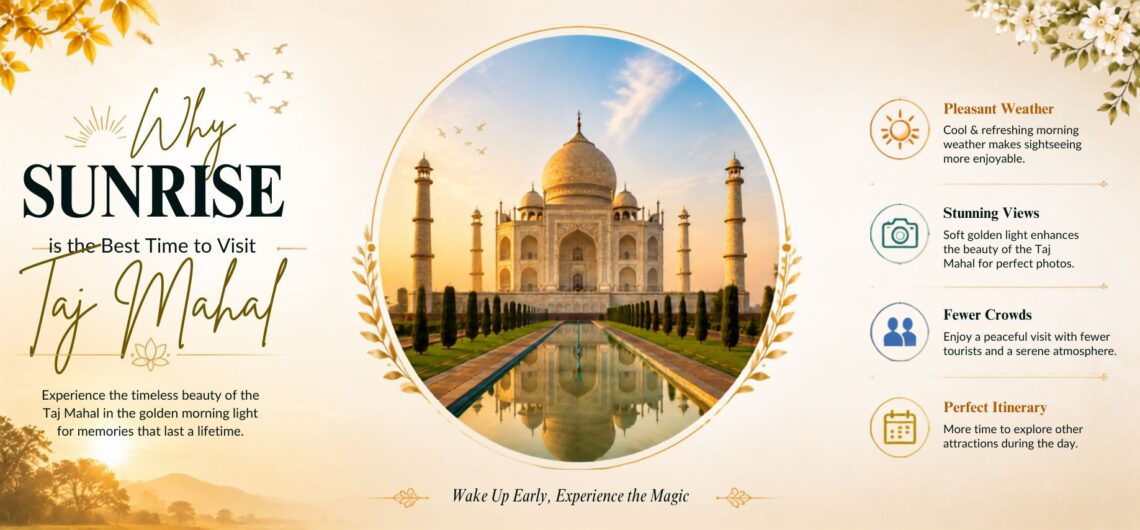
<p>Timing changes everything about this experience. Arrive at midday in high season and you'll be shuffling through crowds under a punishing sun, jostling for a clear photo, and battling long security lines. Arrive at sunrise, and you get a completely different monument — quiet, cool, glowing, and almost yours alone. That's exactly why sunrise is the best time to visit the Taj Mahal, and it's why so many seasoned travelers and photographers build their entire Agra itinerary around those first hours after the gates open.</p>
<!-- /wp:paragraph -->
<!-- wp:paragraph -->
<p>If you're planning your first trip to India and wondering how to experience the Taj Mahal the right way, this guide walks through everything — from what makes sunrise so special, to photography tips, seasonal advice, and how to plan a smooth sunrise tour from Delhi.</p>
<!-- /wp:paragraph -->
<!-- wp:heading -->
<h2 class="wp-block-heading"><strong>Why Sunrise is the Best Time to Visit Taj Mahal</strong></h2>
<!-- /wp:heading -->
<!-- wp:paragraph -->
<p>There's a reason travel photographers, tour guides, and repeat visitors all point to the same answer when asked about the ideal visiting time: sunrise simply offers a better experience on every level.</p>
<!-- /wp:paragraph -->
<!-- wp:paragraph -->
<p><strong>Calm atmosphere.</strong> In the hour after the gates open, the complex is noticeably quiet. There's none of the midday bustle, no loudspeaker announcements, and far less jostling near the main viewing points. It's the closest you'll come to experiencing the Taj Mahal the way it was meant to be appreciated — in stillness.</p>
<!-- /wp:paragraph -->
<!-- wp:paragraph -->
<p><strong>Cool temperatures.</strong> Agra can get brutally hot, especially between April and June. Early morning temperatures are dramatically more comfortable, which makes walking the marble platform (often barefoot or in socks) far more pleasant.</p>
<!-- /wp:paragraph -->
<!-- wp:paragraph -->
<p><strong>Beautiful lighting.</strong> Photographers call the period right after sunrise the "golden hour" for good reason. The soft, low-angle light wraps around the domes and minarets, avoiding the harsh overhead glare that washes out photos later in the day.</p>
<!-- /wp:paragraph -->
<!-- wp:paragraph -->
<p><strong>Less waiting.</strong> Ticket lines, security checks, and bag-drop counters all move faster when fewer people are in the queue. You'll spend less time waiting and more time actually inside the complex.</p>
<!-- /wp:paragraph -->
<!-- wp:paragraph -->
<p><strong>Peaceful environment.</strong> Beyond photography and comfort, there's something genuinely moving about watching the Taj Mahal emerge from morning haze in near silence. Many visitors describe this as the most memorable part of their entire India trip.</p>
<!-- /wp:paragraph -->
<!-- wp:heading -->
<h2 class="wp-block-heading"><strong>What Makes the Sunrise View So Special?</strong></h2>
<!-- /wp:heading -->
<!-- wp:paragraph -->
<p>The Taj Mahal at sunrise isn't just quieter — it actually looks different.</p>
<!-- /wp:paragraph -->
<!-- wp:paragraph -->
<p>As the sun climbs, golden rays hit the white marble at a low angle, causing the entire structure to shift color gradually. It often begins as a soft grey-pink silhouette against the dawn sky, then slowly warms into blush tones, and finally settles into a glowing ivory-gold as the sun fully rises. This changing palette is one of the main reasons photographers return to the Taj Mahal again and again — no two sunrise visits look quite the same.</p>
<!-- /wp:paragraph -->
<!-- wp:paragraph -->
<p>The reflection pools along the central walkway add another layer of magic. On calm mornings, the monument mirrors perfectly in the still water, doubling the visual impact and creating the iconic symmetrical shot most travelers hope to capture.</p>
<!-- /wp:paragraph -->
<!-- wp:paragraph -->
<p>Add to this the light morning mist that frequently drifts across the Yamuna River basin, especially in the cooler months, and you get an almost dreamlike ambiance that simply isn't there later in the day. It's a genuinely unique visual experience — one that's hard to replicate at any other hour.</p>
<!-- /wp:paragraph -->
<!-- wp:heading -->
<h2 class="wp-block-heading"><strong>Benefits of Visiting Taj Mahal at Sunrise</strong></h2>
<!-- /wp:heading -->
<!-- wp:paragraph -->
<p>Beyond the obvious visual appeal, there are practical advantages to choosing a sunrise visit:</p>
<!-- /wp:paragraph -->
<!-- wp:list -->
<ul class="wp-block-list"><!-- wp:list-item -->
<li><strong>Fewer tourists</strong> mean more space to move, better vantage points, and none of the crowd-dodging that defines a midday visit.</li>
<!-- /wp:list-item -->
<!-- wp:list-item -->
<li><strong>Better photographs</strong> are almost guaranteed thanks to soft light and empty foreground space.</li>
<!-- /wp:list-item -->
<!-- wp:list-item -->
<li><strong>Comfortable weather</strong> makes the visit enjoyable rather than exhausting, particularly in warmer months.</li>
<!-- /wp:list-item -->
<!-- wp:list-item -->
<li><strong>Less noise</strong> allows you to actually take in the surroundings and appreciate the architecture.</li>
<!-- /wp:list-item -->
<!-- wp:list-item -->
<li><strong>Easier security checks</strong>, since fewer visitors are passing through entry points at once.</li>
<!-- /wp:list-item -->
<!-- wp:list-item -->
<li><strong>A better overall experience inside the complex</strong>, with more room to explore the mosque, guest house, and gardens without feeling rushed.</li>
<!-- /wp:list-item --></ul>
<!-- /wp:list -->
<!-- wp:heading -->
<h2 class="wp-block-heading"><strong>Taj Mahal Sunrise Photography Tips</strong></h2>
<!-- /wp:heading -->
<!-- wp:paragraph -->
<p>If photography is high on your priority list, sunrise isn't optional — it's essential. Here's how to make the most of it.</p>
<!-- /wp:paragraph -->
<!-- wp:paragraph -->
<p><strong>Camera settings.</strong> For DSLR or mirrorless cameras, start with a low ISO (100–200), a mid-range aperture (f/8–f/11) for sharpness, and adjust shutter speed as the light changes. A tripod helps if you want long exposures of the reflection pool in the dimmer pre-sunrise light.</p>
<!-- /wp:paragraph -->
<!-- wp:paragraph -->
<p><strong>Mobile photography tips.</strong> Most modern smartphones handle golden hour beautifully. Use HDR mode for balanced exposure, avoid zooming digitally (walk closer instead), and consider the portrait or panorama mode for the classic wide symmetrical shot.</p>
<!-- /wp:paragraph -->
<!-- wp:paragraph -->
<p><strong>Golden hour timing.</strong> The 20–30 minutes right after sunrise are the sweet spot — warm light, minimal harsh shadows, and a soft glow across the marble.</p>
<!-- /wp:paragraph -->
<!-- wp:paragraph -->
<p><strong>Best photography spots</strong> include the reflection pool directly in front of the main gate, the marble bench area (made famous by Princess Diana's photo), and the side gardens for a less crowded alternative angle.</p>
<!-- /wp:paragraph -->
<!-- wp:paragraph -->
<p><strong>Main gate framing</strong> is a classic technique — photographing the Taj Mahal through the arched entrance creates natural framing and depth.</p>
<!-- /wp:paragraph -->
<!-- wp:paragraph -->
<p><strong>Side angles</strong> from the eastern and western gardens offer a fresh perspective away from the busiest central pathway.</p>
<!-- /wp:paragraph -->
<!-- wp:paragraph -->
<p><strong>Photography etiquette.</strong> Be mindful of other visitors waiting for the same shot, avoid blocking pathways for long periods, and never touch or lean on the marble structure.</p>
<!-- /wp:paragraph -->
<!-- wp:heading -->
<h2 class="wp-block-heading"><strong>Best Months to Enjoy a Sunrise Visit</strong></h2>
<!-- /wp:heading -->
<!-- wp:paragraph -->
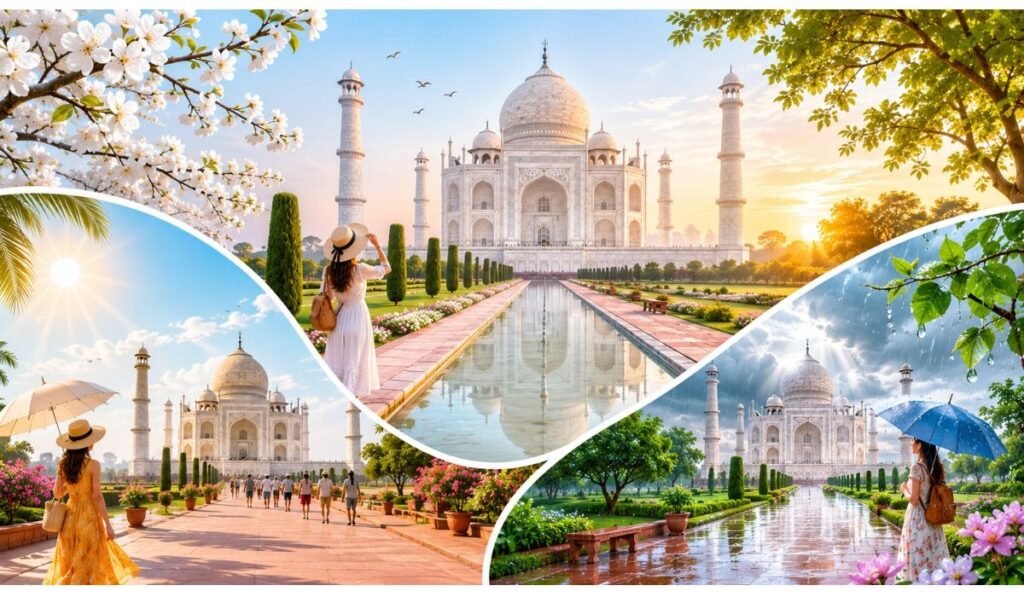
<p>While sunrise is always better than other times of day, the season you visit in shapes the overall experience.</p>
<!-- /wp:paragraph -->
<!-- wp:table -->
<figure class="wp-block-table"><table class="has-fixed-layout"><tbody><tr><td><strong>Season</strong></td><td><strong>Months</strong></td><td><strong>Sunrise Experience</strong></td></tr><tr><td>Winter</td><td>October–March</td><td>Cool, crisp mornings; occasional light fog; excellent lighting; most popular season</td></tr><tr><td>Summer</td><td>April–June</td><td>Very hot by mid-morning; sunrise offers the only comfortable window to visit</td></tr><tr><td>Monsoon</td><td>July–September</td><td>Humid mornings; dramatic cloudy skies; fewer tourists overall</td></tr></tbody></table></figure>
<!-- /wp:table -->
<!-- wp:paragraph -->
<p><strong>October–March</strong> is widely considered the best window for a sunrise visit, offering comfortable temperatures and clear skies.</p>
<!-- /wp:paragraph -->
<!-- wp:paragraph -->
<p><strong>Summer mornings</strong> can still be rewarding, but the heat builds quickly, so sunrise becomes less of a preference and more of a necessity.</p>
<!-- /wp:paragraph -->
<!-- wp:paragraph -->
<p><strong>Monsoon mornings</strong> bring lush green surroundings and occasionally striking cloud formations, though there's a higher chance of overcast skies muting the golden-hour effect.</p>
<!-- /wp:paragraph -->
<!-- wp:paragraph -->
<p><strong>Winter fog</strong>, particularly in December and January, can occasionally delay the "reveal" of the monument, but it also creates a beautifully atmospheric, almost cinematic first impression.</p>
<!-- /wp:paragraph -->
<!-- wp:paragraph -->
<p><strong>Seasonal recommendation:</strong> If your travel dates are flexible, October through March offers the most consistent sunrise conditions.</p>
<!-- /wp:paragraph -->
<!-- wp:heading -->
<h2 class="wp-block-heading"><strong>What Time Should You Reach the Taj Mahal?</strong></h2>
<!-- /wp:heading -->
<!-- wp:paragraph -->
<p>The Taj Mahal typically opens around sunrise, with gate timings adjusted slightly throughout the year based on when the sun actually rises. Tickets are timed to correspond with this opening window.</p>
<!-- /wp:paragraph -->
<!-- wp:paragraph -->
<p>For the ideal experience, aim to arrive at the ticket counter or security checkpoint at least 20–30 minutes before official opening. This buffer accounts for the security screening process, which includes bag checks and walk-through metal detectors.</p>
<!-- /wp:paragraph -->
<!-- wp:paragraph -->
<p>If you're traveling from Delhi, factor in travel time as well — a same-day sunrise trip means leaving Delhi well before dawn to arrive in Agra in time. Building in this buffer removes the stress of rushing and ensures you're standing at the gate, not the ticket queue, when the sun actually starts to rise.</p>
<!-- /wp:paragraph -->
<!-- wp:heading -->
<h2 class="wp-block-heading"><strong>Sunrise Taj Mahal Tour from Delhi</strong></h2>
<!-- /wp:heading -->
<!-- wp:paragraph -->
<p>For international travelers based in Delhi, a <a href="https://www.mytajtour.com/tours/taj-mahal-sunrise-tour/">Sunrise Taj Mahal Tour from Delhi</a> is one of the most popular ways to experience the monument at its best. There are a few common ways to make the journey:</p>
<!-- /wp:paragraph -->
<!-- wp:paragraph -->
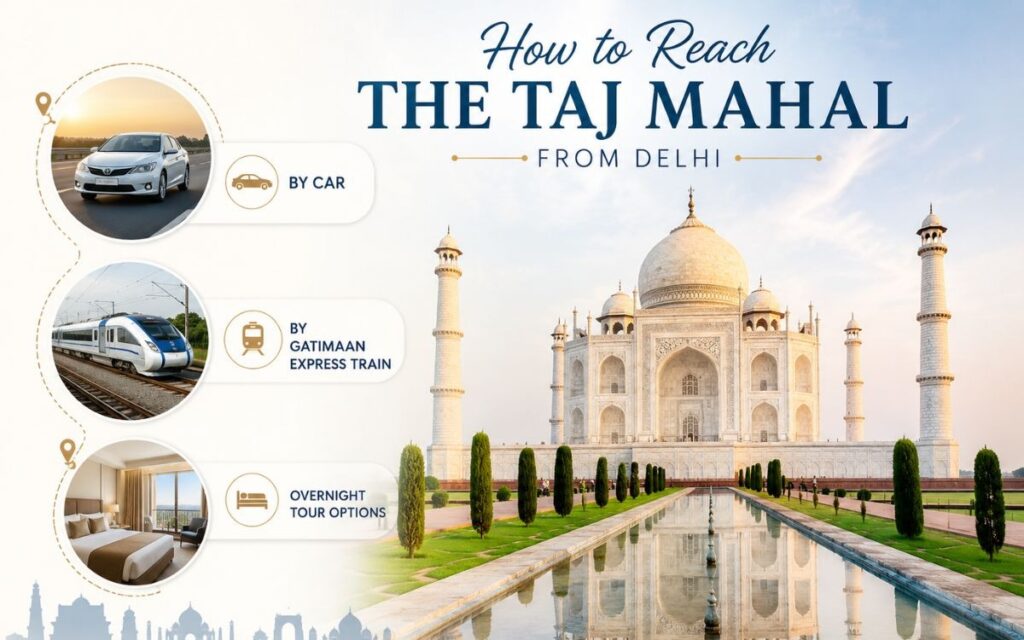
<p><strong>Private car.</strong> A private car with a driver offers flexibility and comfort, typically taking around 3–4 hours one way via the Yamuna Expressway. Leaving Delhi around 3:30–4:00 AM allows arrival in time for sunrise.</p>
<!-- /wp:paragraph -->
<!-- wp:paragraph -->
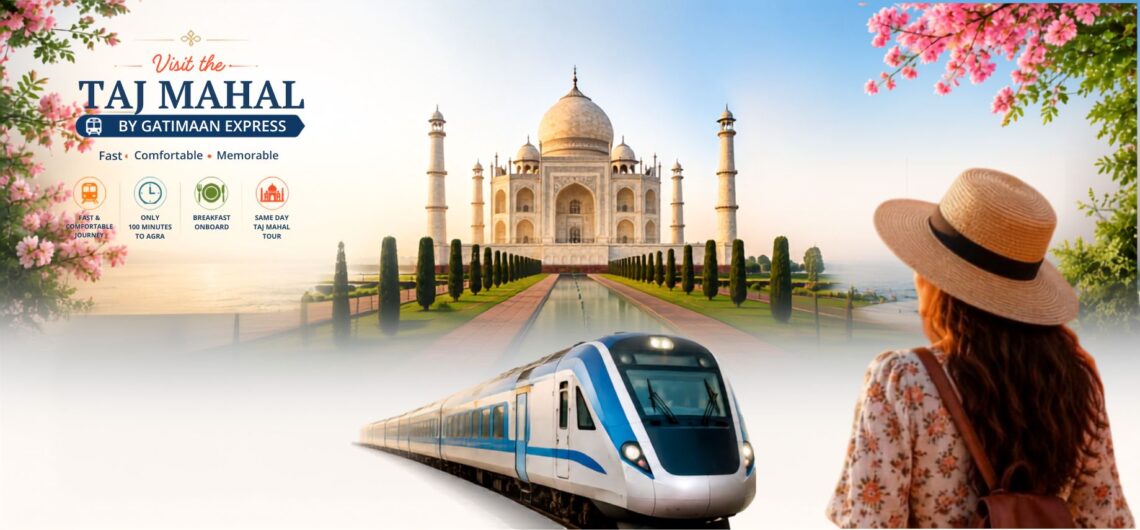
<p><strong>Superfast train.</strong> Trains like the Gatimaan Express can cover the Delhi-to-Agra route in under two hours, making it a faster and often more comfortable alternative, especially when paired with a pre-booked local guide in Agra.</p>
<!-- /wp:paragraph -->
<!-- wp:paragraph -->
<p><strong>Guided tour.</strong> A structured, guided sunrise tour takes the planning out of your hands — transport, tickets, and a knowledgeable local guide are typically bundled together, which is ideal for first-time visitors unfamiliar with entry procedures.</p>
<!-- /wp:paragraph -->
<!-- wp:paragraph -->
<p><strong>Same-day tours</strong> are common and allow travelers to see the Taj Mahal at sunrise and be back in Delhi by evening.</p>
<!-- /wp:paragraph -->
<!-- wp:paragraph -->
<p><strong>Overnight stay</strong> in Agra is worth considering if you'd like a slower pace, extra time to explore Agra Fort and other sites, and less of a rushed early-morning departure from Delhi.</p>
<!-- /wp:paragraph -->
<!-- wp:paragraph -->
<p>Whichever option you choose, the approximate round-trip duration for a same-day sunrise tour is typically 12–14 hours, factoring in travel, sightseeing, and return time.</p>
<!-- /wp:paragraph -->
<!-- wp:heading -->
<h2 class="wp-block-heading"><strong>Top Attractions to Visit After Sunrise</strong></h2>
<!-- /wp:heading -->
<!-- wp:paragraph -->
<p>Once you've soaked in the sunrise experience, Agra has plenty more to offer before you head back:</p>
<!-- /wp:paragraph -->
<!-- wp:list -->
<ul class="wp-block-list"><!-- wp:list-item -->
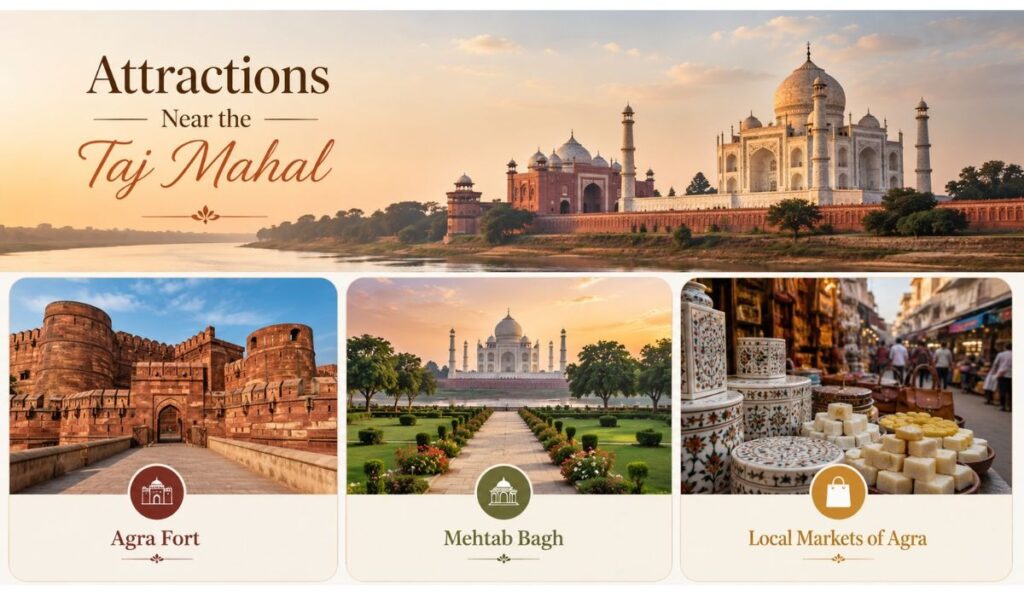
<li><strong>Agra Fort</strong> — a UNESCO World Heritage Site with sweeping views back toward the Taj Mahal.</li>
<!-- /wp:list-item -->
<!-- wp:list-item -->
<li><strong>Mehtab Bagh</strong> — a garden across the river offering a completely different, distant view of the monument, especially striking at sunset if you're staying longer.</li>
<!-- /wp:list-item -->
<!-- wp:list-item -->
<li><strong>Itmad-ud-Daulah</strong> — often called the "Baby Taj," known for its intricate marble inlay work.</li>
<!-- /wp:list-item -->
<!-- wp:list-item -->
<li><strong>Local handicraft workshops</strong> — where you can watch artisans practice traditional marble inlay techniques passed down through generations.</li>
<!-- /wp:list-item -->
<!-- wp:list-item -->
<li><strong>Kinari Bazaar</strong> — a lively local market for souvenirs, textiles, and street food.</li>
<!-- /wp:list-item -->
<!-- wp:list-item -->
<li><strong>Local cuisine</strong> — Agra is famous for its petha (a sweet made from ash gourd) and rich Mughlai dishes worth sampling before you leave.</li>
<!-- /wp:list-item --></ul>
<!-- /wp:list -->
<!-- wp:heading -->
<h2 class="wp-block-heading"><strong>Tips for First-Time Visitors</strong></h2>
<!-- /wp:heading -->
<!-- wp:paragraph -->
<p>A little preparation goes a long way toward making your sunrise visit smooth and enjoyable:</p>
<!-- /wp:paragraph -->
<!-- wp:list -->
<ul class="wp-block-list"><!-- wp:list-item -->
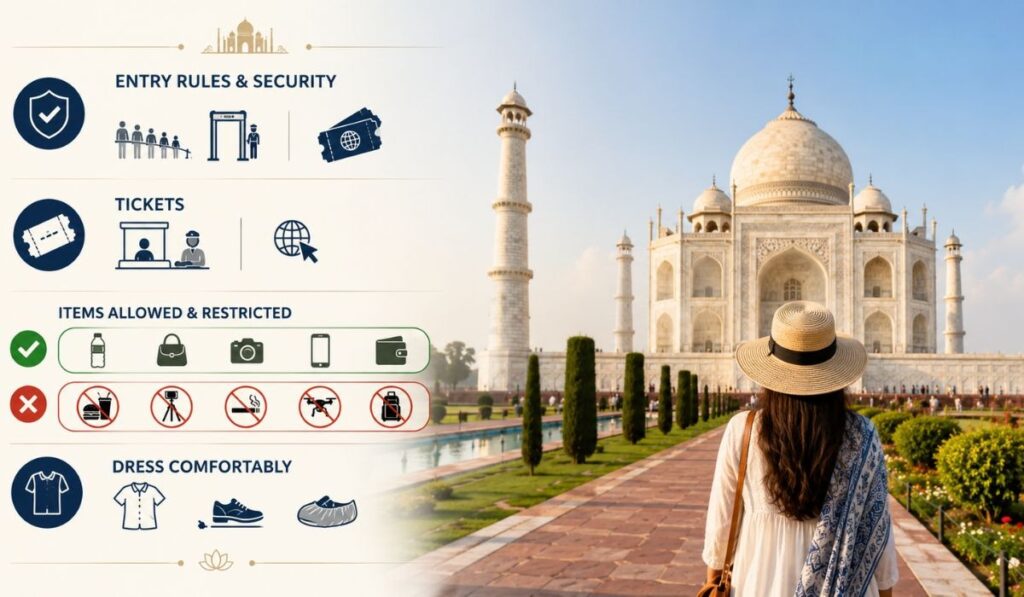
<li><strong>Dress comfortably</strong> and modestly, keeping in mind it's a heritage and religious site.</li>
<!-- /wp:list-item -->
<!-- wp:list-item -->
<li><strong>Carry a passport or valid ID</strong>, which is often required for ticket verification, especially for foreign nationals.</li>
<!-- /wp:list-item -->
<!-- wp:list-item -->
<li><strong>Book tickets early</strong>, ideally online in advance, to avoid delays at the counter.</li>
<!-- /wp:list-item -->
<!-- wp:list-item -->
<li><strong>Wear comfortable shoes</strong> that are easy to slip on and off, since footwear isn't allowed on the main marble platform.</li>
<!-- /wp:list-item -->
<!-- wp:list-item -->
<li><strong>Avoid prohibited items</strong> like tripods (in some cases), food, tobacco, and certain electronics — check current rules before you go.</li>
<!-- /wp:list-item -->
<!-- wp:list-item -->
<li><strong>Hire licensed guides</strong> for accurate historical context and a smoother navigation of the complex.</li>
<!-- /wp:list-item -->
<!-- wp:list-item -->
<li><strong>Stay hydrated</strong>, even in cooler months, since the visit often involves a fair amount of walking.</li>
<!-- /wp:list-item --></ul>
<!-- /wp:list -->
<!-- wp:heading -->
<h2 class="wp-block-heading"><strong>Common Mistakes Tourists Make</strong></h2>
<!-- /wp:heading -->
<!-- wp:paragraph -->
<p>Even well-planned trips can go sideways with a few avoidable missteps:</p>
<!-- /wp:paragraph -->
<!-- wp:list {"ordered":true} -->
<ol class="wp-block-list"><!-- wp:list-item -->
<li><strong>Arriving late</strong> and missing the best light or getting stuck behind a growing queue.</li>
<!-- /wp:list-item -->
<!-- wp:list-item -->
<li><strong>Visiting during weekends without planning</strong>, when domestic tourist numbers spike significantly.</li>
<!-- /wp:list-item -->
<!-- wp:list-item -->
<li><strong>Ignoring weather forecasts</strong>, particularly fog in winter or extreme heat in summer.</li>
<!-- /wp:list-item -->
<!-- wp:list-item -->
<li><strong>Not booking tickets in advance</strong>, leading to long counter lines.</li>
<!-- /wp:list-item -->
<!-- wp:list-item -->
<li><strong>Carrying restricted items</strong>, which can cause delays or items being confiscated at security.</li>
<!-- /wp:list-item -->
<!-- wp:list-item -->
<li><strong>Skipping sunrise altogether</strong>, opting for a later, hotter, more crowded visit and missing the best version of the experience.</li>
<!-- /wp:list-item --></ol>
<!-- /wp:list -->
<!-- wp:heading -->
<h2 class="wp-block-heading"><strong>Is Sunrise Better Than Sunset?</strong></h2>
<!-- /wp:heading -->
<!-- wp:paragraph -->
<p>Both sunrise and sunset offer beautiful lighting at the Taj Mahal, but sunrise consistently comes out ahead for practical and experiential reasons.</p>
<!-- /wp:paragraph -->
<!-- wp:table -->
<figure class="wp-block-table"><table class="has-fixed-layout"><tbody><tr><td><strong>Feature</strong></td><td><strong>Sunrise</strong></td><td><strong>Sunset</strong></td></tr><tr><td>Crowd</td><td>✔ Low</td><td>✖ Higher</td></tr><tr><td>Weather</td><td>✔ Cool</td><td>Moderate</td></tr><tr><td>Photography</td><td>Excellent</td><td>Very Good</td></tr><tr><td>Waiting Time</td><td>Short</td><td>Longer</td></tr><tr><td>Atmosphere</td><td>Peaceful</td><td>Busy</td></tr></tbody></table></figure>
<!-- /wp:table -->
<!-- wp:paragraph -->
<p>Sunset can still be beautiful, especially from Mehtab Bagh across the river, but for the classic up-close experience inside the complex, sunrise remains the preferred choice among frequent visitors and professional photographers alike.</p>
<!-- /wp:paragraph -->
<!-- wp:heading -->
<h2 class="wp-block-heading"><strong>Why Most Travel Experts Recommend Sunrise</strong></h2>
<!-- /wp:heading -->
<!-- wp:paragraph -->
<p>Ask any Agra-based photographer or licensed tour guide when to visit, and the answer is almost always the same. <strong>Photographers</strong> consistently point to the golden-hour lighting as unmatched later in the day. <strong>Tour guides</strong> highlight the smoother, faster experience through security and ticketing when crowds are thin. <strong>Past visitors</strong> frequently describe the sunrise visit as the highlight of their entire trip, citing the emotional impact of watching the monument slowly reveal itself in the morning light.</p>
<!-- /wp:paragraph -->
<!-- wp:paragraph -->
<p>The combination of <strong>better comfort</strong>, fewer logistical headaches, and a genuinely more memorable atmosphere adds up to consistently higher <strong>overall satisfaction</strong> among sunrise visitors compared to those who arrive later in the day.</p>
<!-- /wp:paragraph -->
<!-- wp:heading -->
<h2 class="wp-block-heading"><strong>Final Thoughts</strong></h2>
<!-- /wp:heading -->
<!-- wp:paragraph -->
<p>If there's one piece of advice worth taking seriously when planning your India trip, it's this: don't skip the sunrise. Why sunrise is the best time to visit Taj Mahal comes down to a simple combination — cooler weather, thinner crowds, gorgeous golden light, and a peaceful atmosphere that's almost impossible to find later in the day. It's the difference between seeing the Taj Mahal and truly experiencing it.</p>
<!-- /wp:paragraph -->
<!-- wp:paragraph -->
<p>Whether you're organizing a same-day trip from Delhi or building it into a longer Golden Triangle itinerary, setting your alarm early is one travel decision you're unlikely to regret. If you're still finalizing your plans, it's worth looking into a sunrise-focused tour that handles the timing, transport, and entry logistics for you — leaving you free to simply enjoy the moment the sun rises over one of the world's most beautiful monuments.</p>
<!-- /wp:paragraph -->
<!-- wp:heading -->
<h2 class="wp-block-heading"><strong>Frequently Asked Questions</strong></h2>
<!-- /wp:heading -->
<!-- wp:heading {"level":3} -->
<h3 class="wp-block-heading"><strong>Why is sunrise the best time to visit the Taj Mahal?</strong> </h3>
<!-- /wp:heading -->
<!-- wp:paragraph -->
<p>Sunrise offers cooler temperatures, smaller crowds, and soft golden light that beautifully highlights the white marble. Security lines and ticket queues move faster, and the overall atmosphere is calmer and more peaceful. Photographers especially favor this time because of the changing colors on the monument as the sun rises, making it the most recommended time for a first visit.</p>
<!-- /wp:paragraph -->
<!-- wp:heading {"level":3} -->
<h3 class="wp-block-heading"><strong>What time does the Taj Mahal open for sunrise?</strong> </h3>
<!-- /wp:heading -->
<!-- wp:paragraph -->
<p>The Taj Mahal opens around sunrise, with exact timing shifting slightly by season since it's tied to the actual sunrise time. It's best to check current gate timings before your visit and plan to arrive at least 20–30 minutes early to clear security and be inside as the gates open, maximizing your time in the soft morning light.</p>
<!-- /wp:paragraph -->
<!-- wp:heading {"level":3} -->
<h3 class="wp-block-heading"><strong>Is sunrise better than sunset at the Taj Mahal?</strong> </h3>
<!-- /wp:heading -->
<!-- wp:paragraph -->
<p>Sunrise is generally considered better due to smaller crowds, cooler weather, and shorter waiting times at entry. While sunset offers pleasant lighting too, the complex tends to be busier later in the day. For photography, comfort, and a peaceful experience, most repeat visitors and local guides recommend sunrise over sunset.</p>
<!-- /wp:paragraph -->
<!-- wp:heading {"level":3} -->
<h3 class="wp-block-heading"><strong>How early should I arrive?</strong> </h3>
<!-- /wp:heading -->
<!-- wp:paragraph -->
<p>Arriving 20–30 minutes before the official opening time is ideal. This allows enough buffer for security screening and ticket verification, so you're not rushing once the gates open. If you're on a Sunrise Taj Mahal Tour from Delhi, your guide will typically plan departure times to ensure you arrive with an adequate buffer.</p>
<!-- /wp:paragraph -->
<!-- wp:heading {"level":3} -->
<h3 class="wp-block-heading"><strong>Which season is best for sunrise visits?</strong> </h3>
<!-- /wp:heading -->
<!-- wp:paragraph -->
<p>October through March is widely considered the best season, offering cool, comfortable mornings and generally clear skies. Summer sunrise visits are still worthwhile since they avoid the intense midday heat, while monsoon season offers fewer tourists but a higher chance of cloud cover affecting the golden-hour light.</p>
<!-- /wp:paragraph -->
<!-- wp:heading {"level":3} -->
<h3 class="wp-block-heading"><strong>Can I take photos during sunrise?</strong> </h3>
<!-- /wp:heading -->
<!-- wp:paragraph -->
<p>Yes, photography is allowed and actively encouraged during sunrise visits. It's the most popular time for both amateur and professional photography due to the soft, warm light. Just be mindful of photography etiquette — avoid blocking pathways for extended periods and be considerate of other visitors waiting for the same shot.</p>
<!-- /wp:paragraph -->
<!-- wp:heading {"level":3} -->
<h3 class="wp-block-heading"><strong>Is the Taj Mahal crowded in the morning?</strong> </h3>
<!-- /wp:heading -->
<!-- wp:paragraph -->
<p>Compared to midday and afternoon, mornings are noticeably less crowded, especially in the first hour after opening. While weekends and peak season (October–March) can still draw larger numbers, sunrise remains the quietest window of the day, giving visitors more space and a calmer overall experience.</p>
<!-- /wp:paragraph -->
<!-- wp:heading {"level":3} -->
<h3 class="wp-block-heading"><strong>How long should I spend at the Taj Mahal?</strong> </h3>
<!-- /wp:heading -->
<!-- wp:paragraph -->
<p>Most visitors spend between 1.5 to 2.5 hours exploring the main mausoleum, gardens, mosque, and guest house. If you're combining your sunrise visit with nearby attractions like Agra Fort, plan for a half-day itinerary to comfortably cover everything without feeling rushed.</p>
<!-- /wp:paragraph -->
<!-- wp:heading {"level":3} -->
<h3 class="wp-block-heading"><strong>Is a Sunrise Taj Mahal Tour from Delhi worth it?</strong></h3>
<!-- /wp:heading -->
<!-- wp:paragraph -->
<p> Yes, a Sunrise Taj Mahal Tour from Delhi is popular among first-time visitors because it simplifies transport, timing, and entry logistics. Guided tours typically include a knowledgeable local guide, skip-the-line arrangements, and a well-planned schedule, allowing travelers to focus on the experience rather than logistics.</p>
<!-- /wp:paragraph -->
<!-- wp:heading {"level":3} -->
<h3 class="wp-block-heading"><strong>What should I carry for a sunrise visit?</strong> </h3>
<!-- /wp:heading -->
<!-- wp:paragraph -->
<p>Carry a valid passport or ID, pre-booked tickets, comfortable slip-on shoes, water, and a camera or smartphone for photos. Avoid carrying prohibited items like tripods (where restricted), food, or certain electronics. Dress modestly and comfortably, since mornings can be cool, especially between October and February.</p>
<!-- /wp:paragraph -->
<!-- wp:paragraph -->
<p><em>Planning your visit? Consider exploring related guides on Taj Mahal Tour Packages from Delhi, Same Day Agra Tour options, the </em><a href="https://www.mytajtour.com/golden-triangle-tour-packages/"><em>Golden Triangle Tour</em></a><em>, and a full Taj Mahal Entry Ticket Guide to round out your trip planning.</em></p>
<!-- /wp:paragraph -->
Every year, millions of travelers make their way to Agra just to stand in front of one of the world’s most recognizable monuments. The Taj Mahal isn’t simply a building — it’s a 17th-century love story carved in marble, and for most first-time visitors to India, it sits right at the top of the must-see list. But here’s something many travelers don’t realize until they’ve already booked their trip: when you visit matters almost as much as visiting at all.
Timing changes everything about this experience. Arrive at midday in high season and you’ll be shuffling through crowds under a punishing sun, jostling for a clear photo, and battling long security lines. Arrive at sunrise, and you get a completely different monument — quiet, cool, glowing, and almost yours alone. That’s exactly why sunrise is the best time to visit the Taj Mahal, and it’s why so many seasoned travelers and photographers build their entire Agra itinerary around those first hours after the gates open.
If you’re planning your first trip to India and wondering how to experience the Taj Mahal the right way, this guide walks through everything — from what makes sunrise so special, to photography tips, seasonal advice, and how to plan a smooth sunrise tour from Delhi.
Why Sunrise is the Best Time to Visit Taj Mahal
There’s a reason travel photographers, tour guides, and repeat visitors all point to the same answer when asked about the ideal visiting time: sunrise simply offers a better experience on every level.
Calm atmosphere. In the hour after the gates open, the complex is noticeably quiet. There’s none of the midday bustle, no loudspeaker announcements, and far less jostling near the main viewing points. It’s the closest you’ll come to experiencing the Taj Mahal the way it was meant to be appreciated — in stillness.
Cool temperatures. Agra can get brutally hot, especially between April and June. Early morning temperatures are dramatically more comfortable, which makes walking the marble platform (often barefoot or in socks) far more pleasant.
Beautiful lighting. Photographers call the period right after sunrise the “golden hour” for good reason. The soft, low-angle light wraps around the domes and minarets, avoiding the harsh overhead glare that washes out photos later in the day.
Less waiting. Ticket lines, security checks, and bag-drop counters all move faster when fewer people are in the queue. You’ll spend less time waiting and more time actually inside the complex.
Peaceful environment. Beyond photography and comfort, there’s something genuinely moving about watching the Taj Mahal emerge from morning haze in near silence. Many visitors describe this as the most memorable part of their entire India trip.
What Makes the Sunrise View So Special?
The Taj Mahal at sunrise isn’t just quieter — it actually looks different.
As the sun climbs, golden rays hit the white marble at a low angle, causing the entire structure to shift color gradually. It often begins as a soft grey-pink silhouette against the dawn sky, then slowly warms into blush tones, and finally settles into a glowing ivory-gold as the sun fully rises. This changing palette is one of the main reasons photographers return to the Taj Mahal again and again — no two sunrise visits look quite the same.
The reflection pools along the central walkway add another layer of magic. On calm mornings, the monument mirrors perfectly in the still water, doubling the visual impact and creating the iconic symmetrical shot most travelers hope to capture.
Add to this the light morning mist that frequently drifts across the Yamuna River basin, especially in the cooler months, and you get an almost dreamlike ambiance that simply isn’t there later in the day. It’s a genuinely unique visual experience — one that’s hard to replicate at any other hour.
Benefits of Visiting Taj Mahal at Sunrise
Beyond the obvious visual appeal, there are practical advantages to choosing a sunrise visit:
Fewer tourists mean more space to move, better vantage points, and none of the crowd-dodging that defines a midday visit.
Better photographs are almost guaranteed thanks to soft light and empty foreground space.
Comfortable weather makes the visit enjoyable rather than exhausting, particularly in warmer months.
Less noise allows you to actually take in the surroundings and appreciate the architecture.
Easier security checks, since fewer visitors are passing through entry points at once.
A better overall experience inside the complex, with more room to explore the mosque, guest house, and gardens without feeling rushed.
Taj Mahal Sunrise Photography Tips
If photography is high on your priority list, sunrise isn’t optional — it’s essential. Here’s how to make the most of it.
Camera settings. For DSLR or mirrorless cameras, start with a low ISO (100–200), a mid-range aperture (f/8–f/11) for sharpness, and adjust shutter speed as the light changes. A tripod helps if you want long exposures of the reflection pool in the dimmer pre-sunrise light.
Mobile photography tips. Most modern smartphones handle golden hour beautifully. Use HDR mode for balanced exposure, avoid zooming digitally (walk closer instead), and consider the portrait or panorama mode for the classic wide symmetrical shot.
Golden hour timing. The 20–30 minutes right after sunrise are the sweet spot — warm light, minimal harsh shadows, and a soft glow across the marble.
Best photography spots include the reflection pool directly in front of the main gate, the marble bench area (made famous by Princess Diana’s photo), and the side gardens for a less crowded alternative angle.
Main gate framing is a classic technique — photographing the Taj Mahal through the arched entrance creates natural framing and depth.
Side angles from the eastern and western gardens offer a fresh perspective away from the busiest central pathway.
Photography etiquette. Be mindful of other visitors waiting for the same shot, avoid blocking pathways for long periods, and never touch or lean on the marble structure.
Best Months to Enjoy a Sunrise Visit
While sunrise is always better than other times of day, the season you visit in shapes the overall experience.
Season
Months
Sunrise Experience
Winter
October–March
Cool, crisp mornings; occasional light fog; excellent lighting; most popular season
Summer
April–June
Very hot by mid-morning; sunrise offers the only comfortable window to visit
October–March is widely considered the best window for a sunrise visit, offering comfortable temperatures and clear skies.
Summer mornings can still be rewarding, but the heat builds quickly, so sunrise becomes less of a preference and more of a necessity.
Monsoon mornings bring lush green surroundings and occasionally striking cloud formations, though there’s a higher chance of overcast skies muting the golden-hour effect.
Winter fog, particularly in December and January, can occasionally delay the “reveal” of the monument, but it also creates a beautifully atmospheric, almost cinematic first impression.
Seasonal recommendation: If your travel dates are flexible, October through March offers the most consistent sunrise conditions.
What Time Should You Reach the Taj Mahal?
The Taj Mahal typically opens around sunrise, with gate timings adjusted slightly throughout the year based on when the sun actually rises. Tickets are timed to correspond with this opening window.
For the ideal experience, aim to arrive at the ticket counter or security checkpoint at least 20–30 minutes before official opening. This buffer accounts for the security screening process, which includes bag checks and walk-through metal detectors.
If you’re traveling from Delhi, factor in travel time as well — a same-day sunrise trip means leaving Delhi well before dawn to arrive in Agra in time. Building in this buffer removes the stress of rushing and ensures you’re standing at the gate, not the ticket queue, when the sun actually starts to rise.
Sunrise Taj Mahal Tour from Delhi
For international travelers based in Delhi, a Sunrise Taj Mahal Tour from Delhi is one of the most popular ways to experience the monument at its best. There are a few common ways to make the journey:
Private car. A private car with a driver offers flexibility and comfort, typically taking around 3–4 hours one way via the Yamuna Expressway. Leaving Delhi around 3:30–4:00 AM allows arrival in time for sunrise.
Superfast train. Trains like the Gatimaan Express can cover the Delhi-to-Agra route in under two hours, making it a faster and often more comfortable alternative, especially when paired with a pre-booked local guide in Agra.
Guided tour. A structured, guided sunrise tour takes the planning out of your hands — transport, tickets, and a knowledgeable local guide are typically bundled together, which is ideal for first-time visitors unfamiliar with entry procedures.
Same-day tours are common and allow travelers to see the Taj Mahal at sunrise and be back in Delhi by evening.
Overnight stay in Agra is worth considering if you’d like a slower pace, extra time to explore Agra Fort and other sites, and less of a rushed early-morning departure from Delhi.
Whichever option you choose, the approximate round-trip duration for a same-day sunrise tour is typically 12–14 hours, factoring in travel, sightseeing, and return time.
Top Attractions to Visit After Sunrise
Once you’ve soaked in the sunrise experience, Agra has plenty more to offer before you head back:
Agra Fort — a UNESCO World Heritage Site with sweeping views back toward the Taj Mahal.
Mehtab Bagh — a garden across the river offering a completely different, distant view of the monument, especially striking at sunset if you’re staying longer.
Itmad-ud-Daulah — often called the “Baby Taj,” known for its intricate marble inlay work.
Local handicraft workshops — where you can watch artisans practice traditional marble inlay techniques passed down through generations.
Kinari Bazaar — a lively local market for souvenirs, textiles, and street food.
Local cuisine — Agra is famous for its petha (a sweet made from ash gourd) and rich Mughlai dishes worth sampling before you leave.
Tips for First-Time Visitors
A little preparation goes a long way toward making your sunrise visit smooth and enjoyable:
Dress comfortably and modestly, keeping in mind it’s a heritage and religious site.
Carry a passport or valid ID, which is often required for ticket verification, especially for foreign nationals.
Book tickets early, ideally online in advance, to avoid delays at the counter.
Wear comfortable shoes that are easy to slip on and off, since footwear isn’t allowed on the main marble platform.
Avoid prohibited items like tripods (in some cases), food, tobacco, and certain electronics — check current rules before you go.
Hire licensed guides for accurate historical context and a smoother navigation of the complex.
Stay hydrated, even in cooler months, since the visit often involves a fair amount of walking.
Common Mistakes Tourists Make
Even well-planned trips can go sideways with a few avoidable missteps:
Arriving late and missing the best light or getting stuck behind a growing queue.
Visiting during weekends without planning, when domestic tourist numbers spike significantly.
Ignoring weather forecasts, particularly fog in winter or extreme heat in summer.
Not booking tickets in advance, leading to long counter lines.
Carrying restricted items, which can cause delays or items being confiscated at security.
Skipping sunrise altogether, opting for a later, hotter, more crowded visit and missing the best version of the experience.
Is Sunrise Better Than Sunset?
Both sunrise and sunset offer beautiful lighting at the Taj Mahal, but sunrise consistently comes out ahead for practical and experiential reasons.
Feature
Sunrise
Sunset
Crowd
✔ Low
✖ Higher
Weather
✔ Cool
Moderate
Photography
Excellent
Very Good
Waiting Time
Short
Longer
Atmosphere
Peaceful
Busy
Sunset can still be beautiful, especially from Mehtab Bagh across the river, but for the classic up-close experience inside the complex, sunrise remains the preferred choice among frequent visitors and professional photographers alike.
Why Most Travel Experts Recommend Sunrise
Ask any Agra-based photographer or licensed tour guide when to visit, and the answer is almost always the same. Photographers consistently point to the golden-hour lighting as unmatched later in the day. Tour guides highlight the smoother, faster experience through security and ticketing when crowds are thin. Past visitors frequently describe the sunrise visit as the highlight of their entire trip, citing the emotional impact of watching the monument slowly reveal itself in the morning light.
The combination of better comfort, fewer logistical headaches, and a genuinely more memorable atmosphere adds up to consistently higher overall satisfaction among sunrise visitors compared to those who arrive later in the day.
Final Thoughts
If there’s one piece of advice worth taking seriously when planning your India trip, it’s this: don’t skip the sunrise. Why sunrise is the best time to visit Taj Mahal comes down to a simple combination — cooler weather, thinner crowds, gorgeous golden light, and a peaceful atmosphere that’s almost impossible to find later in the day. It’s the difference between seeing the Taj Mahal and truly experiencing it.
Whether you’re organizing a same-day trip from Delhi or building it into a longer Golden Triangle itinerary, setting your alarm early is one travel decision you’re unlikely to regret. If you’re still finalizing your plans, it’s worth looking into a sunrise-focused tour that handles the timing, transport, and entry logistics for you — leaving you free to simply enjoy the moment the sun rises over one of the world’s most beautiful monuments.
Frequently Asked Questions
Why is sunrise the best time to visit the Taj Mahal?
Sunrise offers cooler temperatures, smaller crowds, and soft golden light that beautifully highlights the white marble. Security lines and ticket queues move faster, and the overall atmosphere is calmer and more peaceful. Photographers especially favor this time because of the changing colors on the monument as the sun rises, making it the most recommended time for a first visit.
What time does the Taj Mahal open for sunrise?
The Taj Mahal opens around sunrise, with exact timing shifting slightly by season since it’s tied to the actual sunrise time. It’s best to check current gate timings before your visit and plan to arrive at least 20–30 minutes early to clear security and be inside as the gates open, maximizing your time in the soft morning light.
Is sunrise better than sunset at the Taj Mahal?
Sunrise is generally considered better due to smaller crowds, cooler weather, and shorter waiting times at entry. While sunset offers pleasant lighting too, the complex tends to be busier later in the day. For photography, comfort, and a peaceful experience, most repeat visitors and local guides recommend sunrise over sunset.
How early should I arrive?
Arriving 20–30 minutes before the official opening time is ideal. This allows enough buffer for security screening and ticket verification, so you’re not rushing once the gates open. If you’re on a Sunrise Taj Mahal Tour from Delhi, your guide will typically plan departure times to ensure you arrive with an adequate buffer.
Which season is best for sunrise visits?
October through March is widely considered the best season, offering cool, comfortable mornings and generally clear skies. Summer sunrise visits are still worthwhile since they avoid the intense midday heat, while monsoon season offers fewer tourists but a higher chance of cloud cover affecting the golden-hour light.
Can I take photos during sunrise?
Yes, photography is allowed and actively encouraged during sunrise visits. It’s the most popular time for both amateur and professional photography due to the soft, warm light. Just be mindful of photography etiquette — avoid blocking pathways for extended periods and be considerate of other visitors waiting for the same shot.
Is the Taj Mahal crowded in the morning?
Compared to midday and afternoon, mornings are noticeably less crowded, especially in the first hour after opening. While weekends and peak season (October–March) can still draw larger numbers, sunrise remains the quietest window of the day, giving visitors more space and a calmer overall experience.
How long should I spend at the Taj Mahal?
Most visitors spend between 1.5 to 2.5 hours exploring the main mausoleum, gardens, mosque, and guest house. If you’re combining your sunrise visit with nearby attractions like Agra Fort, plan for a half-day itinerary to comfortably cover everything without feeling rushed.
Is a Sunrise Taj Mahal Tour from Delhi worth it?
Yes, a Sunrise Taj Mahal Tour from Delhi is popular among first-time visitors because it simplifies transport, timing, and entry logistics. Guided tours typically include a knowledgeable local guide, skip-the-line arrangements, and a well-planned schedule, allowing travelers to focus on the experience rather than logistics.
What should I carry for a sunrise visit?
Carry a valid passport or ID, pre-booked tickets, comfortable slip-on shoes, water, and a camera or smartphone for photos. Avoid carrying prohibited items like tripods (where restricted), food, or certain electronics. Dress modestly and comfortably, since mornings can be cool, especially between October and February.
Planning your visit? Consider exploring related guides on Taj Mahal Tour Packages from Delhi, Same Day Agra Tour options, the Golden Triangle Tour, and a full Taj Mahal Entry Ticket Guide to round out your trip planning.
<!-- wp:paragraph -->
<p>Planning a visit to the Taj Mahal from Delhi but don't want to deal with highway traffic? The Gatimaan Express is one of the fastest, most comfortable, and most convenient ways to reach Agra in just around 100 minutes.</p>
<!-- /wp:paragraph -->
<!-- wp:paragraph -->
<p>Whether you're an international tourist or an Indian traveler looking for a hassle-free day trip, this guide covers everything you need to know—from booking tickets and train timings to local transportation, sightseeing, travel tips, and suggested itineraries. If you're planning a <a href="https://www.mytajtour.com/tours/taj-mahal-tour-by-gatimaan-train/">Taj Mahal tour by Gatimaan train</a>, this guide will help you organize a smooth and memorable journey.</p>
<!-- /wp:paragraph -->
<!-- wp:heading -->
<h2 class="wp-block-heading"><strong>Why Choose Gatimaan Express for a Taj Mahal Trip?</strong></h2>
<!-- /wp:heading -->
<!-- wp:paragraph -->
<p>The Gatimaan Express is India's first semi-high-speed train connecting Delhi and Agra. It offers a smooth journey, modern amenities, and perfect timing for a same-day Taj Mahal visit.</p>
<!-- /wp:paragraph -->
<!-- wp:heading {"level":3} -->
<h3 class="wp-block-heading"><strong>Benefits</strong></h3>
<!-- /wp:heading -->
<!-- wp:list -->
<ul class="wp-block-list"><!-- wp:list-item -->
<li>Journey takes only about 1 hour 40 minutes</li>
<!-- /wp:list-item -->
<!-- wp:list-item -->
<li>Comfortable Executive and Chair Car coaches</li>
<!-- /wp:list-item -->
<!-- wp:list-item -->
<li>Breakfast served on the way to Agra</li>
<!-- /wp:list-item -->
<!-- wp:list-item -->
<li>Ideal for same-day sightseeing</li>
<!-- /wp:list-item -->
<!-- wp:list-item -->
<li>Air-conditioned coaches</li>
<!-- /wp:list-item -->
<!-- wp:list-item -->
<li>Reliable and punctual service</li>
<!-- /wp:list-item -->
<!-- wp:list-item -->
<li>Excellent option for families and foreign tourists</li>
<!-- /wp:list-item --></ul>
<!-- /wp:list -->
<!-- wp:heading -->
<h2 class="wp-block-heading"><strong>Quick Journey Overview</strong></h2>
<!-- /wp:heading -->
<!-- wp:table -->
<figure class="wp-block-table"><table class="has-fixed-layout"><tbody><tr><td><strong>Details</strong></td><td><strong>Information</strong></td></tr><tr><td>Departure Station</td><td>Hazrat Nizamuddin Railway Station (Delhi)</td></tr><tr><td>Arrival Station</td><td>Agra Cantt Railway Station</td></tr><tr><td>Travel Time</td><td>Around 100 Minutes</td></tr><tr><td>Distance</td><td>Approximately 188 km</td></tr><tr><td>Best For</td><td>Same-Day Taj Mahal Tour</td></tr><tr><td>Classes Available</td><td>Executive Chair Car & AC Chair Car</td></tr></tbody></table></figure>
<!-- /wp:table -->
<!-- wp:heading -->
<h2 class="wp-block-heading"><strong>Gatimaan Express Timings (Typical Schedule)</strong></h2>
<!-- /wp:heading -->
<!-- wp:table -->
<figure class="wp-block-table"><table class="has-fixed-layout"><tbody><tr><td><strong>Route</strong></td><td><strong>Time</strong></td></tr><tr><td>Delhi Departure</td><td>Around 8:10 AM</td></tr><tr><td>Agra Arrival</td><td>Around 9:50 AM</td></tr><tr><td>Return from Agra</td><td>Around 5:50 PM</td></tr><tr><td>Delhi Arrival</td><td>Around 7:30 PM</td></tr></tbody></table></figure>
<!-- /wp:table -->
<!-- wp:paragraph -->
<p><em>Train schedules may change, so always verify the latest timings before booking.</em></p>
<!-- /wp:paragraph -->
<!-- wp:heading -->
<h2 class="wp-block-heading"><strong>How to Book Gatimaan Express Tickets</strong></h2>
<!-- /wp:heading -->
<!-- wp:paragraph -->
<p>Booking tickets is simple. You can reserve seats through:</p>
<!-- /wp:paragraph -->
<!-- wp:list -->
<ul class="wp-block-list"><!-- wp:list-item -->
<li>IRCTC Website</li>
<!-- /wp:list-item -->
<!-- wp:list-item -->
<li>IRCTC Rail Connect App</li>
<!-- /wp:list-item -->
<!-- wp:list-item -->
<li>Authorized travel agencies</li>
<!-- /wp:list-item -->
<!-- wp:list-item -->
<li>Railway reservation counters</li>
<!-- /wp:list-item --></ul>
<!-- /wp:list -->
<!-- wp:paragraph -->
<p>During peak tourist seasons, it is advisable to book several weeks in advance.</p>
<!-- /wp:paragraph -->
<!-- wp:heading -->
<h2 class="wp-block-heading"><strong>Sample One-Day Taj Mahal Itinerary</strong></h2>
<!-- /wp:heading -->
<!-- wp:paragraph -->
<p><strong>8:10 AM – Depart Delhi</strong><strong><br></strong>Board the Gatimaan Express from Hazrat Nizamuddin Railway Station.</p>
<!-- /wp:paragraph -->
<!-- wp:paragraph -->
<p><strong>9:50 AM – Arrive at Agra Cantt</strong><strong><br></strong>Meet your driver or hire a taxi to begin sightseeing.</p>
<!-- /wp:paragraph -->
<!-- wp:paragraph -->
<p><strong>10:30 AM – Visit the Taj Mahal</strong><strong><br></strong>Spend around two hours exploring the monument.</p>
<!-- /wp:paragraph -->
<!-- wp:heading {"level":3} -->
<h3 class="wp-block-heading"><strong>Highlights Include:</strong></h3>
<!-- /wp:heading -->
<!-- wp:list -->
<ul class="wp-block-list"><!-- wp:list-item -->
<li>Main Mausoleum</li>
<!-- /wp:list-item -->
<!-- wp:list-item -->
<li>Charbagh Gardens</li>
<!-- /wp:list-item -->
<!-- wp:list-item -->
<li>Reflecting Pool</li>
<!-- /wp:list-item -->
<!-- wp:list-item -->
<li>Yamuna River View</li>
<!-- /wp:list-item -->
<!-- wp:list-item -->
<li>Photography Spots</li>
<!-- /wp:list-item --></ul>
<!-- /wp:list -->
<!-- wp:paragraph -->
<p><strong>1:00 PM – Lunch</strong><strong><br></strong>Enjoy authentic Mughlai cuisine or international dining at a well-rated restaurant.</p>
<!-- /wp:paragraph -->
<!-- wp:paragraph -->
<p><strong>2:30 PM – Explore Agra Fort</strong><strong><br></strong>Visit the UNESCO World Heritage Site and discover the rich Mughal history.</p>
<!-- /wp:paragraph -->
<!-- wp:paragraph -->
<p><strong>4:00 PM – Mehtab Bagh or Local Shopping</strong></p>
<!-- /wp:paragraph -->
<!-- wp:paragraph -->
<p>Depending on your schedule, you can:</p>
<!-- /wp:paragraph -->
<!-- wp:list -->
<ul class="wp-block-list"><!-- wp:list-item -->
<li>Visit Mehtab Bagh</li>
<!-- /wp:list-item -->
<!-- wp:list-item -->
<li>Explore marble handicraft shops</li>
<!-- /wp:list-item -->
<!-- wp:list-item -->
<li>Buy leather products</li>
<!-- /wp:list-item -->
<!-- wp:list-item -->
<li>Shop for local sweets</li>
<!-- /wp:list-item --></ul>
<!-- /wp:list -->
<!-- wp:paragraph -->
<p><strong>5:00 PM – Reach Agra Cantt Station</strong><strong><br></strong>Arrive early for boarding.</p>
<!-- /wp:paragraph -->
<!-- wp:paragraph -->
<p><strong>Evening</strong><strong><br></strong>Return comfortably to Delhi by Gatimaan Express.</p>
<!-- /wp:paragraph -->
<!-- wp:heading -->
<h2 class="wp-block-heading"><strong>Places You Can Visit Along with the Taj Mahal</strong></h2>
<!-- /wp:heading -->
<!-- wp:paragraph -->
<p>If time permits, include these attractions:</p>
<!-- /wp:paragraph -->
<!-- wp:list -->
<ul class="wp-block-list"><!-- wp:list-item -->
<li>Agra Fort</li>
<!-- /wp:list-item -->
<!-- wp:list-item -->
<li>Mehtab Bagh</li>
<!-- /wp:list-item -->
<!-- wp:list-item -->
<li>Itmad-ud-Daulah (Baby Taj)</li>
<!-- /wp:list-item -->
<!-- wp:list-item -->
<li>Local Marble Inlay Workshops</li>
<!-- /wp:list-item -->
<!-- wp:list-item -->
<li>Kinari Bazaar</li>
<!-- /wp:list-item --></ul>
<!-- /wp:list -->
<!-- wp:heading -->
<h2 class="wp-block-heading"><strong>Ticket Price (Approximate)</strong></h2>
<!-- /wp:heading -->
<!-- wp:paragraph -->
<p>Ticket prices vary depending on demand and booking dates.</p>
<!-- /wp:paragraph -->
<!-- wp:paragraph -->
<p>Typical fare ranges:</p>
<!-- /wp:paragraph -->
<!-- wp:list -->
<ul class="wp-block-list"><!-- wp:list-item -->
<li>AC Chair Car</li>
<!-- /wp:list-item -->
<!-- wp:list-item -->
<li>Executive Chair Car</li>
<!-- /wp:list-item --></ul>
<!-- /wp:list -->
<!-- wp:paragraph -->
<p>Prices may increase during weekends, holidays, and tourist season.</p>
<!-- /wp:paragraph -->
<!-- wp:heading -->
<h2 class="wp-block-heading"><strong>Best Time to Travel</strong></h2>
<!-- /wp:heading -->
<!-- wp:paragraph -->
<p>The ideal months are:</p>
<!-- /wp:paragraph -->
<!-- wp:list -->
<ul class="wp-block-list"><!-- wp:list-item -->
<li>October</li>
<!-- /wp:list-item -->
<!-- wp:list-item -->
<li>November</li>
<!-- /wp:list-item -->
<!-- wp:list-item -->
<li>December</li>
<!-- /wp:list-item -->
<!-- wp:list-item -->
<li>January</li>
<!-- /wp:list-item -->
<!-- wp:list-item -->
<li>February</li>
<!-- /wp:list-item -->
<!-- wp:list-item -->
<li>March</li>
<!-- /wp:list-item --></ul>
<!-- /wp:list -->
<!-- wp:paragraph -->
<p>These months offer pleasant weather and excellent photography conditions.</p>
<!-- /wp:paragraph -->
<!-- wp:heading -->
<h2 class="wp-block-heading"><strong>What to Carry</strong></h2>
<!-- /wp:heading -->
<!-- wp:list -->
<ul class="wp-block-list"><!-- wp:list-item -->
<li>Government-issued ID</li>
<!-- /wp:list-item -->
<!-- wp:list-item -->
<li>Mobile ticket</li>
<!-- /wp:list-item -->
<!-- wp:list-item -->
<li>Comfortable walking shoes</li>
<!-- /wp:list-item -->
<!-- wp:list-item -->
<li>Sunglasses</li>
<!-- /wp:list-item -->
<!-- wp:list-item -->
<li>Sunscreen</li>
<!-- /wp:list-item -->
<!-- wp:list-item -->
<li>Water bottle</li>
<!-- /wp:list-item -->
<!-- wp:list-item -->
<li>Camera</li>
<!-- /wp:list-item -->
<!-- wp:list-item -->
<li>Light jacket during winter</li>
<!-- /wp:list-item --></ul>
<!-- /wp:list -->
<!-- wp:heading -->
<h2 class="wp-block-heading"><strong>Local Transportation from Agra Cantt</strong></h2>
<!-- /wp:heading -->
<!-- wp:image {"id":2029,"sizeSlug":"large","linkDestination":"none"} -->
<figure class="wp-block-image size-large"><img src="https://www.mytajtour.com/wp-content/uploads/2026/06/image-5-1024x597.jpeg" alt="" class="wp-image-2029"/></figure>
<!-- /wp:image -->
<!-- wp:paragraph -->
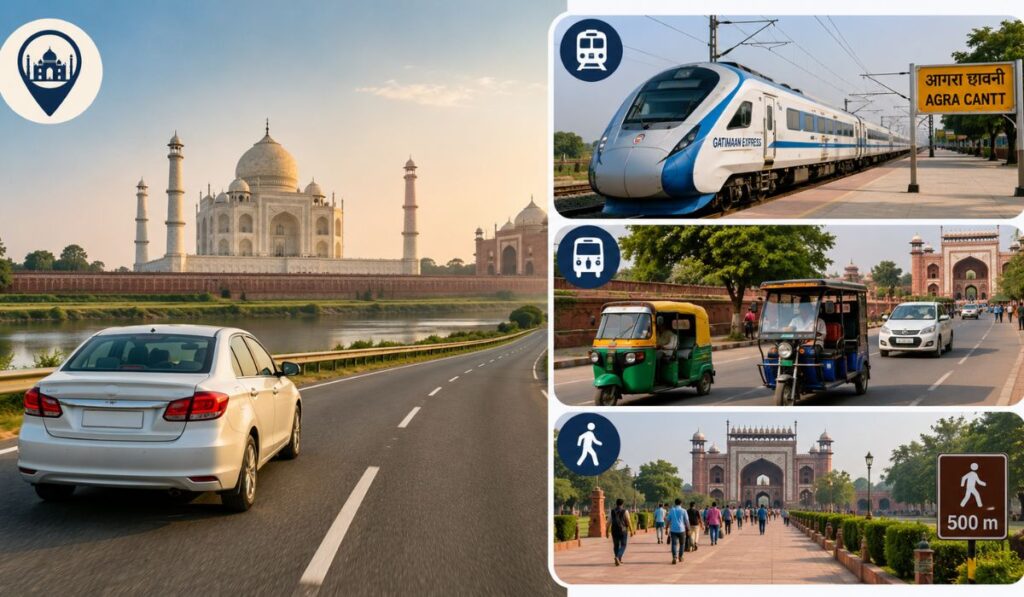
<p>Available options include:</p>
<!-- /wp:paragraph -->
<!-- wp:list -->
<ul class="wp-block-list"><!-- wp:list-item -->
<li>Private Taxi</li>
<!-- /wp:list-item -->
<!-- wp:list-item -->
<li>Auto Rickshaw</li>
<!-- /wp:list-item -->
<!-- wp:list-item -->
<li>Cab Services</li>
<!-- /wp:list-item -->
<!-- wp:list-item -->
<li>Pre-booked Tour Vehicle</li>
<!-- /wp:list-item --></ul>
<!-- /wp:list -->
<!-- wp:paragraph -->
<p>Many travelers prefer booking a private guided tour that includes station pickup.</p>
<!-- /wp:paragraph -->
<!-- wp:heading -->
<h2 class="wp-block-heading"><strong>Is a Guided Tour Worth It?</strong></h2>
<!-- /wp:heading -->
<!-- wp:paragraph -->
<p>Yes. A professional guide can help you understand:</p>
<!-- /wp:paragraph -->
<!-- wp:list -->
<ul class="wp-block-list"><!-- wp:list-item -->
<li>Taj Mahal history</li>
<!-- /wp:list-item -->
<!-- wp:list-item -->
<li>Mughal architecture</li>
<!-- /wp:list-item -->
<!-- wp:list-item -->
<li>Best photo locations</li>
<!-- /wp:list-item -->
<!-- wp:list-item -->
<li>Hidden details</li>
<!-- /wp:list-item -->
<!-- wp:list-item -->
<li>Local culture</li>
<!-- /wp:list-item --></ul>
<!-- /wp:list -->
<!-- wp:paragraph -->
<p>It also saves valuable sightseeing time. Many visitors choose a <a href="https://www.mytajtour.com/tours/taj-mahal-tour-by-gatimaan-train/">Taj Mahal tour by Gatimaan train</a> combined with a private guide and station transfers for a more comfortable and hassle-free experience.</p>
<!-- /wp:paragraph -->
<!-- wp:heading -->
<h2 class="wp-block-heading"><strong>Useful Travel Tips</strong></h2>
<!-- /wp:heading -->
<!-- wp:list -->
<ul class="wp-block-list"><!-- wp:list-item -->
<li>Arrive at the station at least 30 minutes early.</li>
<!-- /wp:list-item -->
<!-- wp:list-item -->
<li>Wear comfortable clothing.</li>
<!-- /wp:list-item -->
<!-- wp:list-item -->
<li>Visit the Taj Mahal in the morning to avoid crowds.</li>
<!-- /wp:list-item -->
<!-- wp:list-item -->
<li>Avoid carrying prohibited items.</li>
<!-- /wp:list-item -->
<!-- wp:list-item -->
<li>Keep your train ticket and ID handy.</li>
<!-- /wp:list-item -->
<!-- wp:list-item -->
<li>Book attraction tickets online whenever possible.</li>
<!-- /wp:list-item --></ul>
<!-- /wp:list -->
<!-- wp:heading -->
<h2 class="wp-block-heading"><strong>Frequently Asked Questions</strong></h2>
<!-- /wp:heading -->
<!-- wp:heading {"level":3} -->
<h3 class="wp-block-heading"><strong>1. Can I visit the Taj Mahal in one day using Gatimaan Express?</strong></h3>
<!-- /wp:heading -->
<!-- wp:paragraph -->
<p>Yes. The train is specifically suitable for same-day trips from Delhi.</p>
<!-- /wp:paragraph -->
<!-- wp:heading {"level":3} -->
<h3 class="wp-block-heading"><strong>2. How far is Agra Cantt from the Taj Mahal?</strong></h3>
<!-- /wp:heading -->
<!-- wp:paragraph -->
<p>The Taj Mahal is approximately 6 km from Agra Cantt Railway Station.</p>
<!-- /wp:paragraph -->
<!-- wp:heading {"level":3} -->
<h3 class="wp-block-heading"><strong>3. Does Gatimaan Express provide meals?</strong></h3>
<!-- /wp:heading -->
<!-- wp:paragraph -->
<p>Yes. Complimentary meals are generally served depending on your travel class and route.</p>
<!-- /wp:paragraph -->
<!-- wp:heading {"level":3} -->
<h3 class="wp-block-heading"><strong>4. Is the train suitable for foreign tourists?</strong></h3>
<!-- /wp:heading -->
<!-- wp:paragraph -->
<p>Absolutely. It is one of the most comfortable and popular train options for international visitors.</p>
<!-- /wp:paragraph -->
<!-- wp:heading {"level":3} -->
<h3 class="wp-block-heading"><strong>5. Which is better—car or Gatimaan Express?</strong></h3>
<!-- /wp:heading -->
<!-- wp:paragraph -->
<p>If you want a quicker, traffic-free journey, Gatimaan Express is often the better option. A private car, however, offers more flexibility to stop at attractions along the way.</p>
<!-- /wp:paragraph -->
<!-- wp:heading -->
<h2 class="wp-block-heading"><strong>Final Thoughts</strong></h2>
<!-- /wp:heading -->
<!-- wp:paragraph -->
<p>A journey to the Taj Mahal by Gatimaan Express is one of the easiest and fastest ways to experience India's most iconic monument. With a travel time of under two hours, comfortable seating, onboard meals, and a convenient schedule, it is ideal for travelers who want to explore Agra in a single day.</p>
<!-- /wp:paragraph -->
<!-- wp:paragraph -->
<p>To make the most of your visit, consider combining your train journey with a private guided tour that includes station pickup, monument entry assistance, and visits to Agra Fort and other nearby attractions. This ensures a smooth, memorable, and stress-free experience.</p>
<!-- /wp:paragraph -->
Planning a visit to the Taj Mahal from Delhi but don’t want to deal with highway traffic? The Gatimaan Express is one of the fastest, most comfortable, and most convenient ways to reach Agra in just around 100 minutes.
Whether you’re an international tourist or an Indian traveler looking for a hassle-free day trip, this guide covers everything you need to know—from booking tickets and train timings to local transportation, sightseeing, travel tips, and suggested itineraries. If you’re planning a Taj Mahal tour by Gatimaan train, this guide will help you organize a smooth and memorable journey.
Why Choose Gatimaan Express for a Taj Mahal Trip?
The Gatimaan Express is India’s first semi-high-speed train connecting Delhi and Agra. It offers a smooth journey, modern amenities, and perfect timing for a same-day Taj Mahal visit.
Benefits
Journey takes only about 1 hour 40 minutes
Comfortable Executive and Chair Car coaches
Breakfast served on the way to Agra
Ideal for same-day sightseeing
Air-conditioned coaches
Reliable and punctual service
Excellent option for families and foreign tourists
Quick Journey Overview
Details
Information
Departure Station
Hazrat Nizamuddin Railway Station (Delhi)
Arrival Station
Agra Cantt Railway Station
Travel Time
Around 100 Minutes
Distance
Approximately 188 km
Best For
Same-Day Taj Mahal Tour
Classes Available
Executive Chair Car & AC Chair Car
Gatimaan Express Timings (Typical Schedule)
Route
Time
Delhi Departure
Around 8:10 AM
Agra Arrival
Around 9:50 AM
Return from Agra
Around 5:50 PM
Delhi Arrival
Around 7:30 PM
Train schedules may change, so always verify the latest timings before booking.
How to Book Gatimaan Express Tickets
Booking tickets is simple. You can reserve seats through:
IRCTC Website
IRCTC Rail Connect App
Authorized travel agencies
Railway reservation counters
During peak tourist seasons, it is advisable to book several weeks in advance.
Sample One-Day Taj Mahal Itinerary
8:10 AM – Depart Delhi Board the Gatimaan Express from Hazrat Nizamuddin Railway Station.
9:50 AM – Arrive at Agra Cantt Meet your driver or hire a taxi to begin sightseeing.
10:30 AM – Visit the Taj Mahal Spend around two hours exploring the monument.
Highlights Include:
Main Mausoleum
Charbagh Gardens
Reflecting Pool
Yamuna River View
Photography Spots
1:00 PM – Lunch Enjoy authentic Mughlai cuisine or international dining at a well-rated restaurant.
2:30 PM – Explore Agra Fort Visit the UNESCO World Heritage Site and discover the rich Mughal history.
4:00 PM – Mehtab Bagh or Local Shopping
Depending on your schedule, you can:
Visit Mehtab Bagh
Explore marble handicraft shops
Buy leather products
Shop for local sweets
5:00 PM – Reach Agra Cantt Station Arrive early for boarding.
Evening Return comfortably to Delhi by Gatimaan Express.
Places You Can Visit Along with the Taj Mahal
If time permits, include these attractions:
Agra Fort
Mehtab Bagh
Itmad-ud-Daulah (Baby Taj)
Local Marble Inlay Workshops
Kinari Bazaar
Ticket Price (Approximate)
Ticket prices vary depending on demand and booking dates.
Typical fare ranges:
AC Chair Car
Executive Chair Car
Prices may increase during weekends, holidays, and tourist season.
Best Time to Travel
The ideal months are:
October
November
December
January
February
March
These months offer pleasant weather and excellent photography conditions.
What to Carry
Government-issued ID
Mobile ticket
Comfortable walking shoes
Sunglasses
Sunscreen
Water bottle
Camera
Light jacket during winter
Local Transportation from Agra Cantt
Available options include:
Private Taxi
Auto Rickshaw
Cab Services
Pre-booked Tour Vehicle
Many travelers prefer booking a private guided tour that includes station pickup.
Is a Guided Tour Worth It?
Yes. A professional guide can help you understand:
Taj Mahal history
Mughal architecture
Best photo locations
Hidden details
Local culture
It also saves valuable sightseeing time. Many visitors choose a Taj Mahal tour by Gatimaan train combined with a private guide and station transfers for a more comfortable and hassle-free experience.
Useful Travel Tips
Arrive at the station at least 30 minutes early.
Wear comfortable clothing.
Visit the Taj Mahal in the morning to avoid crowds.
Avoid carrying prohibited items.
Keep your train ticket and ID handy.
Book attraction tickets online whenever possible.
Frequently Asked Questions
1. Can I visit the Taj Mahal in one day using Gatimaan Express?
Yes. The train is specifically suitable for same-day trips from Delhi.
2. How far is Agra Cantt from the Taj Mahal?
The Taj Mahal is approximately 6 km from Agra Cantt Railway Station.
3. Does Gatimaan Express provide meals?
Yes. Complimentary meals are generally served depending on your travel class and route.
4. Is the train suitable for foreign tourists?
Absolutely. It is one of the most comfortable and popular train options for international visitors.
5. Which is better—car or Gatimaan Express?
If you want a quicker, traffic-free journey, Gatimaan Express is often the better option. A private car, however, offers more flexibility to stop at attractions along the way.
Final Thoughts
A journey to the Taj Mahal by Gatimaan Express is one of the easiest and fastest ways to experience India’s most iconic monument. With a travel time of under two hours, comfortable seating, onboard meals, and a convenient schedule, it is ideal for travelers who want to explore Agra in a single day.
To make the most of your visit, consider combining your train journey with a private guided tour that includes station pickup, monument entry assistance, and visits to Agra Fort and other nearby attractions. This ensures a smooth, memorable, and stress-free experience.
<!-- wp:paragraph -->
<p>The Taj Mahal is one of the most visited landmarks in the world and remains the crown jewel of Indian tourism. Recognized as a UNESCO World Heritage Site, this magnificent monument attracts millions of visitors every year. However, choosing the right time to visit can significantly impact your overall experience.</p>
<!-- /wp:paragraph -->
<!-- wp:paragraph -->
<p>Whether you're planning an Agra Day Trip from Delhi, a luxury getaway, or a photography-focused visit, understanding the weather, crowd levels, and seasonal conditions will help you make the most of your journey.</p>
<!-- /wp:paragraph -->
<!-- wp:paragraph -->
<p>In this complete Taj Mahal Travel Guide, we'll explore the best seasons, ideal months, and practical travel tips for visiting the Taj Mahal in 2026.</p>
<!-- /wp:paragraph -->
<!-- wp:heading -->
<h2 class="wp-block-heading"><strong>Best Season to Visit Taj Mahal</strong></h2>
<!-- /wp:heading -->
<!-- wp:image {"id":2015,"sizeSlug":"large","linkDestination":"none"} -->
<figure class="wp-block-image size-large"><img src="https://www.mytajtour.com/wp-content/uploads/2026/06/image-4-1024x597.jpeg" alt="Infographic comparing the best seasons to visit the Taj Mahal, including winter, summer, and monsoon, with weather, crowd levels, and travel advantages." class="wp-image-2015" title="Best Season to Visit the Taj Mahal – Winter, Summer & Monsoon Travel Guide"/></figure>
<!-- /wp:image -->
<!-- wp:heading {"level":3} -->
<h3 class="wp-block-heading"><strong>Winter Season (October to March)</strong></h3>
<!-- /wp:heading -->
<!-- wp:paragraph -->
<p>Winter is widely considered the best time to visit the Taj Mahal. During these months, temperatures range from 8°C to 25°C, creating pleasant conditions for sightseeing.</p>
<!-- /wp:paragraph -->
<!-- wp:paragraph -->
<p>Why visit in winter?</p>
<!-- /wp:paragraph -->
<!-- wp:list -->
<ul class="wp-block-list"><!-- wp:list-item -->
<li>Comfortable weather for walking and exploring</li>
<!-- /wp:list-item -->
<!-- wp:list-item -->
<li>Clear skies for photography</li>
<!-- /wp:list-item -->
<!-- wp:list-item -->
<li>Ideal for sunrise and sunset views</li>
<!-- /wp:list-item -->
<!-- wp:list-item -->
<li>Pleasant conditions for Agra sightseeing</li>
<!-- /wp:list-item --></ul>
<!-- /wp:list -->
<!-- wp:paragraph -->
<p>The months of November, December, February, and March are particularly popular among international tourists. If you're booking Taj Mahal Tour Packages from Delhi, winter is often the preferred season.</p>
<!-- /wp:paragraph -->
<!-- wp:heading {"level":3} -->
<h3 class="wp-block-heading"><strong>Summer Season (April to June)</strong></h3>
<!-- /wp:heading -->
<!-- wp:paragraph -->
<p>Summer in Agra can be extremely hot, with temperatures frequently exceeding 40°C.</p>
<!-- /wp:paragraph -->
<!-- wp:paragraph -->
<p>Advantages of summer travel:</p>
<!-- /wp:paragraph -->
<!-- wp:list -->
<ul class="wp-block-list"><!-- wp:list-item -->
<li>Fewer crowds</li>
<!-- /wp:list-item -->
<!-- wp:list-item -->
<li>Easier hotel availability</li>
<!-- /wp:list-item -->
<!-- wp:list-item -->
<li>Lower accommodation prices</li>
<!-- /wp:list-item --></ul>
<!-- /wp:list -->
<!-- wp:paragraph -->
<p>Challenges:</p>
<!-- /wp:paragraph -->
<!-- wp:list -->
<ul class="wp-block-list"><!-- wp:list-item -->
<li>Intense heat during daytime</li>
<!-- /wp:list-item -->
<!-- wp:list-item -->
<li>Less comfortable sightseeing experience</li>
<!-- /wp:list-item --></ul>
<!-- /wp:list -->
<!-- wp:paragraph -->
<p>If visiting during summer, plan your visit early in the morning, preferably at sunrise.</p>
<!-- /wp:paragraph -->
<!-- wp:heading {"level":3} -->
<h3 class="wp-block-heading"><strong>Monsoon Season (July to September)</strong></h3>
<!-- /wp:heading -->
<!-- wp:paragraph -->
<p>Monsoon transforms Agra into a greener destination. Occasional rain showers can create beautiful photography opportunities around the monument.</p>
<!-- /wp:paragraph -->
<!-- wp:paragraph -->
<p>Benefits of visiting during monsoon:</p>
<!-- /wp:paragraph -->
<!-- wp:list -->
<ul class="wp-block-list"><!-- wp:list-item -->
<li>Reduced tourist crowds</li>
<!-- /wp:list-item -->
<!-- wp:list-item -->
<li>Cooler temperatures than summer</li>
<!-- /wp:list-item -->
<!-- wp:list-item -->
<li>Dramatic cloud formations for photography</li>
<!-- /wp:list-item --></ul>
<!-- /wp:list -->
<!-- wp:paragraph -->
<p>Keep an umbrella handy and monitor weather forecasts before your visit.</p>
<!-- /wp:paragraph -->
<!-- wp:heading -->
<h2 class="wp-block-heading"><strong>Month-by-Month Guide to Visiting the Taj Mahal</strong></h2>
<!-- /wp:heading -->
<!-- wp:table {"hasFixedLayout":false} -->
<figure class="wp-block-table"><table><tbody><tr><td><strong>Month</strong></td><td><strong>Weather & Travel Conditions</strong></td></tr><tr><td><strong>January</strong></td><td>Cool temperatures and morning fog are common. Excellent for sightseeing, although sunrise views may occasionally be obscured by mist.</td></tr><tr><td><strong>February</strong></td><td>One of the most pleasant months. Clear skies and comfortable weather make it ideal for photography and sightseeing.</td></tr><tr><td><strong>March</strong></td><td>Mild temperatures and vibrant spring conditions create a great atmosphere for visitors.</td></tr><tr><td><strong>April</strong></td><td>The heat begins to increase. Early morning visits become more important.</td></tr><tr><td><strong>May</strong></td><td>Very hot weather. Sunrise visits are strongly recommended.</td></tr><tr><td><strong>June</strong></td><td>High temperatures continue, but crowds remain relatively low.</td></tr><tr><td><strong>July</strong></td><td>Beginning of the monsoon season with occasional rain showers.</td></tr><tr><td><strong>August</strong></td><td>Green landscapes and fewer visitors make August attractive for budget-conscious travelers.</td></tr><tr><td><strong>September</strong></td><td>Weather starts improving as the monsoon gradually retreats.</td></tr><tr><td><strong>October</strong></td><td>One of the best months to visit. Pleasant temperatures return, and visibility improves significantly.</td></tr><tr><td><strong>November</strong></td><td>Excellent weather and ideal conditions for Delhi-to-Agra travel.</td></tr><tr><td><strong>December</strong></td><td>Peak tourist season. Comfortable temperatures and a festive travel atmosphere attract visitors from around the world.</td></tr></tbody></table></figure>
<!-- /wp:table -->
<!-- wp:heading -->
<h2 class="wp-block-heading"><strong>Best Time of Day to Visit the Taj Mahal</strong></h2>
<!-- /wp:heading -->
<!-- wp:image {"id":2013,"sizeSlug":"large","linkDestination":"none"} -->
<figure class="wp-block-image size-large"><img src="https://www.mytajtour.com/wp-content/uploads/2026/06/image-2-1024x640.jpeg" alt="Infographic comparing the best time to visit the Taj Mahal during sunrise, morning, and sunset, highlighting lighting, crowds, weather, and photography opportunities." class="wp-image-2013" title="Best Time of Day to Visit the Taj Mahal – Sunrise, Morning & Sunset Guide"/></figure>
<!-- /wp:image -->
<!-- wp:heading {"level":3} -->
<h3 class="wp-block-heading"><strong>Sunrise Visit</strong></h3>
<!-- /wp:heading -->
<!-- wp:paragraph -->
<p>For most travelers, sunrise offers the most magical Taj Mahal experience.</p>
<!-- /wp:paragraph -->
<!-- wp:paragraph -->
<p>Benefits include:</p>
<!-- /wp:paragraph -->
<!-- wp:list -->
<ul class="wp-block-list"><!-- wp:list-item -->
<li>Soft golden light</li>
<!-- /wp:list-item -->
<!-- wp:list-item -->
<li>Fewer tourists</li>
<!-- /wp:list-item -->
<!-- wp:list-item -->
<li>Pleasant temperatures</li>
<!-- /wp:list-item -->
<!-- wp:list-item -->
<li>Exceptional photography opportunities</li>
<!-- /wp:list-item --></ul>
<!-- /wp:list -->
<!-- wp:paragraph -->
<p>The marble monument changes color as the sun rises, creating unforgettable views.</p>
<!-- /wp:paragraph -->
<!-- wp:heading {"level":3} -->
<h3 class="wp-block-heading"><strong>Morning Visit</strong></h3>
<!-- /wp:heading -->
<!-- wp:paragraph -->
<p>A morning visit after sunrise still offers comfortable weather and good visibility.</p>
<!-- /wp:paragraph -->
<!-- wp:paragraph -->
<p>Advantages:</p>
<!-- /wp:paragraph -->
<!-- wp:list -->
<ul class="wp-block-list"><!-- wp:list-item -->
<li>Convenient timing</li>
<!-- /wp:list-item -->
<!-- wp:list-item -->
<li>Good lighting</li>
<!-- /wp:list-item -->
<!-- wp:list-item -->
<li>Moderate crowd levels</li>
<!-- /wp:list-item --></ul>
<!-- /wp:list -->
<!-- wp:heading {"level":3} -->
<h3 class="wp-block-heading"><strong>Sunset Visit</strong></h3>
<!-- /wp:heading -->
<!-- wp:paragraph -->
<p>Sunset creates a romantic atmosphere as the white marble reflects warm orange and pink hues.</p>
<!-- /wp:paragraph -->
<!-- wp:paragraph -->
<p>Ideal for:</p>
<!-- /wp:paragraph -->
<!-- wp:list -->
<ul class="wp-block-list"><!-- wp:list-item -->
<li>Couples</li>
<!-- /wp:list-item -->
<!-- wp:list-item -->
<li>Photographers</li>
<!-- /wp:list-item -->
<!-- wp:list-item -->
<li>Leisure travelers</li>
<!-- /wp:list-item --></ul>
<!-- /wp:list -->
<!-- wp:heading -->
<h2 class="wp-block-heading"><strong>Why a Sunrise Visit Offers the Best Experience</strong></h2>
<!-- /wp:heading -->
<!-- wp:paragraph -->
<p>Many travel experts consider sunrise the absolute best time to visit the Taj Mahal.</p>
<!-- /wp:paragraph -->
<!-- wp:paragraph -->
<p>A Taj Mahal Sunrise Tour from Delhi allows travelers to reach Agra before large crowds arrive. During sunrise, the monument appears peaceful, and visitors can enjoy unobstructed views of the architecture.</p>
<!-- /wp:paragraph -->
<!-- wp:paragraph -->
<p>Photographers particularly appreciate the soft morning light that highlights intricate marble carvings and gemstone inlay work.</p>
<!-- /wp:paragraph -->
<!-- wp:paragraph -->
<p>For first-time visitors, sunrise offers a more memorable and immersive experience compared to visiting later in the day.</p>
<!-- /wp:paragraph -->
<!-- wp:heading -->
<h2 class="wp-block-heading"><strong>How to Reach the Taj Mahal from Delhi</strong></h2>
<!-- /wp:heading -->
<!-- wp:paragraph -->
<p>Delhi and Agra are well connected by road and rail, making travel convenient for domestic and international tourists.</p>
<!-- /wp:paragraph -->
<!-- wp:image {"id":2014,"sizeSlug":"large","linkDestination":"none"} -->
<figure class="wp-block-image size-large"><img src="https://www.mytajtour.com/wp-content/uploads/2026/06/image-3-1024x640.jpeg" alt="Travel guide showing how to reach the Taj Mahal from Delhi by car, Gatimaan Express train, and overnight tour with the Taj Mahal in the background." class="wp-image-2014" title="How to Reach the Taj Mahal from Delhi – Car, Gatimaan Express & Overnight Tour Guide"/></figure>
<!-- /wp:image -->
<!-- wp:heading {"level":3} -->
<h3 class="wp-block-heading"><strong>By Car</strong></h3>
<!-- /wp:heading -->
<!-- wp:paragraph -->
<p>A Taj Mahal Tour by Car from Delhi remains one of the most popular travel options.</p>
<!-- /wp:paragraph -->
<!-- wp:paragraph -->
<p>Benefits include:</p>
<!-- /wp:paragraph -->
<!-- wp:list -->
<ul class="wp-block-list"><!-- wp:list-item -->
<li>Flexible schedule</li>
<!-- /wp:list-item -->
<!-- wp:list-item -->
<li>Private transportation</li>
<!-- /wp:list-item -->
<!-- wp:list-item -->
<li>Comfortable journey</li>
<!-- /wp:list-item -->
<!-- wp:list-item -->
<li>Easy access to additional attractions</li>
<!-- /wp:list-item --></ul>
<!-- /wp:list -->
<!-- wp:paragraph -->
<p>The journey via the Yamuna Expressway typically takes around 3 to 4 hours.</p>
<!-- /wp:paragraph -->
<!-- wp:heading {"level":3} -->
<h3 class="wp-block-heading"><strong>By Gatimaan Express Train</strong></h3>
<!-- /wp:heading -->
<!-- wp:paragraph -->
<p>The <a href="https://www.mytajtour.com/tours/taj-mahal-tour-by-gatimaan-train/">Taj Mahal Tour by Gatimaan Train</a> is ideal for travelers seeking speed and comfort.</p>
<!-- /wp:paragraph -->
<!-- wp:paragraph -->
<p>Advantages:</p>
<!-- /wp:paragraph -->
<!-- wp:list -->
<ul class="wp-block-list"><!-- wp:list-item -->
<li>Fast travel time</li>
<!-- /wp:list-item -->
<!-- wp:list-item -->
<li>Comfortable seating</li>
<!-- /wp:list-item -->
<!-- wp:list-item -->
<li>Onboard services</li>
<!-- /wp:list-item -->
<!-- wp:list-item -->
<li>Reliable schedule</li>
<!-- /wp:list-item --></ul>
<!-- /wp:list -->
<!-- wp:paragraph -->
<p>The train connects Delhi and Agra in approximately 100 minutes.</p>
<!-- /wp:paragraph -->
<!-- wp:heading {"level":3} -->
<h3 class="wp-block-heading"><strong>Overnight Tour Options</strong></h3>
<!-- /wp:heading -->
<!-- wp:paragraph -->
<p>An <a href="https://www.mytajtour.com/tours/overnight-taj-mahal-tour/">Overnight Taj Mahal Tour from Delhi</a> provides a more relaxed experience.</p>
<!-- /wp:paragraph -->
<!-- wp:paragraph -->
<p>Benefits:</p>
<!-- /wp:paragraph -->
<!-- wp:list -->
<ul class="wp-block-list"><!-- wp:list-item -->
<li>No rushing through attractions</li>
<!-- /wp:list-item -->
<!-- wp:list-item -->
<li>Opportunity to visit Agra Fort</li>
<!-- /wp:list-item -->
<!-- wp:list-item -->
<li>Time to explore local markets</li>
<!-- /wp:list-item -->
<!-- wp:list-item -->
<li>Enhanced cultural experience</li>
<!-- /wp:list-item --></ul>
<!-- /wp:list -->
<!-- wp:paragraph -->
<p>Many travelers combine the Taj Mahal with nearby attractions for a comprehensive Agra tourism experience.</p>
<!-- /wp:paragraph -->
<!-- wp:heading -->
<h2 class="wp-block-heading"><strong>Travel Tips for First-Time Visitors</strong></h2>
<!-- /wp:heading -->
<!-- wp:heading {"level":3} -->
<h3 class="wp-block-heading"><strong>Book Tickets in Advance</strong></h3>
<!-- /wp:heading -->
<!-- wp:paragraph -->
<p>Purchase Taj Mahal tickets online whenever possible to avoid long queues.</p>
<!-- /wp:paragraph -->
<!-- wp:heading {"level":3} -->
<h3 class="wp-block-heading"><strong>Know the Entry Gates</strong></h3>
<!-- /wp:heading -->
<!-- wp:paragraph -->
<p>The monument has multiple entry gates:</p>
<!-- /wp:paragraph -->
<!-- wp:list -->
<ul class="wp-block-list"><!-- wp:list-item -->
<li>East Gate</li>
<!-- /wp:list-item -->
<!-- wp:list-item -->
<li>West Gate</li>
<!-- /wp:list-item -->
<!-- wp:list-item -->
<li>South Gate</li>
<!-- /wp:list-item --></ul>
<!-- /wp:list -->
<!-- wp:paragraph -->
<p>The East and West Gates are generally preferred by tourists.</p>
<!-- /wp:paragraph -->
<!-- wp:heading {"level":3} -->
<h3 class="wp-block-heading"><strong>Follow Security Regulations</strong></h3>
<!-- /wp:heading -->
<!-- wp:paragraph -->
<p>Certain items are restricted inside the complex.</p>
<!-- /wp:paragraph -->
<!-- wp:paragraph -->
<p>Avoid carrying:</p>
<!-- /wp:paragraph -->
<!-- wp:list -->
<ul class="wp-block-list"><!-- wp:list-item -->
<li>Large bags</li>
<!-- /wp:list-item -->
<!-- wp:list-item -->
<li>Drones</li>
<!-- /wp:list-item -->
<!-- wp:list-item -->
<li>Food items</li>
<!-- /wp:list-item -->
<!-- wp:list-item -->
<li>Tobacco products</li>
<!-- /wp:list-item --></ul>
<!-- /wp:list -->
<!-- wp:heading {"level":3} -->
<h3 class="wp-block-heading"><strong>Photography Tips</strong></h3>
<!-- /wp:heading -->
<!-- wp:paragraph -->
<p>For the best photographs:</p>
<!-- /wp:paragraph -->
<!-- wp:list -->
<ul class="wp-block-list"><!-- wp:list-item -->
<li>Arrive early</li>
<!-- /wp:list-item -->
<!-- wp:list-item -->
<li>Use natural light</li>
<!-- /wp:list-item -->
<!-- wp:list-item -->
<li>Explore different angles</li>
<!-- /wp:list-item -->
<!-- wp:list-item -->
<li>Visit during winter months for clear visibility</li>
<!-- /wp:list-item --></ul>
<!-- /wp:list -->
<!-- wp:heading {"level":3} -->
<h3 class="wp-block-heading"><strong>Check Taj Mahal Timings</strong></h3>
<!-- /wp:heading -->
<!-- wp:paragraph -->
<p>The Taj Mahal is generally open from sunrise to sunset and remains closed on Fridays.</p>
<!-- /wp:paragraph -->
<!-- wp:paragraph -->
<p>Always verify current Taj Mahal timings before your trip.</p>
<!-- /wp:paragraph -->
<!-- wp:heading -->
<h2 class="wp-block-heading"><strong>Suggested Taj Mahal Itineraries from Delhi</strong></h2>
<!-- /wp:heading -->
<!-- wp:heading {"level":3} -->
<h3 class="wp-block-heading"><strong>Same-Day Tour</strong></h3>
<!-- /wp:heading -->
<!-- wp:paragraph -->
<p>Ideal for travelers with limited time.</p>
<!-- /wp:paragraph -->
<!-- wp:paragraph -->
<p>Sample itinerary:</p>
<!-- /wp:paragraph -->
<!-- wp:list -->
<ul class="wp-block-list"><!-- wp:list-item -->
<li>Early departure from Delhi</li>
<!-- /wp:list-item -->
<!-- wp:list-item -->
<li>Visit Taj Mahal</li>
<!-- /wp:list-item -->
<!-- wp:list-item -->
<li>Explore Agra Fort</li>
<!-- /wp:list-item -->
<!-- wp:list-item -->
<li>Lunch in Agra</li>
<!-- /wp:list-item -->
<!-- wp:list-item -->
<li>Return to Delhi</li>
<!-- /wp:list-item --></ul>
<!-- /wp:list -->
<!-- wp:paragraph -->
<p>This option is commonly included in many <a href="https://www.mytajtour.com/taj-mahal-tour-packages/">Taj Mahal Tour Packages from Delhi</a>.</p>
<!-- /wp:paragraph -->
<!-- wp:heading {"level":3} -->
<h3 class="wp-block-heading"><strong>Sunrise Tour</strong></h3>
<!-- /wp:heading -->
<!-- wp:paragraph -->
<p>Perfect for photography enthusiasts.</p>
<!-- /wp:paragraph -->
<!-- wp:paragraph -->
<p>Sample itinerary:</p>
<!-- /wp:paragraph -->
<!-- wp:list -->
<ul class="wp-block-list"><!-- wp:list-item -->
<li>Depart Delhi before dawn</li>
<!-- /wp:list-item -->
<!-- wp:list-item -->
<li>Arrive at Taj Mahal for sunrise</li>
<!-- /wp:list-item -->
<!-- wp:list-item -->
<li>Explore Agra attractions</li>
<!-- /wp:list-item -->
<!-- wp:list-item -->
<li>Return to Delhi in the evening</li>
<!-- /wp:list-item --></ul>
<!-- /wp:list -->
<!-- wp:heading {"level":3} -->
<h3 class="wp-block-heading"><strong>Overnight Tour</strong></h3>
<!-- /wp:heading -->
<!-- wp:paragraph -->
<p>Best for travelers seeking a comprehensive experience.</p>
<!-- /wp:paragraph -->
<!-- wp:paragraph -->
<p>Day 1:</p>
<!-- /wp:paragraph -->
<!-- wp:list -->
<ul class="wp-block-list"><!-- wp:list-item -->
<li>Travel to Agra</li>
<!-- /wp:list-item -->
<!-- wp:list-item -->
<li>Visit Agra Fort</li>
<!-- /wp:list-item -->
<!-- wp:list-item -->
<li>Explore local markets</li>
<!-- /wp:list-item --></ul>
<!-- /wp:list -->
<!-- wp:paragraph -->
<p>Day 2:</p>
<!-- /wp:paragraph -->
<!-- wp:list -->
<ul class="wp-block-list"><!-- wp:list-item -->
<li>Sunrise visit to Taj Mahal</li>
<!-- /wp:list-item -->
<!-- wp:list-item -->
<li>Breakfast</li>
<!-- /wp:list-item -->
<!-- wp:list-item -->
<li>Additional sightseeing</li>
<!-- /wp:list-item -->
<!-- wp:list-item -->
<li>Return to Delhi</li>
<!-- /wp:list-item --></ul>
<!-- /wp:list -->
<!-- wp:heading -->
<h2 class="wp-block-heading"><strong>Frequently Asked Questions</strong></h2>
<!-- /wp:heading -->
<!-- wp:heading {"level":3,"fontSize":"medium"} -->
<h3 class="wp-block-heading has-medium-font-size"><strong>1. Is winter the best season to visit the Taj Mahal?</strong></h3>
<!-- /wp:heading -->
<!-- wp:paragraph -->
<p>Yes. October through March generally offers the most comfortable weather and ideal sightseeing conditions.</p>
<!-- /wp:paragraph -->
<!-- wp:heading {"level":3,"fontSize":"medium"} -->
<h3 class="wp-block-heading has-medium-font-size"><strong>2. What is the best month to visit the Taj Mahal?</strong></h3>
<!-- /wp:heading -->
<!-- wp:paragraph -->
<p>February, November, and December are often considered the best months.</p>
<!-- /wp:paragraph -->
<!-- wp:heading {"level":3,"fontSize":"medium"} -->
<h3 class="wp-block-heading has-medium-font-size"><strong>3. Is sunrise better than sunset at the Taj Mahal?</strong></h3>
<!-- /wp:heading -->
<!-- wp:paragraph -->
<p>Sunrise usually provides fewer crowds, cooler temperatures, and superior photography conditions.</p>
<!-- /wp:paragraph -->
<!-- wp:heading {"level":3,"fontSize":"medium"} -->
<h3 class="wp-block-heading has-medium-font-size"><strong>4. How many hours are needed to visit the Taj Mahal?</strong></h3>
<!-- /wp:heading -->
<!-- wp:paragraph -->
<p>Most visitors spend between 2 and 3 hours exploring the monument.</p>
<!-- /wp:paragraph -->
<!-- wp:heading {"level":3,"fontSize":"medium"} -->
<h3 class="wp-block-heading has-medium-font-size"><strong>5. Can I visit the Taj Mahal in one day from Delhi?</strong></h3>
<!-- /wp:heading -->
<!-- wp:paragraph -->
<p>Yes. An Agra Day Trip from Delhi is one of the most popular travel options.</p>
<!-- /wp:paragraph -->
<!-- wp:heading {"level":3,"fontSize":"medium"} -->
<h3 class="wp-block-heading has-medium-font-size"><strong>6. Is the Taj Mahal open every day?</strong></h3>
<!-- /wp:heading -->
<!-- wp:paragraph -->
<p>No. The monument remains closed on Fridays.</p>
<!-- /wp:paragraph -->
<!-- wp:heading {"level":3,"fontSize":"medium"} -->
<h3 class="wp-block-heading has-medium-font-size"><strong>7. Which is better: train or car travel from Delhi?</strong></h3>
<!-- /wp:heading -->
<!-- wp:paragraph -->
<p>Both options are excellent. Travelers seeking flexibility often choose a Taj Mahal Tour by Car from Delhi, while those preferring speed select the Gatimaan Express.</p>
<!-- /wp:paragraph -->
<!-- wp:heading {"level":3,"fontSize":"medium"} -->
<h3 class="wp-block-heading has-medium-font-size"><strong>8. Is an overnight tour worth it?</strong></h3>
<!-- /wp:heading -->
<!-- wp:paragraph -->
<p>Absolutely. An Overnight Taj Mahal Tour from Delhi allows visitors to explore Agra more comfortably and enjoy additional attractions.</p>
<!-- /wp:paragraph -->
<!-- wp:heading -->
<h2 class="wp-block-heading"><strong>Conclusion</strong></h2>
<!-- /wp:heading -->
<!-- wp:paragraph -->
<p>The Best Time to Visit Taj Mahal is during the winter season from October to March when the weather is pleasant and ideal for sightseeing. Among all experiences, a sunrise visit remains the most rewarding, offering breathtaking views, comfortable temperatures, and exceptional photography opportunities.</p>
<!-- /wp:paragraph -->
<!-- wp:paragraph -->
<p>Whether you choose a <a href="https://www.mytajtour.com/tours/taj-mahal-sunrise-tour/">Taj Mahal Sunrise Tour from Delhi</a>, a Taj Mahal Tour by Car from Delhi, a Taj Mahal Tour by Gatimaan Train, or an Overnight Taj Mahal Tour from Delhi, careful planning will ensure a memorable journey to one of the world's most iconic monuments.</p>
<!-- /wp:paragraph -->
<!-- wp:paragraph -->
<p>For first-time travelers, February, November, and December offer the perfect balance of weather, visibility, and overall travel experience.</p>
<!-- /wp:paragraph -->
The Taj Mahal is one of the most visited landmarks in the world and remains the crown jewel of Indian tourism. Recognized as a UNESCO World Heritage Site, this magnificent monument attracts millions of visitors every year. However, choosing the right time to visit can significantly impact your overall experience.
Whether you’re planning an Agra Day Trip from Delhi, a luxury getaway, or a photography-focused visit, understanding the weather, crowd levels, and seasonal conditions will help you make the most of your journey.
In this complete Taj Mahal Travel Guide, we’ll explore the best seasons, ideal months, and practical travel tips for visiting the Taj Mahal in 2026.
Best Season to Visit Taj Mahal
Winter Season (October to March)
Winter is widely considered the best time to visit the Taj Mahal. During these months, temperatures range from 8°C to 25°C, creating pleasant conditions for sightseeing.
Why visit in winter?
Comfortable weather for walking and exploring
Clear skies for photography
Ideal for sunrise and sunset views
Pleasant conditions for Agra sightseeing
The months of November, December, February, and March are particularly popular among international tourists. If you’re booking Taj Mahal Tour Packages from Delhi, winter is often the preferred season.
Summer Season (April to June)
Summer in Agra can be extremely hot, with temperatures frequently exceeding 40°C.
Advantages of summer travel:
Fewer crowds
Easier hotel availability
Lower accommodation prices
Challenges:
Intense heat during daytime
Less comfortable sightseeing experience
If visiting during summer, plan your visit early in the morning, preferably at sunrise.
Monsoon Season (July to September)
Monsoon transforms Agra into a greener destination. Occasional rain showers can create beautiful photography opportunities around the monument.
Benefits of visiting during monsoon:
Reduced tourist crowds
Cooler temperatures than summer
Dramatic cloud formations for photography
Keep an umbrella handy and monitor weather forecasts before your visit.
Month-by-Month Guide to Visiting the Taj Mahal
Month
Weather & Travel Conditions
January
Cool temperatures and morning fog are common. Excellent for sightseeing, although sunrise views may occasionally be obscured by mist.
February
One of the most pleasant months. Clear skies and comfortable weather make it ideal for photography and sightseeing.
March
Mild temperatures and vibrant spring conditions create a great atmosphere for visitors.
April
The heat begins to increase. Early morning visits become more important.
May
Very hot weather. Sunrise visits are strongly recommended.
June
High temperatures continue, but crowds remain relatively low.
July
Beginning of the monsoon season with occasional rain showers.
August
Green landscapes and fewer visitors make August attractive for budget-conscious travelers.
September
Weather starts improving as the monsoon gradually retreats.
October
One of the best months to visit. Pleasant temperatures return, and visibility improves significantly.
November
Excellent weather and ideal conditions for Delhi-to-Agra travel.
December
Peak tourist season. Comfortable temperatures and a festive travel atmosphere attract visitors from around the world.
Best Time of Day to Visit the Taj Mahal
Sunrise Visit
For most travelers, sunrise offers the most magical Taj Mahal experience.
Benefits include:
Soft golden light
Fewer tourists
Pleasant temperatures
Exceptional photography opportunities
The marble monument changes color as the sun rises, creating unforgettable views.
Morning Visit
A morning visit after sunrise still offers comfortable weather and good visibility.
Advantages:
Convenient timing
Good lighting
Moderate crowd levels
Sunset Visit
Sunset creates a romantic atmosphere as the white marble reflects warm orange and pink hues.
Ideal for:
Couples
Photographers
Leisure travelers
Why a Sunrise Visit Offers the Best Experience
Many travel experts consider sunrise the absolute best time to visit the Taj Mahal.
A Taj Mahal Sunrise Tour from Delhi allows travelers to reach Agra before large crowds arrive. During sunrise, the monument appears peaceful, and visitors can enjoy unobstructed views of the architecture.
Photographers particularly appreciate the soft morning light that highlights intricate marble carvings and gemstone inlay work.
For first-time visitors, sunrise offers a more memorable and immersive experience compared to visiting later in the day.
How to Reach the Taj Mahal from Delhi
Delhi and Agra are well connected by road and rail, making travel convenient for domestic and international tourists.
By Car
A Taj Mahal Tour by Car from Delhi remains one of the most popular travel options.
Benefits include:
Flexible schedule
Private transportation
Comfortable journey
Easy access to additional attractions
The journey via the Yamuna Expressway typically takes around 3 to 4 hours.
Best for travelers seeking a comprehensive experience.
Day 1:
Travel to Agra
Visit Agra Fort
Explore local markets
Day 2:
Sunrise visit to Taj Mahal
Breakfast
Additional sightseeing
Return to Delhi
Frequently Asked Questions
1. Is winter the best season to visit the Taj Mahal?
Yes. October through March generally offers the most comfortable weather and ideal sightseeing conditions.
2. What is the best month to visit the Taj Mahal?
February, November, and December are often considered the best months.
3. Is sunrise better than sunset at the Taj Mahal?
Sunrise usually provides fewer crowds, cooler temperatures, and superior photography conditions.
4. How many hours are needed to visit the Taj Mahal?
Most visitors spend between 2 and 3 hours exploring the monument.
5. Can I visit the Taj Mahal in one day from Delhi?
Yes. An Agra Day Trip from Delhi is one of the most popular travel options.
6. Is the Taj Mahal open every day?
No. The monument remains closed on Fridays.
7. Which is better: train or car travel from Delhi?
Both options are excellent. Travelers seeking flexibility often choose a Taj Mahal Tour by Car from Delhi, while those preferring speed select the Gatimaan Express.
8. Is an overnight tour worth it?
Absolutely. An Overnight Taj Mahal Tour from Delhi allows visitors to explore Agra more comfortably and enjoy additional attractions.
Conclusion
The Best Time to Visit Taj Mahal is during the winter season from October to March when the weather is pleasant and ideal for sightseeing. Among all experiences, a sunrise visit remains the most rewarding, offering breathtaking views, comfortable temperatures, and exceptional photography opportunities.
Whether you choose a Taj Mahal Sunrise Tour from Delhi, a Taj Mahal Tour by Car from Delhi, a Taj Mahal Tour by Gatimaan Train, or an Overnight Taj Mahal Tour from Delhi, careful planning will ensure a memorable journey to one of the world’s most iconic monuments.
For first-time travelers, February, November, and December offer the perfect balance of weather, visibility, and overall travel experience.
<!-- wp:paragraph -->
<p>Few places on earth stop you in your tracks the way the Taj Mahal does. The moment its white marble dome comes into view, framed by sandstone archways and a mirror-still reflecting pool, most first-time visitors simply go quiet. No photograph fully prepares you for it.</p>
<!-- /wp:paragraph -->
<!-- wp:paragraph -->
<p>But a visit this iconic deserves more than just showing up. Entry rules, crowd patterns, photography spots, restricted items — there's a lot to navigate. This guide covers everything you need to plan a smooth, memorable first visit to one of the world's greatest monuments.</p>
<!-- /wp:paragraph -->
<!-- wp:heading -->
<h2 class="wp-block-heading"><strong>Why the Taj Mahal Is a Must-Visit Destination</strong></h2>
<!-- /wp:heading -->
<!-- wp:heading {"level":3} -->
<h3 class="wp-block-heading"><strong>A Symbol of Love and Architectural Excellence</strong></h3>
<!-- /wp:heading -->
<!-- wp:paragraph -->
<p>Emperor Shah Jahan commissioned the Taj Mahal in 1632 as a mausoleum for his beloved wife Mumtaz Mahal, who passed away during childbirth. Construction took over 20 years and involved roughly 20,000 artisans from across India, Persia, and Central Asia. The result is a structure that has been called the finest example of Mughal architecture in the world — a seamless blend of Islamic, Persian, Ottoman, and Indian design traditions.</p>
<!-- /wp:paragraph -->
<!-- wp:heading {"level":3} -->
<h3 class="wp-block-heading"><strong>UNESCO World Heritage Status</strong></h3>
<!-- /wp:heading -->
<!-- wp:paragraph -->
<p>The Taj Mahal was inscribed as a UNESCO World Heritage Site in 1983. The designation recognized the complex not just as an architectural achievement, but as a testament to the cultural and artistic exchange of the Mughal era. Today, it draws over 7 to 8 million visitors annually, making it one of India's most visited landmarks.</p>
<!-- /wp:paragraph -->
<!-- wp:heading {"level":3} -->
<h3 class="wp-block-heading"><strong>What Makes the Taj Mahal Unique</strong></h3>
<!-- /wp:heading -->
<!-- wp:paragraph -->
<p>Beyond its famous symmetry and white marble, the Taj Mahal has subtleties that reward a slow, attentive visit. The entire complex is precisely symmetrical — except for the two cenotaphs inside the mausoleum. The inlaid floral work uses over 28 types of semi-precious stones including lapis lazuli, jade, and turquoise. The minarets are built with a slight outward tilt so they would fall away from the main structure in the event of an earthquake.</p>
<!-- /wp:paragraph -->
<!-- wp:heading -->
<h2 class="wp-block-heading"><strong>Best Time to Visit the Taj Mahal</strong></h2>
<!-- /wp:heading -->
<!-- wp:heading {"level":3} -->
<h3 class="wp-block-heading"><strong>Visiting During Sunrise</strong></h3>
<!-- /wp:heading -->
<!-- wp:paragraph -->
<p>Sunrise is the single best time to visit — and most experienced travelers will tell you the same. The complex opens 30 minutes before sunrise, and the soft golden light makes the white marble glow. Crowds are also significantly thinner at this hour. For those who want to make the most of an early morning experience, many visitors plan <a href="https://www.mytajtour.com/tours/taj-mahal-sunrise-tour/">sunrise visits to the Taj Mahal</a> as a dedicated trip from Delhi.</p>
<!-- /wp:paragraph -->
<!-- wp:heading {"level":3} -->
<h3 class="wp-block-heading"><strong>Seasonal Travel Considerations</strong></h3>
<!-- /wp:heading -->
<!-- wp:paragraph -->
<p><strong>October to March</strong> is the most comfortable window for a visit. Temperatures are mild, the air is clearer, and the experience overall is more pleasant. Winter mornings (December–January) can be cold and foggy — sometimes so foggy that the dome disappears — but this creates an ethereal, dramatic atmosphere that many photographers love.</p>
<!-- /wp:paragraph -->
<!-- wp:paragraph -->
<p><strong>April to June</strong> brings intense heat, with temperatures regularly exceeding 40°C (104°F). If you visit during summer, arrive at opening time, carry water, and plan to leave by mid-morning.</p>
<!-- /wp:paragraph -->
<!-- wp:paragraph -->
<p><strong>July to September</strong> is monsoon season. The rain keeps crowds away and turns the surrounding gardens lush and green. Just be prepared for humidity and occasional heavy downpours.</p>
<!-- /wp:paragraph -->
<!-- wp:heading {"level":3} -->
<h3 class="wp-block-heading"><strong>Weekdays vs Weekends</strong></h3>
<!-- /wp:heading -->
<!-- wp:paragraph -->
<p>Weekdays are noticeably less crowded than weekends and public holidays. Friday is the one day of the week the Taj Mahal is closed (it opens only for Friday prayers at the mosque). Plan around that, and if possible, aim for a Tuesday or Wednesday morning for the quietest experience.</p>
<!-- /wp:paragraph -->
<!-- wp:heading -->
<h2 class="wp-block-heading"><strong>Things to Know Before Visiting the Taj Mahal</strong></h2>
<!-- /wp:heading -->
<!-- wp:image {"id":2007,"sizeSlug":"large","linkDestination":"none"} -->
<figure class="wp-block-image size-large"><img src="https://www.mytajtour.com/wp-content/uploads/2026/06/image-1024x597.jpeg" alt="Taj Mahal visitor guide showing entry rules, security checks, ticket information, allowed and restricted items, and visitor tips" class="wp-image-2007" title="Taj Mahal Entry Rules & Security Guide for First-Time Visitors"/></figure>
<!-- /wp:image -->
<!-- wp:heading {"level":3} -->
<h3 class="wp-block-heading"><strong>Entry Rules and Security Guidelines</strong></h3>
<!-- /wp:heading -->
<!-- wp:paragraph -->
<p>All visitors pass through security screening before entering. There are separate entry queues for men and women. The entry fee differs for Indian nationals and foreign tourists — check the Archaeological Survey of India's official website for the current rate before your trip.</p>
<!-- /wp:paragraph -->
<!-- wp:paragraph -->
<p>Tickets can be purchased at the gate or booked online in advance. Online booking is recommended, especially during peak season, as it saves time at the entrance.</p>
<!-- /wp:paragraph -->
<!-- wp:heading {"level":3} -->
<h3 class="wp-block-heading"><strong>Items Allowed and Restricted</strong></h3>
<!-- /wp:heading -->
<!-- wp:paragraph -->
<p>The following items are <strong>not permitted</strong> inside the complex:</p>
<!-- /wp:paragraph -->
<!-- wp:list -->
<ul class="wp-block-list"><!-- wp:list-item -->
<li>Food and drinks (water in a transparent bottle is allowed)</li>
<!-- /wp:list-item -->
<!-- wp:list-item -->
<li>Tripods and selfie sticks</li>
<!-- /wp:list-item -->
<!-- wp:list-item -->
<li>Tobacco and cigarettes</li>
<!-- /wp:list-item -->
<!-- wp:list-item -->
<li>Drone cameras</li>
<!-- /wp:list-item -->
<!-- wp:list-item -->
<li>Large bags or luggage</li>
<!-- /wp:list-item --></ul>
<!-- /wp:list -->
<!-- wp:paragraph -->
<p>Small bags, cameras, phones, and wallets are fine. Lockers are available near the entrance if you need to leave items behind.</p>
<!-- /wp:paragraph -->
<!-- wp:heading {"level":3} -->
<h3 class="wp-block-heading"><strong>Dress Comfortably for the Weather</strong></h3>
<!-- /wp:heading -->
<!-- wp:paragraph -->
<p>There's no strict dress code, but modest, comfortable clothing is advised out of respect for the religious site. Lightweight, breathable fabrics work best in warm months. Shoes must be removed or covered with provided shoe covers before entering the main mausoleum — both options are available at the entrance.</p>
<!-- /wp:paragraph -->
<!-- wp:heading -->
<h2 class="wp-block-heading"><strong>How to Reach the Taj Mahal</strong></h2>
<!-- /wp:heading -->
<!-- wp:image {"id":2010,"sizeSlug":"large","linkDestination":"none"} -->
<figure class="wp-block-image size-large"><img src="https://www.mytajtour.com/wp-content/uploads/2026/06/agra-cantt-to-taj-mahal-transport-guide.jpg-1024x597.jpg" alt="Travel options from Agra Cantt Railway Station to the Taj Mahal including taxi, auto rickshaw, e-rickshaw, and walking route" class="wp-image-2010" title="Agra Cantt to Taj Mahal – Best Transport Options for Tourists"/></figure>
<!-- /wp:image -->
<!-- wp:heading {"level":3} -->
<h3 class="wp-block-heading"><strong></strong><strong><br></strong><strong>Reaching Agra by Road</strong></h3>
<!-- /wp:heading -->
<!-- wp:paragraph -->
<p>Agra is approximately 200–230 km from Delhi via the Yamuna Expressway. By car, the journey typically takes 2.5 to 3.5 hours depending on traffic. This is a popular option for those who want flexibility and comfort — many travelers arrange <a href="https://www.mytajtour.com/tours/taj-mahal-tour-by-car/">Taj Mahal Tour by Car from Delhi</a> that allow for a relaxed pace and stops along the way.</p>
<!-- /wp:paragraph -->
<!-- wp:heading {"level":3} -->
<h3 class="wp-block-heading"><strong>Traveling by Train</strong></h3>
<!-- /wp:heading -->
<!-- wp:paragraph -->
<p>The Gatimaan Express is the fastest and most popular train connecting Delhi's Hazrat Nizamuddin station to Agra Cantt, covering the route in about 1 hour 40 minutes. The Shatabdi Express is another comfortable option, running between Delhi and Agra multiple times a day. Booking in advance is strongly recommended, especially on weekends and during peak tourist season.</p>
<!-- /wp:paragraph -->
<!-- wp:heading {"level":3} -->
<h3 class="wp-block-heading"><strong>Local Transportation Options</strong></h3>
<!-- /wp:heading -->
<!-- wp:paragraph -->
<p>From Agra's train station or city center, auto-rickshaws, e-rickshaws, and pre-paid taxis are all commonly used to reach the Taj Mahal. The South Gate (near Taj Ganj) is the main tourist entrance. The East Gate and West Gate are less congested alternatives. No motorized vehicles are allowed within 500 meters of the monument, so you'll walk the final stretch.</p>
<!-- /wp:paragraph -->
<!-- wp:heading -->
<h2 class="wp-block-heading"><strong>What to Expect Inside the Taj Mahal Complex</strong></h2>
<!-- /wp:heading -->
<!-- wp:heading {"level":3} -->
<h3 class="wp-block-heading"><strong>Main Mausoleum</strong></h3>
<!-- /wp:heading -->
<!-- wp:paragraph -->
<p>The centerpiece of the complex is the white marble mausoleum sitting on a raised platform. Inside, the cenotaphs of Mumtaz Mahal and Shah Jahan rest side by side, surrounded by intricately carved marble screens. The interior is dimly lit and hushed — a dramatic contrast to the sun-drenched gardens outside.</p>
<!-- /wp:paragraph -->
<!-- wp:heading {"level":3} -->
<h3 class="wp-block-heading"><strong>Gardens and Reflecting Pool</strong></h3>
<!-- /wp:heading -->
<!-- wp:paragraph -->
<p>The formal Mughal garden (called the Charbagh) stretches from the main gate to the base of the mausoleum. It is divided into four quadrants by water channels, with a large raised marble tank at the center — the famous reflecting pool that mirrors the dome. Walking through these gardens slowly reveals new angles and perspectives at every turn.</p>
<!-- /wp:paragraph -->
<!-- wp:heading {"level":3} -->
<h3 class="wp-block-heading"><strong>Mosque and Guest House</strong></h3>
<!-- /wp:heading -->
<!-- wp:paragraph -->
<p>Flanking the mausoleum on either side are two identical red sandstone structures — a mosque on the west and a guest house on the east. The guest house was built purely to maintain architectural symmetry. The mosque is still in active use for Friday prayers.</p>
<!-- /wp:paragraph -->
<!-- wp:heading -->
<h2 class="wp-block-heading"><strong>Taj Mahal Photography Tips for Beginners</strong></h2>
<!-- /wp:heading -->
<!-- wp:heading {"level":3} -->
<h3 class="wp-block-heading"><strong>Best Photo Locations</strong></h3>
<!-- /wp:heading -->
<!-- wp:list -->
<ul class="wp-block-list"><!-- wp:list-item -->
<li><strong>The Great Gate (Darwaza-i-Rauza):</strong> Frame the Taj Mahal through the arched gateway for an iconic, magazine-worthy composition.</li>
<!-- /wp:list-item -->
<!-- wp:list-item -->
<li><strong>The Reflecting Pool bench:</strong> The classic postcard shot — position yourself slightly to one side to avoid the crowded center.</li>
<!-- /wp:list-item -->
<!-- wp:list-item -->
<li><strong>The raised platform:</strong> Shoot from up close for dramatic detail of the marble inlay and calligraphy.</li>
<!-- /wp:list-item -->
<!-- wp:list-item -->
<li><strong>Mehtab Bagh (across the Yamuna River):</strong> This garden on the opposite bank offers a unique full-view perspective at sunset.</li>
<!-- /wp:list-item --></ul>
<!-- /wp:list -->
<!-- wp:heading {"level":3} -->
<h3 class="wp-block-heading"><strong>Ideal Lighting Conditions</strong></h3>
<!-- /wp:heading -->
<!-- wp:paragraph -->
<p>The Taj Mahal changes personality with the light. Sunrise gives warm, golden tones. Midday sun makes the marble almost blinding white. Overcast days produce soft, diffused light that brings out the stone's subtle warmth. Avoid harsh midday light if you want your images to look their best.</p>
<!-- /wp:paragraph -->
<!-- wp:heading {"level":3} -->
<h3 class="wp-block-heading"><strong>Smartphone Photography Tips</strong></h3>
<!-- /wp:heading -->
<!-- wp:list -->
<ul class="wp-block-list"><!-- wp:list-item -->
<li>Use Portrait mode to separate the monument from a busy background.</li>
<!-- /wp:list-item -->
<!-- wp:list-item -->
<li>Clean your lens before shooting — marble dust and smudges are inevitable.</li>
<!-- /wp:list-item -->
<!-- wp:list-item -->
<li>Try shooting from a low angle near the reflecting pool for striking reflections.</li>
<!-- /wp:list-item -->
<!-- wp:list-item -->
<li>Enable grid lines to keep your compositions level and symmetrical.</li>
<!-- /wp:list-item -->
<!-- wp:list-item -->
<li>The early morning light is the most forgiving for any camera.</li>
<!-- /wp:list-item --></ul>
<!-- /wp:list -->
<!-- wp:heading -->
<h2 class="wp-block-heading"><strong>Common Mistakes First-Time Visitors Should Avoid</strong></h2>
<!-- /wp:heading -->
<!-- wp:heading {"level":3} -->
<h3 class="wp-block-heading"><strong>Arriving Late</strong></h3>
<!-- /wp:heading -->
<!-- wp:paragraph -->
<p>first-time-visitors-guide-to-the-taj-mahal. Arriving late means navigating packed pathways, long queues at popular photo spots, and limited shade. An early start transforms the experience.</p>
<!-- /wp:paragraph -->
<!-- wp:heading {"level":3} -->
<h3 class="wp-block-heading"><strong>Ignoring Weather Conditions</strong></h3>
<!-- /wp:heading -->
<!-- wp:paragraph -->
<p>Checking the forecast is simple but often overlooked. Rain, fog, and extreme heat all affect your experience significantly. The right clothing and footwear — especially comfortable walking shoes — can make or break the day.</p>
<!-- /wp:paragraph -->
<!-- wp:heading {"level":3} -->
<h3 class="wp-block-heading"><strong>Not Carrying Essentials</strong></h3>
<!-- /wp:heading -->
<!-- wp:paragraph -->
<p>The area around the Taj Mahal has limited food vendors once you're inside. Carry water, a small snack if allowed, sunscreen, and a hat for warm-weather visits.</p>
<!-- /wp:paragraph -->
<!-- wp:heading {"level":3} -->
<h3 class="wp-block-heading"><strong>Missing Nearby Attractions</strong></h3>
<!-- /wp:heading -->
<!-- wp:paragraph -->
<p>Many visitors leave Agra without seeing its other major sites. This can be a major disappointment, especially if you've traveled all the way from Delhi to visit the Taj Mahal.</p>
<!-- /wp:paragraph -->
<!-- wp:heading -->
<h2 class="wp-block-heading"><strong>Attractions Near the Taj Mahal</strong></h2>
<!-- /wp:heading -->
<!-- wp:image {"id":2008,"sizeSlug":"large","linkDestination":"none"} -->
<figure class="wp-block-image size-large"><img src="https://www.mytajtour.com/wp-content/uploads/2026/06/image-1-1024x597.jpeg" alt="Popular attractions near the Taj Mahal including Agra Fort, Mehtab Bagh, and local markets in Agra" class="wp-image-2008" title="Top Attractions Near the Taj Mahal You Should Not Miss"/></figure>
<!-- /wp:image -->
<!-- wp:heading {"level":3} -->
<h3 class="wp-block-heading"><strong>Agra Fort</strong></h3>
<!-- /wp:heading -->
<!-- wp:paragraph -->
<p>Just 2.5 km from the Taj Mahal, Agra Fort is a <a href="https://whc.unesco.org/en/list/251/">UNESCO World Heritage Site</a> in its own right. The red sandstone complex served as the main residence of the Mughal emperors until 1638. From certain sections of the fort, you can see the Taj Mahal across the Yamuna River — the same view Shah Jahan reportedly spent his final years gazing at from captivity.</p>
<!-- /wp:paragraph -->
<!-- wp:heading {"level":3} -->
<h3 class="wp-block-heading"><strong>Mehtab Bagh</strong></h3>
<!-- /wp:heading -->
<!-- wp:paragraph -->
<p>The "Moonlight Garden" sits directly across the Yamuna River from the Taj Mahal. Architects originally designed it as a garden retreat for Shah Jahan and positioned it to perfectly mirror the Taj complex on the opposite bank. Today it offers one of the most uncrowded and beautiful views of the monument, particularly beautiful at sunset.</p>
<!-- /wp:paragraph -->
<!-- wp:heading {"level":3} -->
<h3 class="wp-block-heading"><strong>Local Markets of Agra</strong></h3>
<!-- /wp:heading -->
<!-- wp:paragraph -->
<p>Explore the markets around Taj Ganj and Sadar Bazaar to shop for Agra's famous marble inlay goods, leather products, and Petha sweets—a local confection made from white pumpkin that Agra's confectioners have prepared for centuries. Shopkeepers expect bargaining, so compare prices at a few stores before making a purchase.</p>
<!-- /wp:paragraph -->
<!-- wp:heading -->
<h2 class="wp-block-heading"><strong>Useful Travel Tips for International Visitors</strong></h2>
<!-- /wp:heading -->
<!-- wp:heading {"level":3} -->
<h3 class="wp-block-heading"><strong>Currency and Payments</strong></h3>
<!-- /wp:heading -->
<!-- wp:paragraph -->
<p>India operates largely on cash, especially for small purchases and auto-rickshaws. Carry Indian Rupees (INR) in small denominations. ATMs are available in Agra city center. Most mid-range and upscale restaurants and hotels accept cards, but smaller vendors typically don't.</p>
<!-- /wp:paragraph -->
<!-- wp:heading {"level":3} -->
<h3 class="wp-block-heading"><strong>Local Etiquette</strong></h3>
<!-- /wp:heading -->
<!-- wp:paragraph -->
<p>Remove your shoes before entering the mausoleum. Dress modestly — covering shoulders and knees shows respect, especially inside religious sections of the complex. Speak quietly inside the mausoleum.</p>
<!-- /wp:paragraph -->
<!-- wp:heading {"level":3} -->
<h3 class="wp-block-heading"><strong>Staying Hydrated and Comfortable</strong></h3>
<!-- /wp:heading -->
<!-- wp:paragraph -->
<p>Dehydration is a real risk in warm months. Drink water regularly throughout the day. Sealed bottled water from reputable brands is widely available and inexpensive. If you're visiting in summer, plan your day around the shade and return to your hotel or a restaurant during the hottest midday hours.</p>
<!-- /wp:paragraph -->
<!-- wp:heading -->
<h2 class="wp-block-heading"><strong>Frequently Asked Questions About Visiting the Taj Mahal</strong></h2>
<!-- /wp:heading -->
<!-- wp:heading {"level":3} -->
<h3 class="wp-block-heading"><strong>1. What is the best time to visit the Taj Mahal?</strong> </h3>
<!-- /wp:heading -->
<!-- wp:paragraph -->
<p>Sunrise on a weekday between October and March is the ideal combination — comfortable weather, beautiful light, and smaller crowds. The complex opens 30 minutes before sunrise.</p>
<!-- /wp:paragraph -->
<!-- wp:heading {"level":3} -->
<h3 class="wp-block-heading"><strong>2. How much time should I spend at the Taj Mahal?</strong> </h3>
<!-- /wp:heading -->
<!-- wp:paragraph -->
<p>Most visitors spend 2 to 3 hours inside the complex. This allows time to explore the gardens, enter the mausoleum, visit the mosque and guest house, and take photos without rushing.</p>
<!-- /wp:paragraph -->
<!-- wp:heading {"level":3} -->
<h3 class="wp-block-heading"><strong>3. Can I take photos inside the Taj Mahal?</strong> </h3>
<!-- /wp:heading -->
<!-- wp:paragraph -->
<p>Visitors can freely take photographs throughout the Taj Mahal complex and gardens. However, security staff prohibit photography inside the main mausoleum, where the cenotaphs are located. Security personnel may temporarily hold phones and cameras at the entrance before allowing visitors inside.</p>
<!-- /wp:paragraph -->
<!-- wp:heading {"level":3} -->
<h3 class="wp-block-heading"><strong>4. What items are not allowed inside?</strong> </h3>
<!-- /wp:heading -->
<!-- wp:paragraph -->
<p>Food, alcohol, tripods, selfie sticks, cigarettes, drones, and large bags are all prohibited. Visitors may carry small cameras, phones, and water in transparent bottles into the complex.</p>
<!-- /wp:paragraph -->
<!-- wp:heading {"level":3} -->
<h3 class="wp-block-heading"><strong>5. Is the Taj Mahal suitable for family visits?</strong> </h3>
<!-- /wp:heading -->
<!-- wp:paragraph -->
<p>Absolutely. Families with children of all ages visit regularly. The grounds are spacious and walkable, and the experience is engaging for all ages. Just plan for the heat if visiting in summer and bring water and snacks for younger children.</p>
<!-- /wp:paragraph -->
<!-- wp:heading {"level":3} -->
<h3 class="wp-block-heading"><strong>6. Which nearby attractions should I visit?</strong> </h3>
<!-- /wp:heading -->
<!-- wp:paragraph -->
<p>Agra Fort and Mehtab Bagh are both excellent complements to a Taj Mahal visit. Fatehpur Sikri, the abandoned Mughal capital about 40 km from Agra, is worth a half-day excursion if your schedule allows.</p>
<!-- /wp:paragraph -->
<!-- wp:heading {"level":3} -->
<h3 class="wp-block-heading"><strong>7. What should I wear when visiting the Taj Mahal?</strong> </h3>
<!-- /wp:heading -->
<!-- wp:paragraph -->
<p>Comfortable, modest clothing appropriate for the season. Lightweight layers work well since mornings can be cool even in warmer months.Wear flat, comfortable shoes because you'll walk on marble and cobblestone, and security staff require visitors to remove their shoes before entering the mausoleum.</p>
<!-- /wp:paragraph -->
<!-- wp:heading {"level":3} -->
<h3 class="wp-block-heading"><strong>8. Can I visit the Taj Mahal in one day from Delhi?</strong> </h3>
<!-- /wp:heading -->
<!-- wp:paragraph -->
<p>Yes. Many travelers make the trip as a guided Taj Mahal experience departing from Delhi early in the morning and returning the same evening. For a more relaxed pace that includes Agra Fort and an evening at the monument, an <a href="https://www.mytajtour.com/tours/overnight-taj-mahal-tour/">overnight Taj Mahal experience</a> gives you time to see everything comfortably without feeling rushed.</p>
<!-- /wp:paragraph -->
Few places on earth stop you in your tracks the way the Taj Mahal does. The moment its white marble dome comes into view, framed by sandstone archways and a mirror-still reflecting pool, most first-time visitors simply go quiet. No photograph fully prepares you for it.
But a visit this iconic deserves more than just showing up. Entry rules, crowd patterns, photography spots, restricted items — there’s a lot to navigate. This guide covers everything you need to plan a smooth, memorable first visit to one of the world’s greatest monuments.
Why the Taj Mahal Is a Must-Visit Destination
A Symbol of Love and Architectural Excellence
Emperor Shah Jahan commissioned the Taj Mahal in 1632 as a mausoleum for his beloved wife Mumtaz Mahal, who passed away during childbirth. Construction took over 20 years and involved roughly 20,000 artisans from across India, Persia, and Central Asia. The result is a structure that has been called the finest example of Mughal architecture in the world — a seamless blend of Islamic, Persian, Ottoman, and Indian design traditions.
UNESCO World Heritage Status
The Taj Mahal was inscribed as a UNESCO World Heritage Site in 1983. The designation recognized the complex not just as an architectural achievement, but as a testament to the cultural and artistic exchange of the Mughal era. Today, it draws over 7 to 8 million visitors annually, making it one of India’s most visited landmarks.
What Makes the Taj Mahal Unique
Beyond its famous symmetry and white marble, the Taj Mahal has subtleties that reward a slow, attentive visit. The entire complex is precisely symmetrical — except for the two cenotaphs inside the mausoleum. The inlaid floral work uses over 28 types of semi-precious stones including lapis lazuli, jade, and turquoise. The minarets are built with a slight outward tilt so they would fall away from the main structure in the event of an earthquake.
Best Time to Visit the Taj Mahal
Visiting During Sunrise
Sunrise is the single best time to visit — and most experienced travelers will tell you the same. The complex opens 30 minutes before sunrise, and the soft golden light makes the white marble glow. Crowds are also significantly thinner at this hour. For those who want to make the most of an early morning experience, many visitors plan sunrise visits to the Taj Mahal as a dedicated trip from Delhi.
Seasonal Travel Considerations
October to March is the most comfortable window for a visit. Temperatures are mild, the air is clearer, and the experience overall is more pleasant. Winter mornings (December–January) can be cold and foggy — sometimes so foggy that the dome disappears — but this creates an ethereal, dramatic atmosphere that many photographers love.
April to June brings intense heat, with temperatures regularly exceeding 40°C (104°F). If you visit during summer, arrive at opening time, carry water, and plan to leave by mid-morning.
July to September is monsoon season. The rain keeps crowds away and turns the surrounding gardens lush and green. Just be prepared for humidity and occasional heavy downpours.
Weekdays vs Weekends
Weekdays are noticeably less crowded than weekends and public holidays. Friday is the one day of the week the Taj Mahal is closed (it opens only for Friday prayers at the mosque). Plan around that, and if possible, aim for a Tuesday or Wednesday morning for the quietest experience.
Things to Know Before Visiting the Taj Mahal
Entry Rules and Security Guidelines
All visitors pass through security screening before entering. There are separate entry queues for men and women. The entry fee differs for Indian nationals and foreign tourists — check the Archaeological Survey of India’s official website for the current rate before your trip.
Tickets can be purchased at the gate or booked online in advance. Online booking is recommended, especially during peak season, as it saves time at the entrance.
Items Allowed and Restricted
The following items are not permitted inside the complex:
Food and drinks (water in a transparent bottle is allowed)
Tripods and selfie sticks
Tobacco and cigarettes
Drone cameras
Large bags or luggage
Small bags, cameras, phones, and wallets are fine. Lockers are available near the entrance if you need to leave items behind.
Dress Comfortably for the Weather
There’s no strict dress code, but modest, comfortable clothing is advised out of respect for the religious site. Lightweight, breathable fabrics work best in warm months. Shoes must be removed or covered with provided shoe covers before entering the main mausoleum — both options are available at the entrance.
How to Reach the Taj Mahal
Reaching Agra by Road
Agra is approximately 200–230 km from Delhi via the Yamuna Expressway. By car, the journey typically takes 2.5 to 3.5 hours depending on traffic. This is a popular option for those who want flexibility and comfort — many travelers arrange Taj Mahal Tour by Car from Delhi that allow for a relaxed pace and stops along the way.
Traveling by Train
The Gatimaan Express is the fastest and most popular train connecting Delhi’s Hazrat Nizamuddin station to Agra Cantt, covering the route in about 1 hour 40 minutes. The Shatabdi Express is another comfortable option, running between Delhi and Agra multiple times a day. Booking in advance is strongly recommended, especially on weekends and during peak tourist season.
Local Transportation Options
From Agra’s train station or city center, auto-rickshaws, e-rickshaws, and pre-paid taxis are all commonly used to reach the Taj Mahal. The South Gate (near Taj Ganj) is the main tourist entrance. The East Gate and West Gate are less congested alternatives. No motorized vehicles are allowed within 500 meters of the monument, so you’ll walk the final stretch.
What to Expect Inside the Taj Mahal Complex
Main Mausoleum
The centerpiece of the complex is the white marble mausoleum sitting on a raised platform. Inside, the cenotaphs of Mumtaz Mahal and Shah Jahan rest side by side, surrounded by intricately carved marble screens. The interior is dimly lit and hushed — a dramatic contrast to the sun-drenched gardens outside.
Gardens and Reflecting Pool
The formal Mughal garden (called the Charbagh) stretches from the main gate to the base of the mausoleum. It is divided into four quadrants by water channels, with a large raised marble tank at the center — the famous reflecting pool that mirrors the dome. Walking through these gardens slowly reveals new angles and perspectives at every turn.
Mosque and Guest House
Flanking the mausoleum on either side are two identical red sandstone structures — a mosque on the west and a guest house on the east. The guest house was built purely to maintain architectural symmetry. The mosque is still in active use for Friday prayers.
Taj Mahal Photography Tips for Beginners
Best Photo Locations
The Great Gate (Darwaza-i-Rauza): Frame the Taj Mahal through the arched gateway for an iconic, magazine-worthy composition.
The Reflecting Pool bench: The classic postcard shot — position yourself slightly to one side to avoid the crowded center.
The raised platform: Shoot from up close for dramatic detail of the marble inlay and calligraphy.
Mehtab Bagh (across the Yamuna River): This garden on the opposite bank offers a unique full-view perspective at sunset.
Ideal Lighting Conditions
The Taj Mahal changes personality with the light. Sunrise gives warm, golden tones. Midday sun makes the marble almost blinding white. Overcast days produce soft, diffused light that brings out the stone’s subtle warmth. Avoid harsh midday light if you want your images to look their best.
Smartphone Photography Tips
Use Portrait mode to separate the monument from a busy background.
Clean your lens before shooting — marble dust and smudges are inevitable.
Try shooting from a low angle near the reflecting pool for striking reflections.
Enable grid lines to keep your compositions level and symmetrical.
The early morning light is the most forgiving for any camera.
Common Mistakes First-Time Visitors Should Avoid
Arriving Late
first-time-visitors-guide-to-the-taj-mahal. Arriving late means navigating packed pathways, long queues at popular photo spots, and limited shade. An early start transforms the experience.
Ignoring Weather Conditions
Checking the forecast is simple but often overlooked. Rain, fog, and extreme heat all affect your experience significantly. The right clothing and footwear — especially comfortable walking shoes — can make or break the day.
Not Carrying Essentials
The area around the Taj Mahal has limited food vendors once you’re inside. Carry water, a small snack if allowed, sunscreen, and a hat for warm-weather visits.
Missing Nearby Attractions
Many visitors leave Agra without seeing its other major sites. This can be a major disappointment, especially if you’ve traveled all the way from Delhi to visit the Taj Mahal.
Attractions Near the Taj Mahal
Agra Fort
Just 2.5 km from the Taj Mahal, Agra Fort is a UNESCO World Heritage Site in its own right. The red sandstone complex served as the main residence of the Mughal emperors until 1638. From certain sections of the fort, you can see the Taj Mahal across the Yamuna River — the same view Shah Jahan reportedly spent his final years gazing at from captivity.
Mehtab Bagh
The “Moonlight Garden” sits directly across the Yamuna River from the Taj Mahal. Architects originally designed it as a garden retreat for Shah Jahan and positioned it to perfectly mirror the Taj complex on the opposite bank. Today it offers one of the most uncrowded and beautiful views of the monument, particularly beautiful at sunset.
Local Markets of Agra
Explore the markets around Taj Ganj and Sadar Bazaar to shop for Agra’s famous marble inlay goods, leather products, and Petha sweets—a local confection made from white pumpkin that Agra’s confectioners have prepared for centuries. Shopkeepers expect bargaining, so compare prices at a few stores before making a purchase.
Useful Travel Tips for International Visitors
Currency and Payments
India operates largely on cash, especially for small purchases and auto-rickshaws. Carry Indian Rupees (INR) in small denominations. ATMs are available in Agra city center. Most mid-range and upscale restaurants and hotels accept cards, but smaller vendors typically don’t.
Local Etiquette
Remove your shoes before entering the mausoleum. Dress modestly — covering shoulders and knees shows respect, especially inside religious sections of the complex. Speak quietly inside the mausoleum.
Staying Hydrated and Comfortable
Dehydration is a real risk in warm months. Drink water regularly throughout the day. Sealed bottled water from reputable brands is widely available and inexpensive. If you’re visiting in summer, plan your day around the shade and return to your hotel or a restaurant during the hottest midday hours.
Frequently Asked Questions About Visiting the Taj Mahal
1. What is the best time to visit the Taj Mahal?
Sunrise on a weekday between October and March is the ideal combination — comfortable weather, beautiful light, and smaller crowds. The complex opens 30 minutes before sunrise.
2. How much time should I spend at the Taj Mahal?
Most visitors spend 2 to 3 hours inside the complex. This allows time to explore the gardens, enter the mausoleum, visit the mosque and guest house, and take photos without rushing.
3. Can I take photos inside the Taj Mahal?
Visitors can freely take photographs throughout the Taj Mahal complex and gardens. However, security staff prohibit photography inside the main mausoleum, where the cenotaphs are located. Security personnel may temporarily hold phones and cameras at the entrance before allowing visitors inside.
4. What items are not allowed inside?
Food, alcohol, tripods, selfie sticks, cigarettes, drones, and large bags are all prohibited. Visitors may carry small cameras, phones, and water in transparent bottles into the complex.
5. Is the Taj Mahal suitable for family visits?
Absolutely. Families with children of all ages visit regularly. The grounds are spacious and walkable, and the experience is engaging for all ages. Just plan for the heat if visiting in summer and bring water and snacks for younger children.
6. Which nearby attractions should I visit?
Agra Fort and Mehtab Bagh are both excellent complements to a Taj Mahal visit. Fatehpur Sikri, the abandoned Mughal capital about 40 km from Agra, is worth a half-day excursion if your schedule allows.
7. What should I wear when visiting the Taj Mahal?
Comfortable, modest clothing appropriate for the season. Lightweight layers work well since mornings can be cool even in warmer months.Wear flat, comfortable shoes because you’ll walk on marble and cobblestone, and security staff require visitors to remove their shoes before entering the mausoleum.
8. Can I visit the Taj Mahal in one day from Delhi?
Yes. Many travelers make the trip as a guided Taj Mahal experience departing from Delhi early in the morning and returning the same evening. For a more relaxed pace that includes Agra Fort and an evening at the monument, an overnight Taj Mahal experience gives you time to see everything comfortably without feeling rushed.