<!-- wp:paragraph -->
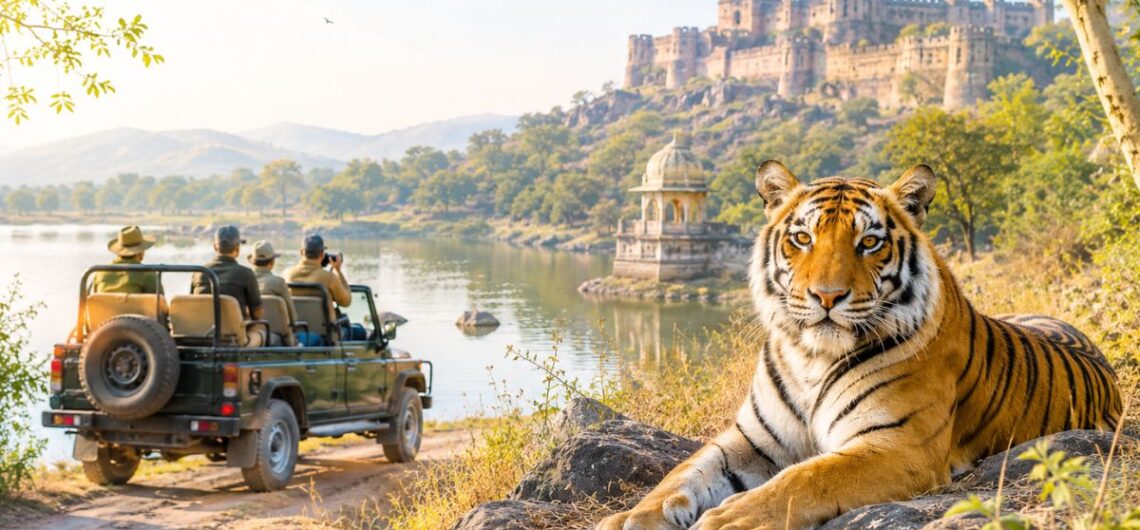
<p>If you've ever pictured a tiger stretched out beside a still forest lake, tail flicking, completely unbothered by the jeep full of people holding their breath a few metres away — there's a good chance you were picturing Ranthambore without even knowing it. Tucked into the dry hills of eastern Rajasthan, <a href="https://www.mytajtour.com/tours/golden-triangle-tour-with-ranthambore/">Ranthambore National Park</a> is one of the most reliable places on earth to see a wild Bengal tiger, and that reputation means safari seats disappear fast. This Ranthambore Safari Booking Guide walks you through exactly how the online booking system works, what a jeep safari and canter safari actually involve, which documents you'll need, and how to avoid the small mistakes that ruin a lot of first-time visits. Whether you're coming from Delhi for a weekend or flying in from another country for a two-week India trip, by the end of this guide you'll know how to book confidently and give yourself the best possible shot at a real tiger sighting.</p>
<!-- /wp:paragraph -->
<!-- wp:heading -->
<h2 class="wp-block-heading"><strong>Why Visit Ranthambore National Park?</strong></h2>
<!-- /wp:heading -->
<!-- wp:paragraph -->
<p>Ranthambore is one of India's most famous tiger reserves, and it earns that fame honestly. Unlike some parks where sightings are rare and largely luck-based, Ranthambore's tiger density is high enough that many safaris — especially in the core zones — turn up an actual sighting. But tigers aren't the only reason to come.</p>
<!-- /wp:paragraph -->
<!-- wp:paragraph -->
<p>The park sits around a dramatic 10th-century fort, and the ruins of old hunting lodges, chhatris, and lakeside pavilions poke out of the forest in a way that makes the whole landscape feel half-wild, half-abandoned kingdom. Photographers love it for the light alone — golden hour over Padam Talao lake, framed by ancient stone, is hard to beat. Bird watchers will also find plenty to point a lens at, from kingfishers and crested serpent eagles to flocks of waterfowl around the lakes. Add in sambar deer, marsh crocodiles, sloth bears, and leopards, and it's easy to see why Ranthambore pulls in wildlife lovers from across India and abroad, not just committed tiger-spotters.</p>
<!-- /wp:paragraph -->
<!-- wp:heading -->
<h2 class="wp-block-heading"><strong>Types of Safari Available in Ranthambore</strong></h2>
<!-- /wp:heading -->
<!-- wp:paragraph -->
<p>There are two ways to explore the park: the Jeep Safari and the Canter Safari. Both run in the same zones and the same time slots, but the experience is quite different.</p>
<!-- /wp:paragraph -->
<!-- wp:heading {"level":3} -->
<h3 class="wp-block-heading"><strong>Jeep Safari</strong></h3>
<!-- /wp:heading -->
<!-- wp:paragraph -->
<p>The jeep safari uses an open 4×4 Maruti Gypsy that seats up to 6 visitors, plus a guide and driver. Because the vehicle is small, it can move faster, take tighter forest tracks, and reposition quickly if there's word of a tiger nearby.</p>
<!-- /wp:paragraph -->
<!-- wp:list -->
<ul class="wp-block-list"><!-- wp:list-item -->
<li><strong>Capacity:</strong> 6 passengers per vehicle</li>
<!-- /wp:list-item -->
<!-- wp:list-item -->
<li><strong>Comfort:</strong> More legroom, less crowding, easier to move around for photos</li>
<!-- /wp:list-item -->
<!-- wp:list-item -->
<li><strong>Advantages:</strong> Faster, more flexible, better sightlines in every direction</li>
<!-- /wp:list-item -->
<!-- wp:list-item -->
<li><strong>Best for:</strong> Photographers, couples, small families, and anyone who wants a more personal, immersive experience</li>
<!-- /wp:list-item --></ul>
<!-- /wp:list -->
<!-- wp:heading {"level":3} -->
<h3 class="wp-block-heading"><strong>Canter Safari</strong></h3>
<!-- /wp:heading -->
<!-- wp:paragraph -->
<p>The canter is a larger, open-roof safari bus that holds around 20 passengers. It's the budget-friendly option and a popular choice for bigger groups.</p>
<!-- /wp:paragraph -->
<!-- wp:list -->
<ul class="wp-block-list"><!-- wp:list-item -->
<li><strong>Capacity:</strong> Up to 20 passengers</li>
<!-- /wp:list-item -->
<!-- wp:list-item -->
<li><strong>Budget-friendly:</strong> Lower per-person cost than a jeep seat</li>
<!-- /wp:list-item -->
<!-- wp:list-item -->
<li><strong>Group experience:</strong> Good for friend groups, office trips, or larger families</li>
<!-- /wp:list-item -->
<!-- wp:list-item -->
<li><strong>Suitable for families:</strong> Higher vantage point works well for kids and older travellers who want a steadier ride</li>
<!-- /wp:list-item --></ul>
<!-- /wp:list -->
<!-- wp:heading {"level":3} -->
<h3 class="wp-block-heading"><strong>Jeep Safari vs Canter Safari: Quick Comparison</strong></h3>
<!-- /wp:heading -->
<!-- wp:table -->
<figure class="wp-block-table"><table class="has-fixed-layout"><tbody><tr><td><strong>Feature</strong></td><td><strong>Jeep Safari</strong></td><td><strong>Canter Safari</strong></td></tr><tr><td>Capacity</td><td>6 passengers</td><td>Up to 20 passengers</td></tr><tr><td>Price</td><td>Higher per seat</td><td>Lower per seat</td></tr><tr><td>Comfort</td><td>More space, more flexible</td><td>Higher seating, less legroom</td></tr><tr><td>Photography</td><td>Excellent, easy repositioning</td><td>Good, but more crowded</td></tr><tr><td>Best for</td><td>Photographers, small groups, couples</td><td>Families, large groups, budget travellers</td></tr><tr><td>Availability</td><td>Limited seats, books out fast</td><td>More seats, but fixed group timing</td></tr></tbody></table></figure>
<!-- /wp:table -->
<!-- wp:heading -->
<h2 class="wp-block-heading"><strong>Ranthambore Safari Booking Process</strong></h2>
<!-- /wp:heading -->
<!-- wp:paragraph -->
<p>Booking a Ranthambore safari online is straightforward once you know the sequence. Here's the step-by-step process most official and authorised booking platforms follow:</p>
<!-- /wp:paragraph -->
<!-- wp:list {"ordered":true} -->
<ol class="wp-block-list"><!-- wp:list-item -->
<li><strong>Select your safari type</strong> – Choose between Jeep Safari or Canter Safari based on group size and budget.</li>
<!-- /wp:list-item -->
<!-- wp:list-item -->
<li><strong>Choose your travel date</strong> – Pick the date you want to safari, keeping the seasonal calendar in mind (more on this below).</li>
<!-- /wp:list-item -->
<!-- wp:list-item -->
<li><strong>Select your safari shift</strong> – Morning or evening; timings shift with the season.</li>
<!-- /wp:list-item -->
<!-- wp:list-item -->
<li><strong>Choose your preferred zone</strong> – You can request a zone, though allocation for regular permits is often done by the forest department's system rather than guaranteed.</li>
<!-- /wp:list-item -->
<!-- wp:list-item -->
<li><strong>Enter visitor details</strong> – Full name, age, and gender for every person travelling, exactly as it appears on their ID.</li>
<!-- /wp:list-item -->
<!-- wp:list-item -->
<li><strong>Upload ID proof</strong> – A valid, government-issued ID is mandatory for every visitor, Indian or foreign.</li>
<!-- /wp:list-item -->
<!-- wp:list-item -->
<li><strong>Make payment</strong> – Full payment is generally required upfront to confirm your seats.</li>
<!-- /wp:list-item -->
<!-- wp:list-item -->
<li><strong>Receive confirmation</strong> – You'll get a booking confirmation and permit details, which you should carry (printed or digital) on the day of your safari.</li>
<!-- /wp:list-item --></ol>
<!-- /wp:list -->
<!-- wp:paragraph -->
<p>Because permits are limited per zone, per shift — a set number of jeeps and canters are allowed into each zone at a time — popular slots for weekends, holidays, and the winter season can sell out weeks in advance.</p>
<!-- /wp:paragraph -->
<!-- wp:paragraph -->
<p>For the latest permit availability, safari rules, and official booking information, you can also visit the <a href="https://aaranyak.forest.rajasthan.gov.in/">official Ranthambore safari booking portal</a> managed by the Rajasthan Forest Department. </p>
<!-- /wp:paragraph -->
<!-- wp:heading -->
<h2 class="wp-block-heading"><strong>Documents Required for Booking</strong></h2>
<!-- /wp:heading -->
<!-- wp:paragraph -->
<p>Ranthambore's forest department is strict about identification, and mismatched or missing ID is one of the most common reasons visitors get turned away at the gate. Keep the original document with you, not just a photocopy or screenshot, since originals are usually required for entry verification.</p>
<!-- /wp:paragraph -->
<!-- wp:paragraph -->
<p>Accepted ID proofs typically include:</p>
<!-- /wp:paragraph -->
<!-- wp:list -->
<ul class="wp-block-list"><!-- wp:list-item -->
<li><strong>Passport</strong> (mandatory for foreign nationals)</li>
<!-- /wp:list-item -->
<!-- wp:list-item -->
<li><strong>Aadhaar Card</strong></li>
<!-- /wp:list-item -->
<!-- wp:list-item -->
<li><strong>Driving License</strong></li>
<!-- /wp:list-item -->
<!-- wp:list-item -->
<li><strong>PAN Card</strong></li>
<!-- /wp:list-item -->
<!-- wp:list-item -->
<li><strong>Voter ID</strong></li>
<!-- /wp:list-item --></ul>
<!-- /wp:list -->
<!-- wp:paragraph -->
<p>Make sure the name and age you enter during online booking matches your ID exactly — even small spelling mismatches can cause problems at the entry gate.</p>
<!-- /wp:paragraph -->
<!-- wp:heading -->
<h2 class="wp-block-heading"><strong>Ranthambore Safari Timings</strong></h2>
<!-- /wp:heading -->
<!-- wp:paragraph -->
<p>Safaris run twice a day, morning and evening, and each ride lasts roughly 3 to 3.5 hours. Exact clock times shift with sunrise and sunset across the year, so always double-check the current slot before you travel.</p>
<!-- /wp:paragraph -->
<!-- wp:table -->
<figure class="wp-block-table"><table class="has-fixed-layout"><tbody><tr><td><strong>Season</strong></td><td><strong>Morning Safari</strong></td><td><strong>Evening Safari</strong></td></tr><tr><td>October – February (Winter)</td><td>Later start, around 7:00 AM</td><td>Earlier end, around 5:30 PM</td></tr><tr><td>March – April (Spring/early summer)</td><td>Earlier start, around 6:30 AM</td><td>Later end, around 6:30 PM</td></tr><tr><td>May – June (Peak summer)</td><td>Very early start, around 6:00 AM</td><td>Later end, around 6:30 PM</td></tr></tbody></table></figure>
<!-- /wp:table -->
<!-- wp:paragraph -->
<p>The park closes for the monsoon, generally from July through September, though core zones sometimes reopen slightly earlier than buffer zones depending on forest department notifications for that year.</p>
<!-- /wp:paragraph -->
<!-- wp:heading -->
<h2 class="wp-block-heading"><strong>Ranthambore Safari Zones Explained</strong></h2>
<!-- /wp:heading -->
<!-- wp:paragraph -->
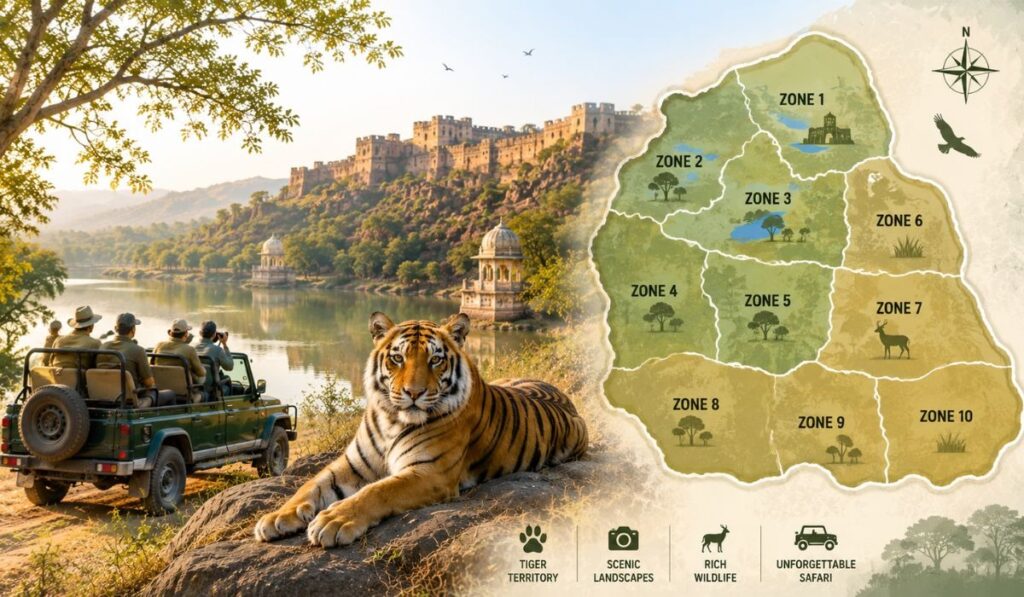
<p>Ranthambore is divided into 10 official safari zones, but only around 20% of the total reserve is open to tourism at all. Zones 1 to 5 are considered the <strong>core zones</strong> — the classic, high-density tiger territory around the old fort, lakes, and ruins. Zones 6 to 10 are the <strong>buffer zones</strong>, generally larger and less crowded, with their own resident tigers and often better odds of a quieter, less touristy drive.</p>
<!-- /wp:paragraph -->
<!-- wp:image {"id":2072,"sizeSlug":"large","linkDestination":"none"} -->
<figure class="wp-block-image size-large"><img src="https://www.mytajtour.com/wp-content/uploads/2026/07/image-2-1024x597.jpeg" alt="Map of Ranthambore Safari Zones 1 to 10 with a Bengal tiger, jeep safari, and Ranthambore Fort in the background." class="wp-image-2072" title="Ranthambore Safari Zones Guide – Best Zones for Tiger Sighting"/></figure>
<!-- /wp:image -->
<!-- wp:list -->
<ul class="wp-block-list"><!-- wp:list-item -->
<li><strong>Zone 1–2:</strong> Close to the fort and lakes, scenic but historically less predictable for tiger movement.</li>
<!-- /wp:list-item -->
<!-- wp:list-item -->
<li><strong>Zone 3:</strong> One of the most popular zones, known for frequent sightings around Rajbagh and Padam Talao lakes.</li>
<!-- /wp:list-item -->
<!-- wp:list-item -->
<li><strong>Zone 4–5:</strong> Classic core territory, dense forest with strong tiger presence historically.</li>
<!-- /wp:list-item -->
<!-- wp:list-item -->
<li><strong>Zone 6–7:</strong> Buffer zone, more open grassland, good for spotting deer and other wildlife alongside occasional tigers.</li>
<!-- /wp:list-item -->
<!-- wp:list-item -->
<li><strong>Zone 8–9:</strong> Larger, less crowded buffer areas, good for a calmer safari experience.</li>
<!-- /wp:list-item -->
<!-- wp:list-item -->
<li><strong>Zone 10:</strong> Farthest buffer zone, known for open landscapes and lower vehicle density.</li>
<!-- /wp:list-item --></ul>
<!-- /wp:list -->
<!-- wp:paragraph -->
<p>Zone popularity shifts as individual tigers establish and move territories, so "the best zone" this year may not be the same next year. If a specific zone matters to you, ask your booking operator or a local guide for the latest movement patterns before you lock in your dates.</p>
<!-- /wp:paragraph -->
<!-- wp:heading -->
<h2 class="wp-block-heading"><strong>Ranthambore Safari Booking Price</strong></h2>
<!-- /wp:heading -->
<!-- wp:paragraph -->
<p>Safari pricing in Ranthambore has several components bundled together: the forest department's entry permit, the vehicle charge, and the guide fee, along with any service charge added by the booking platform or operator. Rates for foreign nationals are set higher than for Indian citizens under the park's fee structure.</p>
<!-- /wp:paragraph -->
<!-- wp:list -->
<ul class="wp-block-list"><!-- wp:list-item -->
<li><strong>Jeep Safari:</strong> Typically higher per-seat pricing than canter, since the vehicle is smaller and more in demand.</li>
<!-- /wp:list-item -->
<!-- wp:list-item -->
<li><strong>Canter Safari:</strong> More budget-friendly per seat, since the cost is spread across more passengers.</li>
<!-- /wp:list-item -->
<!-- wp:list-item -->
<li><strong>Guide fee:</strong> Usually included in the total permit cost rather than charged separately.</li>
<!-- /wp:list-item -->
<!-- wp:list-item -->
<li><strong>Entry fee:</strong> Bundled into the safari permit price.</li>
<!-- /wp:list-item -->
<!-- wp:list-item -->
<li><strong>Camera charges:</strong> Some categories of professional camera equipment may attract an additional fee — check with your operator if you're carrying heavier gear.</li>
<!-- /wp:list-item --></ul>
<!-- /wp:list -->
<!-- wp:paragraph -->
<p>Prices are revised periodically by the Rajasthan Forest Department, and service charges from booking platforms vary by season, so treat any number you see online as an estimate and confirm the current rate before paying.</p>
<!-- /wp:paragraph -->
<!-- wp:heading -->
<h2 class="wp-block-heading"><strong>Best Time to Book Ranthambore Safari</strong></h2>
<!-- /wp:heading -->
<!-- wp:paragraph -->
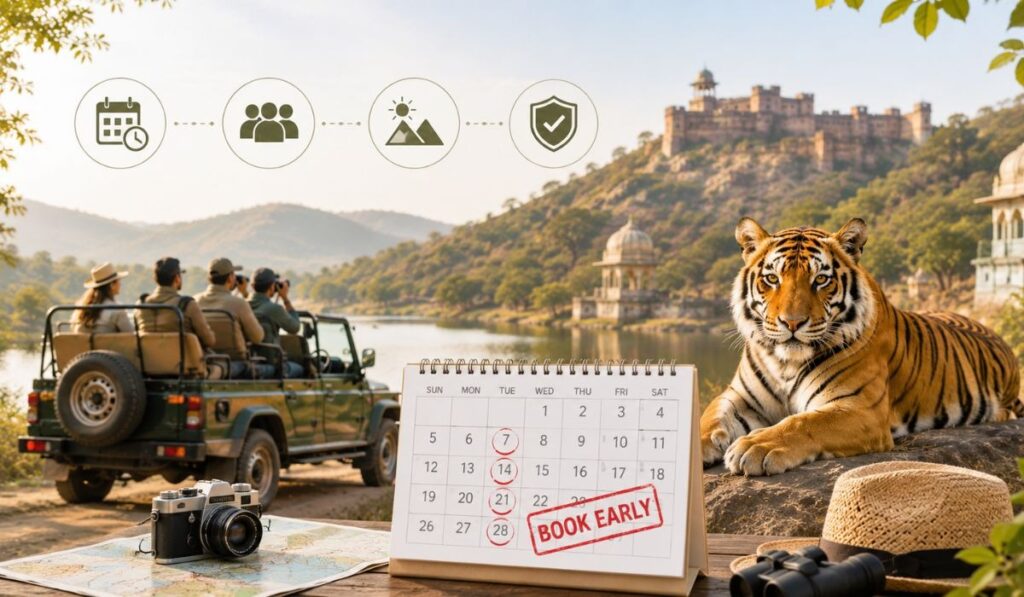
<p>Ranthambore runs on limited daily permits, and a fixed number of jeeps and canters are allowed into each zone per shift. That scarcity is exactly why advance booking matters.</p>
<!-- /wp:paragraph -->
<!-- wp:list -->
<ul class="wp-block-list"><!-- wp:list-item -->
<li><strong>Peak season (October–February):</strong> Book 60–90 days ahead if you can, especially for weekends.</li>
<!-- /wp:list-item -->
<!-- wp:list-item -->
<li><strong>Weekends and Indian holidays:</strong> These fill up fastest — book as early as possible.</li>
<!-- /wp:list-item -->
<!-- wp:list-item -->
<li><strong>Festivals and long weekends:</strong> Domestic tourism spikes hard around Diwali, Christmas–New Year, and other major holidays.</li>
<!-- /wp:list-item -->
<!-- wp:list-item -->
<li><strong>General rule:</strong> The closer you get to your travel date, the fewer zone and vehicle choices you'll have, and last-minute bookings often mean settling for whatever slot is left.</li>
<!-- /wp:list-item --></ul>
<!-- /wp:list -->
<!-- wp:heading -->
<h2 class="wp-block-heading"><strong>Best Time to Visit Ranthambore</strong></h2>
<!-- /wp:heading -->
<!-- wp:image {"id":2071,"sizeSlug":"large","linkDestination":"none"} -->
<figure class="wp-block-image size-large"><img src="https://www.mytajtour.com/wp-content/uploads/2026/07/image-1-1024x597.jpeg" alt="Travel planning infographic showing a Ranthambore safari jeep, Bengal tiger, booking calendar, and Ranthambore Fort, highlighting the best time to book a safari." class="wp-image-2071" title="Best Time to Book Ranthambore Safari – Complete Booking Guide"/></figure>
<!-- /wp:image -->
<!-- wp:list -->
<ul class="wp-block-list"><!-- wp:list-item -->
<li><strong>October – February:</strong> Cool, pleasant weather and comfortable game drives. Wildlife is a little more spread out since water is available across the park, but this remains the most popular window for a reason — comfortable mornings, good visibility, and a classic Rajasthan winter feel.</li>
<!-- /wp:list-item -->
<!-- wp:list-item -->
<li><strong>March – May:</strong> Hot, sometimes very hot by May. The upside is that animals cluster around shrinking waterholes, which often makes tiger sightings easier despite the heat.</li>
<!-- /wp:list-item -->
<!-- wp:list-item -->
<li><strong>June:</strong> The last stretch before monsoon closure, hot and dry, with strong sighting odds for the same reason as March–May.</li>
<!-- /wp:list-item -->
<!-- wp:list-item -->
<li><strong>July – September (Monsoon Closure):</strong> The park is largely closed for safaris during this period, giving the forest time to recover.</li>
<!-- /wp:list-item --></ul>
<!-- /wp:list -->
<!-- wp:heading -->
<h2 class="wp-block-heading"><strong>Tips to Increase Tiger Sighting Chances</strong></h2>
<!-- /wp:heading -->
<!-- wp:list -->
<ul class="wp-block-list"><!-- wp:list-item -->
<li>Choose a morning safari when possible — tigers are often more active in cooler early hours.</li>
<!-- /wp:list-item -->
<!-- wp:list-item -->
<li>Stay quiet and avoid sudden movement or loud conversation in the vehicle.</li>
<!-- /wp:list-item -->
<!-- wp:list-item -->
<li>If sightings matter more to you than comfort, ask about booking a well-regarded core zone.</li>
<!-- /wp:list-item -->
<!-- wp:list-item -->
<li>Consider travelling in the hotter months (March–June), when animals gather near remaining water sources.</li>
<!-- /wp:list-item -->
<!-- wp:list-item -->
<li>Carry binoculars for spotting movement at a distance, even if you're hoping for a close-up.</li>
<!-- /wp:list-item -->
<!-- wp:list-item -->
<li>Always follow your guide's instructions — they read tracks, alarm calls, and vehicle chatter far better than a first-time visitor can.</li>
<!-- /wp:list-item --></ul>
<!-- /wp:list -->
<!-- wp:heading -->
<h2 class="wp-block-heading"><strong>Common Booking Mistakes to Avoid</strong></h2>
<!-- /wp:heading -->
<!-- wp:list -->
<ul class="wp-block-list"><!-- wp:list-item -->
<li><strong>Booking last minute:</strong> Popular dates and zones sell out well in advance, especially in winter.</li>
<!-- /wp:list-item -->
<!-- wp:list-item -->
<li><strong>Entering wrong ID details:</strong> A mismatch between your booking and your physical ID can mean denied entry, with no refund.</li>
<!-- /wp:list-item -->
<!-- wp:list-item -->
<li><strong>Choosing zones at random:</strong> A little research (or asking your operator) goes a long way toward a better experience.</li>
<!-- /wp:list-item -->
<!-- wp:list-item -->
<li><strong>Ignoring the cancellation policy:</strong> Ranthambore safari fees are generally non-refundable once confirmed, so check terms before you pay.</li>
<!-- /wp:list-item -->
<!-- wp:list-item -->
<li><strong>Booking through unreliable websites:</strong> Stick to the official booking system or well-reviewed, established operators to avoid inflated prices or fake confirmations.</li>
<!-- /wp:list-item --></ul>
<!-- /wp:list -->
<!-- wp:heading -->
<h2 class="wp-block-heading"><strong>F</strong>AQ - Ranthambore Safari Booking Guide</h2>
<!-- /wp:heading -->
<!-- wp:heading {"level":3} -->
<h3 class="wp-block-heading">How early should I book a Ranthambore safari? </h3>
<!-- /wp:heading -->
<!-- wp:paragraph -->
<p>For winter weekends and holidays, 60–90 days in advance is a safe target. For weekdays in shoulder season, a few weeks ahead is often enough.</p>
<!-- /wp:paragraph -->
<!-- wp:heading {"level":3} -->
<h3 class="wp-block-heading">Which safari is better, jeep or canter? </h3>
<!-- /wp:heading -->
<!-- wp:paragraph -->
<p>Jeep safaris offer more flexibility and better photography angles for smaller groups; canter safaris are more budget-friendly and suit larger groups traveling together.</p>
<!-- /wp:paragraph -->
<!-- wp:heading {"level":3} -->
<h3 class="wp-block-heading">Can I choose my safari zone? </h3>
<!-- /wp:heading -->
<!-- wp:paragraph -->
<p>You can request a zone during booking, but allocation for standard permits is generally managed by the forest department's system, so a specific zone isn't always guaranteed.</p>
<!-- /wp:paragraph -->
<!-- wp:heading {"level":3} -->
<h3 class="wp-block-heading">Is online booking mandatory?</h3>
<!-- /wp:heading -->
<!-- wp:paragraph -->
<p> Yes — safaris are managed through the official booking system, and walk-in availability on the day is rare to nonexistent, especially in peak season.</p>
<!-- /wp:paragraph -->
<!-- wp:heading {"level":3} -->
<h3 class="wp-block-heading">Can children join the safari? </h3>
<!-- /wp:heading -->
<!-- wp:paragraph -->
<p>Yes, children can join, though very young kids may find the early morning start and bumpy ride tiring. Check with your operator about age-based pricing.</p>
<!-- /wp:paragraph -->
<!-- wp:heading {"level":3} -->
<h3 class="wp-block-heading">What happens if I miss my safari?</h3>
<!-- /wp:heading -->
<!-- wp:paragraph -->
<p> Vehicles depart on a strict schedule, and safari fees are generally non-refundable if you miss your slot, so plan to arrive at the gate well ahead of time.</p>
<!-- /wp:paragraph -->
<!-- wp:heading {"level":3} -->
<h3 class="wp-block-heading">Are refunds available if I need to cancel? </h3>
<!-- /wp:heading -->
<!-- wp:paragraph -->
<p>Refund policies are usually limited or unavailable once a permit is confirmed. Always check the specific cancellation terms of your booking platform before paying.</p>
<!-- /wp:paragraph -->
<!-- wp:heading {"level":3} -->
<h3 class="wp-block-heading">What should I carry on safari? </h3>
<!-- /wp:heading -->
<!-- wp:paragraph -->
<p>Original ID proof, your booking confirmation, weather-appropriate clothing (it gets cold on winter mornings), binoculars, and a camera. Note that mobile phone use is restricted inside the park during the safari as per park rules.</p>
<!-- /wp:paragraph -->
<!-- wp:heading {"level":3} -->
<h3 class="wp-block-heading">Do foreigners pay a different price than Indians? </h3>
<!-- /wp:heading -->
<!-- wp:paragraph -->
<p>Yes, foreign nationals pay a higher permit rate than Indian citizens, as set by the forest department's fee structure.</p>
<!-- /wp:paragraph -->
<!-- wp:heading {"level":3} -->
<h3 class="wp-block-heading">Is the park open year-round? </h3>
<!-- /wp:heading -->
<!-- wp:paragraph -->
<p>No — Ranthambore closes for the monsoon season, roughly July through September, and reopens once the forest has had time to recover.</p>
<!-- /wp:paragraph -->
<!-- wp:heading -->
<h2 class="wp-block-heading"><strong>Conclusion</strong></h2>
<!-- /wp:heading -->
<!-- wp:paragraph -->
<p>A great Ranthambore safari really comes down to a few simple decisions made early: book well ahead of your travel dates, pick the safari type that fits your group and budget, get your documents right the first time, and plan your trip around the season that matches what you're looking for — cooler comfort in winter or better sighting odds in the summer heat. Follow the park's rules, listen to your guide, and treat the experience as what it is: a rare, genuinely wild encounter, not a guaranteed photo opportunity.</p>
<!-- /wp:paragraph -->
<!-- wp:paragraph -->
<p>If you're planning a complete wildlife vacation, explore our <a href="https://www.mytajtour.com/tours/golden-triangle-tour-with-ranthambore/">Ranthambore Tour Packages</a> that include safari permits, accommodation, and local sightseeing. </p>
<!-- /wp:paragraph -->
<!-- wp:paragraph -->
<p>Ready to see a Bengal tiger in the wild? Start planning your Ranthambore safari today, book early, and give yourself the best possible chance at a sighting you'll be talking about for years.</p>
<!-- /wp:paragraph -->
If you’ve ever pictured a tiger stretched out beside a still forest lake, tail flicking, completely unbothered by the jeep full of people holding their breath a few metres away — there’s a good chance you were picturing Ranthambore without even knowing it. Tucked into the dry hills of eastern Rajasthan, Ranthambore National Park is one of the most reliable places on earth to see a wild Bengal tiger, and that reputation means safari seats disappear fast. This Ranthambore Safari Booking Guide walks you through exactly how the online booking system works, what a jeep safari and canter safari actually involve, which documents you’ll need, and how to avoid the small mistakes that ruin a lot of first-time visits. Whether you’re coming from Delhi for a weekend or flying in from another country for a two-week India trip, by the end of this guide you’ll know how to book confidently and give yourself the best possible shot at a real tiger sighting.
Why Visit Ranthambore National Park?
Ranthambore is one of India’s most famous tiger reserves, and it earns that fame honestly. Unlike some parks where sightings are rare and largely luck-based, Ranthambore’s tiger density is high enough that many safaris — especially in the core zones — turn up an actual sighting. But tigers aren’t the only reason to come.
The park sits around a dramatic 10th-century fort, and the ruins of old hunting lodges, chhatris, and lakeside pavilions poke out of the forest in a way that makes the whole landscape feel half-wild, half-abandoned kingdom. Photographers love it for the light alone — golden hour over Padam Talao lake, framed by ancient stone, is hard to beat. Bird watchers will also find plenty to point a lens at, from kingfishers and crested serpent eagles to flocks of waterfowl around the lakes. Add in sambar deer, marsh crocodiles, sloth bears, and leopards, and it’s easy to see why Ranthambore pulls in wildlife lovers from across India and abroad, not just committed tiger-spotters.
Types of Safari Available in Ranthambore
There are two ways to explore the park: the Jeep Safari and the Canter Safari. Both run in the same zones and the same time slots, but the experience is quite different.
Jeep Safari
The jeep safari uses an open 4×4 Maruti Gypsy that seats up to 6 visitors, plus a guide and driver. Because the vehicle is small, it can move faster, take tighter forest tracks, and reposition quickly if there’s word of a tiger nearby.
Capacity: 6 passengers per vehicle
Comfort: More legroom, less crowding, easier to move around for photos
Advantages: Faster, more flexible, better sightlines in every direction
Best for: Photographers, couples, small families, and anyone who wants a more personal, immersive experience
Canter Safari
The canter is a larger, open-roof safari bus that holds around 20 passengers. It’s the budget-friendly option and a popular choice for bigger groups.
Capacity: Up to 20 passengers
Budget-friendly: Lower per-person cost than a jeep seat
Group experience: Good for friend groups, office trips, or larger families
Suitable for families: Higher vantage point works well for kids and older travellers who want a steadier ride
Jeep Safari vs Canter Safari: Quick Comparison
Feature
Jeep Safari
Canter Safari
Capacity
6 passengers
Up to 20 passengers
Price
Higher per seat
Lower per seat
Comfort
More space, more flexible
Higher seating, less legroom
Photography
Excellent, easy repositioning
Good, but more crowded
Best for
Photographers, small groups, couples
Families, large groups, budget travellers
Availability
Limited seats, books out fast
More seats, but fixed group timing
Ranthambore Safari Booking Process
Booking a Ranthambore safari online is straightforward once you know the sequence. Here’s the step-by-step process most official and authorised booking platforms follow:
Select your safari type – Choose between Jeep Safari or Canter Safari based on group size and budget.
Choose your travel date – Pick the date you want to safari, keeping the seasonal calendar in mind (more on this below).
Select your safari shift – Morning or evening; timings shift with the season.
Choose your preferred zone – You can request a zone, though allocation for regular permits is often done by the forest department’s system rather than guaranteed.
Enter visitor details – Full name, age, and gender for every person travelling, exactly as it appears on their ID.
Upload ID proof – A valid, government-issued ID is mandatory for every visitor, Indian or foreign.
Make payment – Full payment is generally required upfront to confirm your seats.
Receive confirmation – You’ll get a booking confirmation and permit details, which you should carry (printed or digital) on the day of your safari.
Because permits are limited per zone, per shift — a set number of jeeps and canters are allowed into each zone at a time — popular slots for weekends, holidays, and the winter season can sell out weeks in advance.
For the latest permit availability, safari rules, and official booking information, you can also visit the official Ranthambore safari booking portal managed by the Rajasthan Forest Department.
Documents Required for Booking
Ranthambore’s forest department is strict about identification, and mismatched or missing ID is one of the most common reasons visitors get turned away at the gate. Keep the original document with you, not just a photocopy or screenshot, since originals are usually required for entry verification.
Accepted ID proofs typically include:
Passport (mandatory for foreign nationals)
Aadhaar Card
Driving License
PAN Card
Voter ID
Make sure the name and age you enter during online booking matches your ID exactly — even small spelling mismatches can cause problems at the entry gate.
Ranthambore Safari Timings
Safaris run twice a day, morning and evening, and each ride lasts roughly 3 to 3.5 hours. Exact clock times shift with sunrise and sunset across the year, so always double-check the current slot before you travel.
Season
Morning Safari
Evening Safari
October – February (Winter)
Later start, around 7:00 AM
Earlier end, around 5:30 PM
March – April (Spring/early summer)
Earlier start, around 6:30 AM
Later end, around 6:30 PM
May – June (Peak summer)
Very early start, around 6:00 AM
Later end, around 6:30 PM
The park closes for the monsoon, generally from July through September, though core zones sometimes reopen slightly earlier than buffer zones depending on forest department notifications for that year.
Ranthambore Safari Zones Explained
Ranthambore is divided into 10 official safari zones, but only around 20% of the total reserve is open to tourism at all. Zones 1 to 5 are considered the core zones — the classic, high-density tiger territory around the old fort, lakes, and ruins. Zones 6 to 10 are the buffer zones, generally larger and less crowded, with their own resident tigers and often better odds of a quieter, less touristy drive.
Zone 1–2: Close to the fort and lakes, scenic but historically less predictable for tiger movement.
Zone 3: One of the most popular zones, known for frequent sightings around Rajbagh and Padam Talao lakes.
Zone 4–5: Classic core territory, dense forest with strong tiger presence historically.
Zone 6–7: Buffer zone, more open grassland, good for spotting deer and other wildlife alongside occasional tigers.
Zone 8–9: Larger, less crowded buffer areas, good for a calmer safari experience.
Zone 10: Farthest buffer zone, known for open landscapes and lower vehicle density.
Zone popularity shifts as individual tigers establish and move territories, so “the best zone” this year may not be the same next year. If a specific zone matters to you, ask your booking operator or a local guide for the latest movement patterns before you lock in your dates.
Ranthambore Safari Booking Price
Safari pricing in Ranthambore has several components bundled together: the forest department’s entry permit, the vehicle charge, and the guide fee, along with any service charge added by the booking platform or operator. Rates for foreign nationals are set higher than for Indian citizens under the park’s fee structure.
Jeep Safari: Typically higher per-seat pricing than canter, since the vehicle is smaller and more in demand.
Canter Safari: More budget-friendly per seat, since the cost is spread across more passengers.
Guide fee: Usually included in the total permit cost rather than charged separately.
Entry fee: Bundled into the safari permit price.
Camera charges: Some categories of professional camera equipment may attract an additional fee — check with your operator if you’re carrying heavier gear.
Prices are revised periodically by the Rajasthan Forest Department, and service charges from booking platforms vary by season, so treat any number you see online as an estimate and confirm the current rate before paying.
Best Time to Book Ranthambore Safari
Ranthambore runs on limited daily permits, and a fixed number of jeeps and canters are allowed into each zone per shift. That scarcity is exactly why advance booking matters.
Peak season (October–February): Book 60–90 days ahead if you can, especially for weekends.
Weekends and Indian holidays: These fill up fastest — book as early as possible.
Festivals and long weekends: Domestic tourism spikes hard around Diwali, Christmas–New Year, and other major holidays.
General rule: The closer you get to your travel date, the fewer zone and vehicle choices you’ll have, and last-minute bookings often mean settling for whatever slot is left.
Best Time to Visit Ranthambore
October – February: Cool, pleasant weather and comfortable game drives. Wildlife is a little more spread out since water is available across the park, but this remains the most popular window for a reason — comfortable mornings, good visibility, and a classic Rajasthan winter feel.
March – May: Hot, sometimes very hot by May. The upside is that animals cluster around shrinking waterholes, which often makes tiger sightings easier despite the heat.
June: The last stretch before monsoon closure, hot and dry, with strong sighting odds for the same reason as March–May.
July – September (Monsoon Closure): The park is largely closed for safaris during this period, giving the forest time to recover.
Tips to Increase Tiger Sighting Chances
Choose a morning safari when possible — tigers are often more active in cooler early hours.
Stay quiet and avoid sudden movement or loud conversation in the vehicle.
If sightings matter more to you than comfort, ask about booking a well-regarded core zone.
Consider travelling in the hotter months (March–June), when animals gather near remaining water sources.
Carry binoculars for spotting movement at a distance, even if you’re hoping for a close-up.
Always follow your guide’s instructions — they read tracks, alarm calls, and vehicle chatter far better than a first-time visitor can.
Common Booking Mistakes to Avoid
Booking last minute: Popular dates and zones sell out well in advance, especially in winter.
Entering wrong ID details: A mismatch between your booking and your physical ID can mean denied entry, with no refund.
Choosing zones at random: A little research (or asking your operator) goes a long way toward a better experience.
Ignoring the cancellation policy: Ranthambore safari fees are generally non-refundable once confirmed, so check terms before you pay.
Booking through unreliable websites: Stick to the official booking system or well-reviewed, established operators to avoid inflated prices or fake confirmations.
FAQ – Ranthambore Safari Booking Guide
How early should I book a Ranthambore safari?
For winter weekends and holidays, 60–90 days in advance is a safe target. For weekdays in shoulder season, a few weeks ahead is often enough.
Which safari is better, jeep or canter?
Jeep safaris offer more flexibility and better photography angles for smaller groups; canter safaris are more budget-friendly and suit larger groups traveling together.
Can I choose my safari zone?
You can request a zone during booking, but allocation for standard permits is generally managed by the forest department’s system, so a specific zone isn’t always guaranteed.
Is online booking mandatory?
Yes — safaris are managed through the official booking system, and walk-in availability on the day is rare to nonexistent, especially in peak season.
Can children join the safari?
Yes, children can join, though very young kids may find the early morning start and bumpy ride tiring. Check with your operator about age-based pricing.
What happens if I miss my safari?
Vehicles depart on a strict schedule, and safari fees are generally non-refundable if you miss your slot, so plan to arrive at the gate well ahead of time.
Are refunds available if I need to cancel?
Refund policies are usually limited or unavailable once a permit is confirmed. Always check the specific cancellation terms of your booking platform before paying.
What should I carry on safari?
Original ID proof, your booking confirmation, weather-appropriate clothing (it gets cold on winter mornings), binoculars, and a camera. Note that mobile phone use is restricted inside the park during the safari as per park rules.
Do foreigners pay a different price than Indians?
Yes, foreign nationals pay a higher permit rate than Indian citizens, as set by the forest department’s fee structure.
Is the park open year-round?
No — Ranthambore closes for the monsoon season, roughly July through September, and reopens once the forest has had time to recover.
Conclusion
A great Ranthambore safari really comes down to a few simple decisions made early: book well ahead of your travel dates, pick the safari type that fits your group and budget, get your documents right the first time, and plan your trip around the season that matches what you’re looking for — cooler comfort in winter or better sighting odds in the summer heat. Follow the park’s rules, listen to your guide, and treat the experience as what it is: a rare, genuinely wild encounter, not a guaranteed photo opportunity.
If you’re planning a complete wildlife vacation, explore our Ranthambore Tour Packages that include safari permits, accommodation, and local sightseeing.
Ready to see a Bengal tiger in the wild? Start planning your Ranthambore safari today, book early, and give yourself the best possible chance at a sighting you’ll be talking about for years.
<!-- wp:paragraph -->
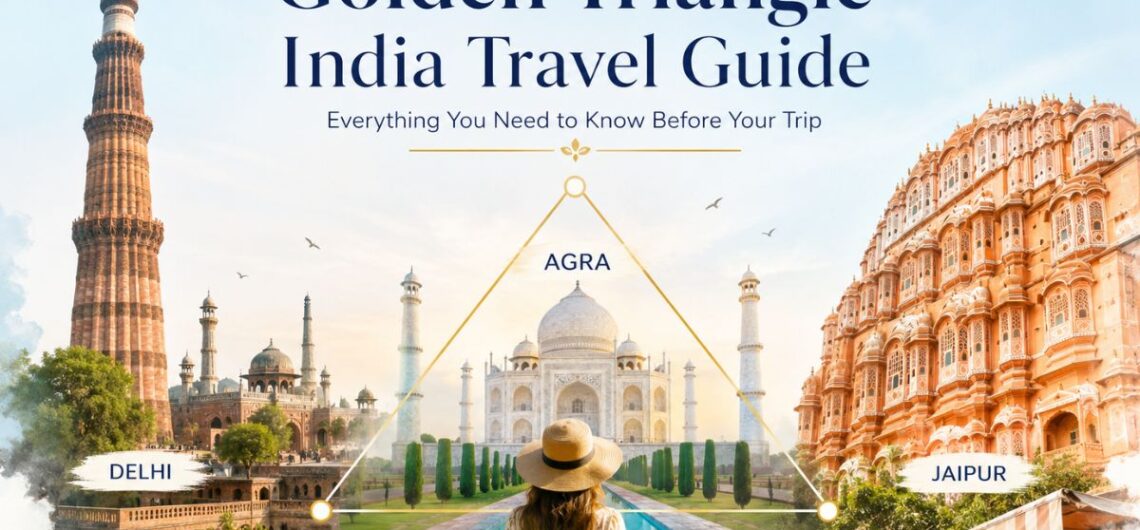
<p>For many first-time visitors, choosing where to begin in a country as diverse as India can feel challenging. One of the most practical introductions is the famous route connecting Delhi, Agra, and Jaipur. This <strong>Golden Triangle India Travel Guide</strong> explains what the Golden Triangle Tour is, why it is so popular, which places you should visit, how many days you need, the best time to travel, and how to move between the three cities.</p>
<!-- /wp:paragraph -->
<!-- wp:paragraph -->
<p>The journey brings together three distinct sides of North India. Delhi combines centuries of history with modern city life, Agra is home to the magnificent Taj Mahal and other examples of Mughal heritage, while Jaipur introduces travellers to Rajasthan's forts, palaces, colourful markets, and royal traditions.</p>
<!-- /wp:paragraph -->
<!-- wp:paragraph -->
<p>Whether you are planning your first trip to India or adding this circuit to a longer holiday, understanding the route before you travel can help you create a more comfortable and rewarding itinerary.</p>
<!-- /wp:paragraph -->
<!-- wp:heading -->
<h2 class="wp-block-heading"><strong>What Is the Golden Triangle Tour?</strong></h2>
<!-- /wp:heading -->
<!-- wp:paragraph -->
<p>The Golden Triangle Tour is a popular tourist circuit connecting <strong>Delhi, Agra, and Jaipur</strong> in North India. When the three cities are marked on a map, their locations form a roughly triangular shape, which explains the name.</p>
<!-- /wp:paragraph -->
<!-- wp:paragraph -->
<p>Delhi usually serves as the starting and ending point because of its international airport and extensive transport connections. From Delhi, travellers typically continue to Agra before travelling west towards Jaipur and eventually returning to the capital.</p>
<!-- /wp:paragraph -->
<!-- wp:paragraph -->
<p>The <strong>Delhi Agra Jaipur Golden Triangle</strong> is particularly popular because the three destinations offer remarkably different experiences within a relatively manageable travel route.</p>
<!-- /wp:paragraph -->
<!-- wp:paragraph -->
<p>In Delhi, you can explore Mughal monuments, colonial-era landmarks, religious sites, and bustling markets. Agra provides the opportunity to see the Taj Mahal, while Jaipur offers impressive forts and royal palaces.</p>
<!-- /wp:paragraph -->
<!-- wp:paragraph -->
<p>Together, these destinations form one of the most famous examples of a <strong>North India cultural tour</strong>.</p>
<!-- /wp:paragraph -->
<!-- wp:heading -->
<h2 class="wp-block-heading"><strong>Why Is It Called the Golden Triangle?</strong></h2>
<!-- /wp:heading -->
<!-- wp:paragraph -->
<p>Many travellers planning their first journey ask: <strong>why is it called the Golden Triangle?</strong></p>
<!-- /wp:paragraph -->
<!-- wp:paragraph -->
<p>The "triangle" part of the name comes from the geographical positions of Delhi, Agra, and Jaipur. The three cities form a triangular travel circuit when connected on a map.</p>
<!-- /wp:paragraph -->
<!-- wp:paragraph -->
<p>The word "Golden" reflects the importance and popularity of the destinations rather than a literal geographical feature. Each city contains some of India's most significant cultural, architectural, and historical attractions.</p>
<!-- /wp:paragraph -->
<!-- wp:paragraph -->
<p>Because the route connects major highlights within a relatively compact region, it has become one of the most recognised travel circuits in the country.</p>
<!-- /wp:paragraph -->
<!-- wp:heading -->
<h2 class="wp-block-heading"><strong>Which Cities Are Included in India's Golden Triangle?</strong></h2>
<!-- /wp:heading -->
<!-- wp:paragraph -->
<p>The three main <strong>Golden Triangle cities in India</strong> are Delhi, Agra, and Jaipur.</p>
<!-- /wp:paragraph -->
<!-- wp:paragraph -->
<p>Although travellers often add destinations such as Ranthambore, Varanasi, Rishikesh, Udaipur, or Amritsar, these places are extensions of the traditional route rather than part of the original triangle.</p>
<!-- /wp:paragraph -->
<!-- wp:heading {"level":3} -->
<h3 class="wp-block-heading"><strong>Delhi: History Meets Modern India</strong></h3>
<!-- /wp:heading -->
<!-- wp:paragraph -->
<p>Delhi is often the first destination on a <strong>Golden Triangle Tour starting from Delhi</strong>.</p>
<!-- /wp:paragraph -->
<!-- wp:paragraph -->
<p>The capital has been shaped by multiple dynasties and historical periods. Ancient ruins, medieval monuments, Mughal architecture, colonial landmarks, and modern neighbourhoods can all be found across the city.</p>
<!-- /wp:paragraph -->
<!-- wp:paragraph -->
<p>Important <strong>historical attractions in Delhi</strong> include the Red Fort, Humayun's Tomb, Qutub Minar, Jama Masjid, and several other heritage sites.</p>
<!-- /wp:paragraph -->
<!-- wp:paragraph -->
<p>Old Delhi offers a completely different atmosphere from New Delhi. The narrow lanes and busy markets around Chandni Chowk provide an energetic introduction to traditional city life, while New Delhi features broad avenues, government buildings, museums, and modern commercial areas.</p>
<!-- /wp:paragraph -->
<!-- wp:paragraph -->
<p>For first-time visitors, spending at least one or two full days in Delhi provides a useful introduction to India's historical and contemporary character.</p>
<!-- /wp:paragraph -->
<!-- wp:paragraph -->
<p>Travellers who want a more organised introduction to the capital can explore <a href="https://www.mytajtour.com/delhi-tour-packages/">Delhi Tour Packages</a> that cover major heritage sites, markets, and landmarks according to their available time. </p>
<!-- /wp:paragraph -->
<!-- wp:heading {"level":3} -->
<h3 class="wp-block-heading"><strong>Agra: Home of the Taj Mahal</strong></h3>
<!-- /wp:heading -->
<!-- wp:paragraph -->
<p>Agra is usually the second stop on the traditional <strong>India Golden Triangle route</strong>.</p>
<!-- /wp:paragraph -->
<!-- wp:paragraph -->
<p>The city's most famous attraction is undoubtedly the Taj Mahal, one of the world's most recognised monuments. Built during the Mughal period, it attracts visitors from across the globe for its architecture, craftsmanship, symmetry, and history.</p>
<!-- /wp:paragraph -->
<!-- wp:image {"id":2066,"sizeSlug":"large","linkDestination":"none"} -->
<figure class="wp-block-image size-large"><img src="https://www.mytajtour.com/wp-content/uploads/2026/07/image-1024x597.jpeg" alt="" class="wp-image-2066"/></figure>
<!-- /wp:image -->
<!-- wp:paragraph -->
<p>However, Agra offers more than one monument.</p>
<!-- /wp:paragraph -->
<!-- wp:paragraph -->
<p>Combining the <strong>Taj Mahal and Agra Fort</strong> allows travellers to better understand the city's importance during the Mughal era. Agra Fort served as a major royal residence and provides an interesting historical connection to the Taj Mahal.</p>
<!-- /wp:paragraph -->
<!-- wp:paragraph -->
<p>Other attractions may include Itmad-ud-Daulah and Mehtab Bagh, depending on your available time.</p>
<!-- /wp:paragraph -->
<!-- wp:paragraph -->
<p>Many travellers spend one night in Agra so they can visit the Taj Mahal early in the morning before continuing to Jaipur.</p>
<!-- /wp:paragraph -->
<!-- wp:paragraph -->
<p>For visitors who want to explore the monument and its history in greater depth, a well-planned <a href="https://www.mytajtour.com/taj-mahal-tour-packages/">Taj Mahal Tour</a> can make it easier to combine the Taj Mahal with other important attractions in Agra. </p>
<!-- /wp:paragraph -->
<!-- wp:heading {"level":3} -->
<h3 class="wp-block-heading"><strong>Jaipur: Rajasthan's Royal Capital</strong></h3>
<!-- /wp:heading -->
<!-- wp:paragraph -->
<p>Jaipur completes the traditional Golden Triangle.</p>
<!-- /wp:paragraph -->
<!-- wp:paragraph -->
<p>Known as the Pink City, Jaipur is famous for its impressive forts, royal architecture, historic city centre, traditional markets, textiles, handicrafts, and jewellery.</p>
<!-- /wp:paragraph -->
<!-- wp:paragraph -->
<p>The combination of <strong>Amber Fort and City Palace Jaipur</strong> provides visitors with an excellent introduction to Rajasthan's royal heritage.</p>
<!-- /wp:paragraph -->
<!-- wp:paragraph -->
<p>Other important attractions include Hawa Mahal and Jantar Mantar.</p>
<!-- /wp:paragraph -->
<!-- wp:paragraph -->
<p>Jaipur also offers experiences beyond monument sightseeing. Exploring local bazaars, trying regional cuisine, and observing traditional crafts can add cultural depth to your visit.</p>
<!-- /wp:paragraph -->
<!-- wp:paragraph -->
<p>For most travellers, two days provide enough time to see the major highlights without making the schedule excessively rushed.</p>
<!-- /wp:paragraph -->
<!-- wp:paragraph -->
<p>Travellers interested in exploring the Pink City's major landmarks and cultural experiences can consider <a href="https://www.mytajtour.com/jaipur-tour-packages/">Jaipur Tour Packages</a> based on their schedule and preferred sightseeing pace. </p>
<!-- /wp:paragraph -->
<!-- wp:heading -->
<h2 class="wp-block-heading"><strong>What Is the Golden Triangle Route in India?</strong></h2>
<!-- /wp:heading -->
<!-- wp:paragraph -->
<p>The traditional route is:</p>
<!-- /wp:paragraph -->
<!-- wp:paragraph -->
<p><strong>Delhi → Agra → Jaipur → Delhi</strong></p>
<!-- /wp:paragraph -->
<!-- wp:paragraph -->
<p>This <strong>Delhi Agra Jaipur travel route</strong> is popular because the cities are well connected by road and rail.</p>
<!-- /wp:paragraph -->
<!-- wp:paragraph -->
<p>The journey can also be completed in the opposite direction, starting in Delhi and travelling to Jaipur before continuing to Agra. However, Delhi to Agra to Jaipur remains one of the most commonly used sequences.</p>
<!-- /wp:paragraph -->
<!-- wp:paragraph -->
<p>A standard <strong>Golden Triangle travel circuit</strong> covers roughly 700 to 800 kilometres in total, depending on the exact roads, hotel locations, sightseeing stops, and return route used.</p>
<!-- /wp:paragraph -->
<!-- wp:paragraph -->
<p>The relatively manageable distances make the circuit suitable for travellers who want to experience multiple destinations during one trip.</p>
<!-- /wp:paragraph -->
<!-- wp:heading -->
<h2 class="wp-block-heading"><strong>How Many Days Do You Need for a Golden Triangle Tour?</strong></h2>
<!-- /wp:heading -->
<!-- wp:paragraph -->
<p>The ideal <strong>Golden Triangle Tour duration</strong> depends on your travel style.</p>
<!-- /wp:paragraph -->
<!-- wp:paragraph -->
<p>A three-day trip is possible but usually focuses only on the major highlights. Travellers following such a schedule need to accept early starts, limited free time, and frequent travel.</p>
<!-- /wp:paragraph -->
<!-- wp:paragraph -->
<p>Four or five days provides a better balance for visitors with limited time.</p>
<!-- /wp:paragraph -->
<!-- wp:paragraph -->
<p>For a more comfortable experience, six or seven days is generally preferable. This allows you to explore the cities at a slower pace and spend more time at important attractions.</p>
<!-- /wp:paragraph -->
<!-- wp:paragraph -->
<p>A simple guide would be:</p>
<!-- /wp:paragraph -->
<!-- wp:list -->
<ul class="wp-block-list"><!-- wp:list-item -->
<li><strong>3 days:</strong> Fast-paced highlights tour</li>
<!-- /wp:list-item -->
<!-- wp:list-item -->
<li><strong>4–5 days:</strong> Suitable for travellers with limited time</li>
<!-- /wp:list-item -->
<!-- wp:list-item -->
<li><strong>6–7 days:</strong> More comfortable for first-time visitors</li>
<!-- /wp:list-item -->
<!-- wp:list-item -->
<li><strong>8+ days:</strong> Ideal for slower travel or adding nearby destinations</li>
<!-- /wp:list-item --></ul>
<!-- /wp:list -->
<!-- wp:paragraph -->
<p>When deciding <strong>how many days for a Golden Triangle Tour</strong>, consider not only the number of attractions you want to visit but also travel time between cities.</p>
<!-- /wp:paragraph -->
<!-- wp:heading -->
<h2 class="wp-block-heading"><strong>Suggested Golden Triangle Itinerary India</strong></h2>
<!-- /wp:heading -->
<!-- wp:paragraph -->
<p>A well-planned <strong>Golden Triangle itinerary India</strong> can be completed in several ways. The following six-day route offers a balanced starting point.</p>
<!-- /wp:paragraph -->
<!-- wp:heading {"level":3} -->
<h3 class="wp-block-heading"><strong>Day 1: Arrive in Delhi</strong></h3>
<!-- /wp:heading -->
<!-- wp:paragraph -->
<p>Arrive in Delhi and settle into your hotel. Depending on your arrival time, explore nearby attractions or spend the day recovering from your journey.</p>
<!-- /wp:paragraph -->
<!-- wp:heading {"level":3} -->
<h3 class="wp-block-heading"><strong>Day 2: Explore Delhi</strong></h3>
<!-- /wp:heading -->
<!-- wp:paragraph -->
<p>Spend a full day visiting selected attractions across Old and New Delhi. You might explore Jama Masjid, the Old Delhi area, Humayun's Tomb, Qutub Minar, and other major landmarks according to your interests.</p>
<!-- /wp:paragraph -->
<!-- wp:heading {"level":3} -->
<h3 class="wp-block-heading"><strong>Day 3: Delhi to Agra</strong></h3>
<!-- /wp:heading -->
<!-- wp:paragraph -->
<p>Travel to Agra and visit Agra Fort. If time allows, explore Mehtab Bagh or another local attraction.</p>
<!-- /wp:paragraph -->
<!-- wp:heading {"level":3} -->
<h3 class="wp-block-heading"><strong>Day 4: Taj Mahal and Jaipur</strong></h3>
<!-- /wp:heading -->
<!-- wp:paragraph -->
<p>Visit the Taj Mahal early in the morning before continuing towards Jaipur. Depending on your route and available time, you may stop at Fatehpur Sikri.</p>
<!-- /wp:paragraph -->
<!-- wp:heading {"level":3} -->
<h3 class="wp-block-heading"><strong>Day 5: Jaipur Sightseeing</strong></h3>
<!-- /wp:heading -->
<!-- wp:paragraph -->
<p>Spend the day exploring Amber Fort, City Palace, Jantar Mantar, and other major Jaipur attractions. You can also visit local markets if your schedule allows.</p>
<!-- /wp:paragraph -->
<!-- wp:heading {"level":3} -->
<h3 class="wp-block-heading"><strong>Day 6: Jaipur to Delhi</strong></h3>
<!-- /wp:heading -->
<!-- wp:paragraph -->
<p>Return to Delhi for your onward journey or continue to another destination in India.</p>
<!-- /wp:paragraph -->
<!-- wp:paragraph -->
<p>This <strong>Delhi Agra Jaipur itinerary</strong> can easily be extended by adding another day in any of the three cities.</p>
<!-- /wp:paragraph -->
<!-- wp:heading -->
<h2 class="wp-block-heading"><strong>Best Time to Visit Golden Triangle India</strong></h2>
<!-- /wp:heading -->
<!-- wp:paragraph -->
<p>The <strong>best time to visit Golden Triangle India</strong> is generally between October and March, when temperatures are usually more comfortable for outdoor sightseeing.</p>
<!-- /wp:paragraph -->
<!-- wp:paragraph -->
<p>October and November often provide pleasant conditions. December and January can be colder, particularly during early mornings and evenings in Delhi and Agra.</p>
<!-- /wp:paragraph -->
<!-- wp:paragraph -->
<p>February and March are also popular months before the intense summer heat arrives.</p>
<!-- /wp:paragraph -->
<!-- wp:paragraph -->
<p>From approximately April onwards, daytime temperatures can become very high, especially in Agra and Jaipur. Travelling during summer is still possible, but sightseeing may be more comfortable during the morning and late afternoon.</p>
<!-- /wp:paragraph -->
<!-- wp:paragraph -->
<p>The monsoon months can bring rainfall and humidity. However, there may also be fewer visitors at some attractions compared with the peak winter season.</p>
<!-- /wp:paragraph -->
<!-- wp:paragraph -->
<p>Weather patterns vary from year to year, so checking current forecasts before departure is always recommended.</p>
<!-- /wp:paragraph -->
<!-- wp:heading -->
<h2 class="wp-block-heading"><strong>How to Travel Between Delhi, Agra and Jaipur</strong></h2>
<!-- /wp:heading -->
<!-- wp:paragraph -->
<p>Understanding <strong>how to travel between Delhi, Agra and Jaipur</strong> is an important part of planning your journey.</p>
<!-- /wp:paragraph -->
<!-- wp:heading {"level":3} -->
<h3 class="wp-block-heading"><strong>By Private Car</strong></h3>
<!-- /wp:heading -->
<!-- wp:paragraph -->
<p>A private car offers flexibility and door-to-door transportation. It can be particularly convenient if you want to stop at attractions between cities.</p>
<!-- /wp:paragraph -->
<!-- wp:paragraph -->
<p>Road travel also makes it easier to manage luggage and adjust your schedule.</p>
<!-- /wp:paragraph -->
<!-- wp:heading {"level":3} -->
<h3 class="wp-block-heading"><strong>By Train</strong></h3>
<!-- /wp:heading -->
<!-- wp:paragraph -->
<p>India's railway network connects the major Golden Triangle cities. Several trains operate between Delhi and Agra, while rail connections are also available for other sections of the journey.</p>
<!-- /wp:paragraph -->
<!-- wp:paragraph -->
<p>Train schedules and availability can change, so tickets should be checked through current official sources before travelling.</p>
<!-- /wp:paragraph -->
<!-- wp:heading -->
<h2 class="wp-block-heading"><strong>Places to Visit on the Golden Triangle</strong></h2>
<!-- /wp:heading -->
<!-- wp:paragraph -->
<p>The best <strong>places to visit on the Golden Triangle</strong> depend on your available time and personal interests.</p>
<!-- /wp:paragraph -->
<!-- wp:paragraph -->
<p>In Delhi, first-time visitors often prioritise Qutub Minar, Humayun's Tomb, Old Delhi, and selected landmarks in New Delhi.</p>
<!-- /wp:paragraph -->
<!-- wp:paragraph -->
<p>In Agra, the Taj Mahal and Agra Fort are usually essential stops.</p>
<!-- /wp:paragraph -->
<!-- wp:paragraph -->
<p>In Jaipur, Amber Fort, Hawa Mahal, City Palace, and Jantar Mantar are among the most popular attractions.</p>
<!-- /wp:paragraph -->
<!-- wp:paragraph -->
<p>Rather than trying to visit every possible monument, focus on a manageable selection. Spending more time at fewer attractions can often provide a better travel experience than rushing through a long sightseeing checklist.</p>
<!-- /wp:paragraph -->
<!-- wp:heading -->
<h2 class="wp-block-heading"><strong>Is the Golden Triangle Good for First-Time Visitors to India?</strong></h2>
<!-- /wp:heading -->
<!-- wp:paragraph -->
<p>The <strong>Golden Triangle India for first-time visitors</strong> is popular for several practical reasons.</p>
<!-- /wp:paragraph -->
<!-- wp:paragraph -->
<p>The route includes internationally recognised attractions, provides access to different cultural experiences, and has relatively established tourism infrastructure.</p>
<!-- /wp:paragraph -->
<!-- wp:paragraph -->
<p>Delhi offers an introduction to India's capital and history. Agra provides the iconic Taj Mahal experience, while Jaipur introduces visitors to Rajasthan.</p>
<!-- /wp:paragraph -->
<!-- wp:paragraph -->
<p>This combination makes the route a strong <strong>first trip to India itinerary</strong>, especially for travellers who have approximately one week available.</p>
<!-- /wp:paragraph -->
<!-- wp:paragraph -->
<p>However, first-time visitors should be prepared for busy streets, traffic, crowds, and significant differences between destinations.</p>
<!-- /wp:paragraph -->
<!-- wp:paragraph -->
<p>Planning transportation and accommodation in advance can make the overall journey more comfortable.</p>
<!-- /wp:paragraph -->
<!-- wp:paragraph -->
<p>Before travelling, check current destination information and travel guidance through the <a href="https://www.incredibleindia.gov.in/">official India tourism website</a>, especially when planning visits to major heritage attractions. </p>
<!-- /wp:paragraph -->
<!-- wp:heading -->
<h2 class="wp-block-heading"><strong>How Much Distance Is There Between Delhi, Agra and Jaipur?</strong></h2>
<!-- /wp:heading -->
<!-- wp:paragraph -->
<p>The exact <strong>distance between Delhi Agra and Jaipur</strong> depends on your route and starting point within each city.</p>
<!-- /wp:paragraph -->
<!-- wp:paragraph -->
<p>Delhi to Agra is approximately 230 kilometres by road, while Agra to Jaipur is roughly 240 kilometres. Jaipur to Delhi is approximately 280 kilometres.</p>
<!-- /wp:paragraph -->
<!-- wp:paragraph -->
<p>Travel times can vary significantly depending on traffic, road conditions, stops, and the location of your accommodation.</p>
<!-- /wp:paragraph -->
<!-- wp:paragraph -->
<p>Avoid planning your itinerary based only on distance. In India, realistic travel time is often more important than the number of kilometres shown on a map.</p>
<!-- /wp:paragraph -->
<!-- wp:heading -->
<h2 class="wp-block-heading"><strong>Can You Extend the Golden Triangle Tour?</strong></h2>
<!-- /wp:heading -->
<!-- wp:paragraph -->
<p>Yes. One of the advantages of the Golden Triangle is that it can serve as the foundation for a longer India journey.</p>
<!-- /wp:paragraph -->
<!-- wp:paragraph -->
<p>Wildlife enthusiasts may add <a href="https://www.mytajtour.com/tours/golden-triangle-tour-with-ranthambore/">Ranthambore National Park</a>. Travellers interested in spirituality can extend their journey towards Rishikesh or Varanasi.</p>
<!-- /wp:paragraph -->
<!-- wp:paragraph -->
<p>Those who want to explore more of Rajasthan may continue towards Udaipur, Jodhpur, or Jaisalmer.</p>
<!-- /wp:paragraph -->
<!-- wp:paragraph -->
<p>The best extension depends on your interests and the total number of days available.</p>
<!-- /wp:paragraph -->
<!-- wp:paragraph -->
<p>When adding another destination, include enough time to enjoy it properly rather than simply increasing the number of stops.</p>
<!-- /wp:paragraph -->
<!-- wp:heading -->
<h2 class="wp-block-heading"><strong>Golden Triangle Travel Tips for First-Time Visitors</strong></h2>
<!-- /wp:heading -->
<!-- wp:paragraph -->
<p>A few practical <strong>Golden Triangle travel tips</strong> can make your journey easier.</p>
<!-- /wp:paragraph -->
<!-- wp:paragraph -->
<p>Book important transportation and accommodation in advance during busy travel periods. Start sightseeing early when possible, particularly at popular attractions.</p>
<!-- /wp:paragraph -->
<!-- wp:paragraph -->
<p>Carry comfortable walking shoes, sun protection, and drinking water. Dress respectfully when visiting religious sites.</p>
<!-- /wp:paragraph -->
<!-- wp:paragraph -->
<p>Keep your daily itinerary realistic. Traffic and travel times can be unpredictable, and trying to cover too many attractions may make the journey unnecessarily tiring.</p>
<!-- /wp:paragraph -->
<!-- wp:paragraph -->
<p>Use authorised guides and transportation services when required, and check current entry rules, ticket prices, opening hours, and monument closure days before your visit.</p>
<!-- /wp:paragraph -->
<!-- wp:paragraph -->
<p>Most importantly, allow some flexibility. Markets, local food, neighbourhood walks, and unexpected discoveries can be just as memorable as famous monuments.</p>
<!-- /wp:paragraph -->
<!-- wp:heading -->
<h2 class="wp-block-heading"><strong>Is the Golden Triangle Tour Worth It?</strong></h2>
<!-- /wp:heading -->
<!-- wp:paragraph -->
<p>For travellers interested in Indian history, architecture, culture, and heritage, the Golden Triangle can be a rewarding introduction to the country.</p>
<!-- /wp:paragraph -->
<!-- wp:paragraph -->
<p>The route provides remarkable variety within a relatively accessible circuit. You can move from the historic streets of Delhi to the Taj Mahal in Agra and then experience the forts and palaces of Jaipur within a few days.</p>
<!-- /wp:paragraph -->
<!-- wp:paragraph -->
<p>It is particularly suitable for travellers who want to see several of North India's major highlights without taking multiple domestic flights.</p>
<!-- /wp:paragraph -->
<!-- wp:paragraph -->
<p>The experience ultimately depends on how you plan the journey. A well-paced itinerary with realistic travel times is generally more enjoyable than trying to cover every attraction in the shortest possible period.</p>
<!-- /wp:paragraph -->
<!-- wp:paragraph -->
<p>Travellers who prefer a pre-planned journey with organised transportation and sightseeing can explore <a href="https://www.mytajtour.com/golden-triangle-tour-packages/">Golden Triangle Tour Packages</a> based on their preferred duration, travel style, and itinerary. </p>
<!-- /wp:paragraph -->
<!-- wp:heading -->
<h2 class="wp-block-heading">Frequently Asked Questions About the Golden Triangle India</h2>
<!-- /wp:heading -->
<!-- wp:heading {"level":3} -->
<h3 class="wp-block-heading">1. What is the Golden Triangle Tour in India?</h3>
<!-- /wp:heading -->
<!-- wp:paragraph -->
<p>The Golden Triangle Tour is a famous tourist circuit connecting Delhi, Agra, and Jaipur. The three cities form a roughly triangular route on a map and offer a combination of historical monuments, Mughal heritage, Rajasthan's royal architecture, markets, and cultural experiences.</p>
<!-- /wp:paragraph -->
<!-- wp:heading {"level":3} -->
<h3 class="wp-block-heading">2. Why is it called the Golden Triangle?</h3>
<!-- /wp:heading -->
<!-- wp:paragraph -->
<p>If you are wondering <strong>why is it called the Golden Triangle</strong>, the name comes from the triangular shape created by Delhi, Agra, and Jaipur on a map. "Golden" represents the cultural and tourism significance of these three destinations.</p>
<!-- /wp:paragraph -->
<!-- wp:heading {"level":3} -->
<h3 class="wp-block-heading">3. Which cities are included in the India Golden Triangle route?</h3>
<!-- /wp:heading -->
<!-- wp:paragraph -->
<p>The traditional <strong>India Golden Triangle route</strong> includes Delhi, Agra, and Jaipur. Destinations such as Ranthambore, Varanasi, and Rishikesh are popular extensions but are not part of the original Golden Triangle.</p>
<!-- /wp:paragraph -->
<!-- wp:heading {"level":3} -->
<h3 class="wp-block-heading">4. How many days are enough for a Golden Triangle Tour?</h3>
<!-- /wp:heading -->
<!-- wp:paragraph -->
<p>For most first-time visitors, five to seven days is a comfortable <strong>Golden Triangle Tour duration</strong>. A three or four-day journey is possible for travellers with limited time but will require a faster sightseeing schedule.</p>
<!-- /wp:paragraph -->
<!-- wp:heading {"level":3} -->
<h3 class="wp-block-heading">5. What is the best time to visit Golden Triangle India?</h3>
<!-- /wp:heading -->
<!-- wp:paragraph -->
<p>The <strong>best time to visit Golden Triangle India</strong> is generally from October to March, when temperatures are more comfortable for sightseeing in Delhi, Agra, and Jaipur. Always check current weather conditions before travelling.</p>
<!-- /wp:paragraph -->
<!-- wp:heading {"level":3} -->
<h3 class="wp-block-heading">6. What is the best Golden Triangle itinerary in India?</h3>
<!-- /wp:heading -->
<!-- wp:paragraph -->
<p>A popular <strong>Golden Triangle itinerary India</strong> follows Delhi → Agra → Jaipur → Delhi. Spending two days in Delhi, one or two days in Agra, and two days in Jaipur provides a balanced experience for many travellers.</p>
<!-- /wp:paragraph -->
<!-- wp:heading {"level":3} -->
<h3 class="wp-block-heading">7. How do you travel between Delhi, Agra and Jaipur?</h3>
<!-- /wp:heading -->
<!-- wp:paragraph -->
<p>If you are considering <strong>how to travel between Delhi, Agra and Jaipur</strong>, private cars and trains are the most commonly used options. The best choice depends on your budget, schedule, preferred comfort level, and current transport availability.</p>
<!-- /wp:paragraph -->
<!-- wp:heading {"level":3} -->
<h3 class="wp-block-heading">8. What are the best places to visit on the Golden Triangle?</h3>
<!-- /wp:heading -->
<!-- wp:paragraph -->
<p>Popular <strong>places to visit on the Golden Triangle</strong> include Qutub Minar and Humayun's Tomb in Delhi, the Taj Mahal and Agra Fort in Agra, and Amber Fort, Hawa Mahal, City Palace, and Jantar Mantar in Jaipur.</p>
<!-- /wp:paragraph -->
<!-- wp:heading {"level":3} -->
<h3 class="wp-block-heading">9. Is the Golden Triangle India suitable for first-time visitors?</h3>
<!-- /wp:heading -->
<!-- wp:paragraph -->
<p>Yes. The <strong>Golden Triangle India for first-time visitors</strong> offers an accessible introduction to India's history, architecture, culture, and major heritage attractions. The established tourism infrastructure also makes the route relatively straightforward to plan.</p>
<!-- /wp:paragraph -->
<!-- wp:heading {"level":3} -->
<h3 class="wp-block-heading">10. Is the Golden Triangle Tour worth it?</h3>
<!-- /wp:heading -->
<!-- wp:paragraph -->
<p>The Golden Triangle Tour can be worth it for travellers interested in history, architecture, and culture. It combines three very different destinations within one relatively compact <strong>Golden Triangle travel circuit</strong>, making it particularly suitable for travellers visiting North India for the first time.</p>
<!-- /wp:paragraph -->
<!-- wp:heading -->
<h2 class="wp-block-heading"><strong>Final Thoughts</strong></h2>
<!-- /wp:heading -->
<!-- wp:paragraph -->
<p>The Golden Triangle remains one of India's most recognised travel routes because it combines three destinations with distinctly different identities.</p>
<!-- /wp:paragraph -->
<!-- wp:paragraph -->
<p>Delhi reveals layers of Indian history alongside contemporary urban life. Agra introduces travellers to the architectural legacy of the Mughal period and the world-famous Taj Mahal. Jaipur adds Rajasthan's royal heritage, magnificent forts, palaces, and colourful culture.</p>
<!-- /wp:paragraph -->
<!-- wp:paragraph -->
<p>This <strong>Golden Triangle India Travel Guide</strong> provides a foundation for planning the route, but there is no single perfect itinerary for everyone. Your ideal journey will depend on your available time, travel pace, interests, and the experiences you value most.</p>
<!-- /wp:paragraph -->
<!-- wp:paragraph -->
<p>Whether you complete the circuit in four days or explore it over a full week, thoughtful planning can help you experience the Golden Triangle as more than a checklist of famous attractions. It can become an introduction to the history, culture, architecture, and diversity that make North India such a fascinating destination.</p>
<!-- /wp:paragraph -->
For many first-time visitors, choosing where to begin in a country as diverse as India can feel challenging. One of the most practical introductions is the famous route connecting Delhi, Agra, and Jaipur. This Golden Triangle India Travel Guide explains what the Golden Triangle Tour is, why it is so popular, which places you should visit, how many days you need, the best time to travel, and how to move between the three cities.
The journey brings together three distinct sides of North India. Delhi combines centuries of history with modern city life, Agra is home to the magnificent Taj Mahal and other examples of Mughal heritage, while Jaipur introduces travellers to Rajasthan’s forts, palaces, colourful markets, and royal traditions.
Whether you are planning your first trip to India or adding this circuit to a longer holiday, understanding the route before you travel can help you create a more comfortable and rewarding itinerary.
What Is the Golden Triangle Tour?
The Golden Triangle Tour is a popular tourist circuit connecting Delhi, Agra, and Jaipur in North India. When the three cities are marked on a map, their locations form a roughly triangular shape, which explains the name.
Delhi usually serves as the starting and ending point because of its international airport and extensive transport connections. From Delhi, travellers typically continue to Agra before travelling west towards Jaipur and eventually returning to the capital.
The Delhi Agra Jaipur Golden Triangle is particularly popular because the three destinations offer remarkably different experiences within a relatively manageable travel route.
In Delhi, you can explore Mughal monuments, colonial-era landmarks, religious sites, and bustling markets. Agra provides the opportunity to see the Taj Mahal, while Jaipur offers impressive forts and royal palaces.
Together, these destinations form one of the most famous examples of a North India cultural tour.
Why Is It Called the Golden Triangle?
Many travellers planning their first journey ask: why is it called the Golden Triangle?
The “triangle” part of the name comes from the geographical positions of Delhi, Agra, and Jaipur. The three cities form a triangular travel circuit when connected on a map.
The word “Golden” reflects the importance and popularity of the destinations rather than a literal geographical feature. Each city contains some of India’s most significant cultural, architectural, and historical attractions.
Because the route connects major highlights within a relatively compact region, it has become one of the most recognised travel circuits in the country.
Which Cities Are Included in India’s Golden Triangle?
The three main Golden Triangle cities in India are Delhi, Agra, and Jaipur.
Although travellers often add destinations such as Ranthambore, Varanasi, Rishikesh, Udaipur, or Amritsar, these places are extensions of the traditional route rather than part of the original triangle.
Delhi: History Meets Modern India
Delhi is often the first destination on a Golden Triangle Tour starting from Delhi.
The capital has been shaped by multiple dynasties and historical periods. Ancient ruins, medieval monuments, Mughal architecture, colonial landmarks, and modern neighbourhoods can all be found across the city.
Important historical attractions in Delhi include the Red Fort, Humayun’s Tomb, Qutub Minar, Jama Masjid, and several other heritage sites.
Old Delhi offers a completely different atmosphere from New Delhi. The narrow lanes and busy markets around Chandni Chowk provide an energetic introduction to traditional city life, while New Delhi features broad avenues, government buildings, museums, and modern commercial areas.
For first-time visitors, spending at least one or two full days in Delhi provides a useful introduction to India’s historical and contemporary character.
Travellers who want a more organised introduction to the capital can explore Delhi Tour Packages that cover major heritage sites, markets, and landmarks according to their available time.
Agra: Home of the Taj Mahal
Agra is usually the second stop on the traditional India Golden Triangle route.
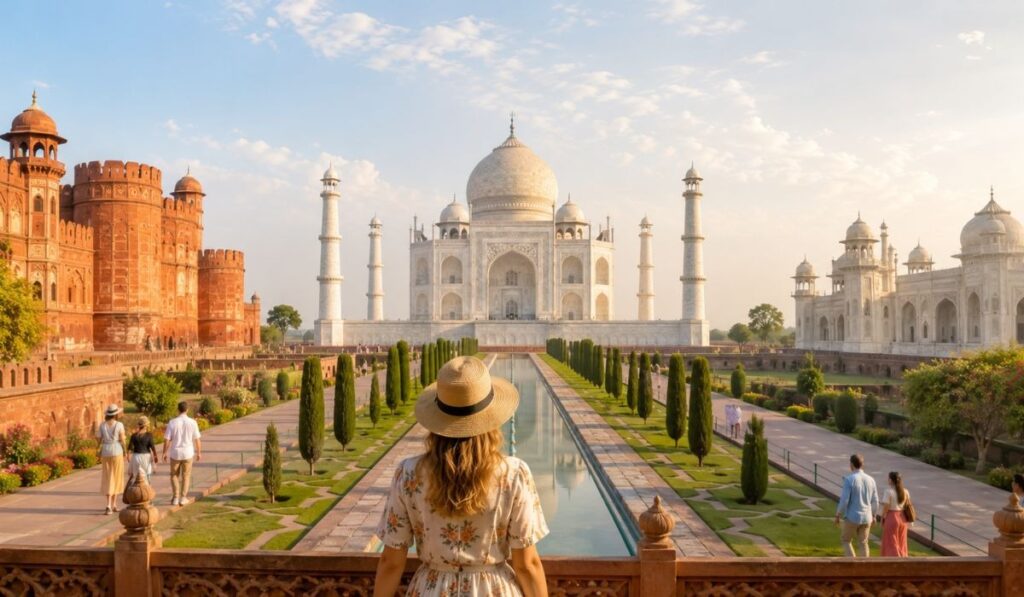
The city’s most famous attraction is undoubtedly the Taj Mahal, one of the world’s most recognised monuments. Built during the Mughal period, it attracts visitors from across the globe for its architecture, craftsmanship, symmetry, and history.
However, Agra offers more than one monument.
Combining the Taj Mahal and Agra Fort allows travellers to better understand the city’s importance during the Mughal era. Agra Fort served as a major royal residence and provides an interesting historical connection to the Taj Mahal.
Other attractions may include Itmad-ud-Daulah and Mehtab Bagh, depending on your available time.
Many travellers spend one night in Agra so they can visit the Taj Mahal early in the morning before continuing to Jaipur.
For visitors who want to explore the monument and its history in greater depth, a well-planned Taj Mahal Tour can make it easier to combine the Taj Mahal with other important attractions in Agra.
Jaipur: Rajasthan’s Royal Capital
Jaipur completes the traditional Golden Triangle.
Known as the Pink City, Jaipur is famous for its impressive forts, royal architecture, historic city centre, traditional markets, textiles, handicrafts, and jewellery.
The combination of Amber Fort and City Palace Jaipur provides visitors with an excellent introduction to Rajasthan’s royal heritage.
Other important attractions include Hawa Mahal and Jantar Mantar.
Jaipur also offers experiences beyond monument sightseeing. Exploring local bazaars, trying regional cuisine, and observing traditional crafts can add cultural depth to your visit.
For most travellers, two days provide enough time to see the major highlights without making the schedule excessively rushed.
Travellers interested in exploring the Pink City’s major landmarks and cultural experiences can consider Jaipur Tour Packages based on their schedule and preferred sightseeing pace.
What Is the Golden Triangle Route in India?
The traditional route is:
Delhi → Agra → Jaipur → Delhi
This Delhi Agra Jaipur travel route is popular because the cities are well connected by road and rail.
The journey can also be completed in the opposite direction, starting in Delhi and travelling to Jaipur before continuing to Agra. However, Delhi to Agra to Jaipur remains one of the most commonly used sequences.
A standard Golden Triangle travel circuit covers roughly 700 to 800 kilometres in total, depending on the exact roads, hotel locations, sightseeing stops, and return route used.
The relatively manageable distances make the circuit suitable for travellers who want to experience multiple destinations during one trip.
How Many Days Do You Need for a Golden Triangle Tour?
The ideal Golden Triangle Tour duration depends on your travel style.
A three-day trip is possible but usually focuses only on the major highlights. Travellers following such a schedule need to accept early starts, limited free time, and frequent travel.
Four or five days provides a better balance for visitors with limited time.
For a more comfortable experience, six or seven days is generally preferable. This allows you to explore the cities at a slower pace and spend more time at important attractions.
A simple guide would be:
3 days: Fast-paced highlights tour
4–5 days: Suitable for travellers with limited time
6–7 days: More comfortable for first-time visitors
8+ days: Ideal for slower travel or adding nearby destinations
When deciding how many days for a Golden Triangle Tour, consider not only the number of attractions you want to visit but also travel time between cities.
Suggested Golden Triangle Itinerary India
A well-planned Golden Triangle itinerary India can be completed in several ways. The following six-day route offers a balanced starting point.
Day 1: Arrive in Delhi
Arrive in Delhi and settle into your hotel. Depending on your arrival time, explore nearby attractions or spend the day recovering from your journey.
Day 2: Explore Delhi
Spend a full day visiting selected attractions across Old and New Delhi. You might explore Jama Masjid, the Old Delhi area, Humayun’s Tomb, Qutub Minar, and other major landmarks according to your interests.
Day 3: Delhi to Agra
Travel to Agra and visit Agra Fort. If time allows, explore Mehtab Bagh or another local attraction.
Day 4: Taj Mahal and Jaipur
Visit the Taj Mahal early in the morning before continuing towards Jaipur. Depending on your route and available time, you may stop at Fatehpur Sikri.
Day 5: Jaipur Sightseeing
Spend the day exploring Amber Fort, City Palace, Jantar Mantar, and other major Jaipur attractions. You can also visit local markets if your schedule allows.
Day 6: Jaipur to Delhi
Return to Delhi for your onward journey or continue to another destination in India.
This Delhi Agra Jaipur itinerary can easily be extended by adding another day in any of the three cities.
Best Time to Visit Golden Triangle India
The best time to visit Golden Triangle India is generally between October and March, when temperatures are usually more comfortable for outdoor sightseeing.
October and November often provide pleasant conditions. December and January can be colder, particularly during early mornings and evenings in Delhi and Agra.
February and March are also popular months before the intense summer heat arrives.
From approximately April onwards, daytime temperatures can become very high, especially in Agra and Jaipur. Travelling during summer is still possible, but sightseeing may be more comfortable during the morning and late afternoon.
The monsoon months can bring rainfall and humidity. However, there may also be fewer visitors at some attractions compared with the peak winter season.
Weather patterns vary from year to year, so checking current forecasts before departure is always recommended.
How to Travel Between Delhi, Agra and Jaipur
Understanding how to travel between Delhi, Agra and Jaipur is an important part of planning your journey.
By Private Car
A private car offers flexibility and door-to-door transportation. It can be particularly convenient if you want to stop at attractions between cities.
Road travel also makes it easier to manage luggage and adjust your schedule.
By Train
India’s railway network connects the major Golden Triangle cities. Several trains operate between Delhi and Agra, while rail connections are also available for other sections of the journey.
Train schedules and availability can change, so tickets should be checked through current official sources before travelling.
Places to Visit on the Golden Triangle
The best places to visit on the Golden Triangle depend on your available time and personal interests.
In Delhi, first-time visitors often prioritise Qutub Minar, Humayun’s Tomb, Old Delhi, and selected landmarks in New Delhi.
In Agra, the Taj Mahal and Agra Fort are usually essential stops.
In Jaipur, Amber Fort, Hawa Mahal, City Palace, and Jantar Mantar are among the most popular attractions.
Rather than trying to visit every possible monument, focus on a manageable selection. Spending more time at fewer attractions can often provide a better travel experience than rushing through a long sightseeing checklist.
Is the Golden Triangle Good for First-Time Visitors to India?
The Golden Triangle India for first-time visitors is popular for several practical reasons.
The route includes internationally recognised attractions, provides access to different cultural experiences, and has relatively established tourism infrastructure.
Delhi offers an introduction to India’s capital and history. Agra provides the iconic Taj Mahal experience, while Jaipur introduces visitors to Rajasthan.
This combination makes the route a strong first trip to India itinerary, especially for travellers who have approximately one week available.
However, first-time visitors should be prepared for busy streets, traffic, crowds, and significant differences between destinations.
Planning transportation and accommodation in advance can make the overall journey more comfortable.
Before travelling, check current destination information and travel guidance through the official India tourism website, especially when planning visits to major heritage attractions.
How Much Distance Is There Between Delhi, Agra and Jaipur?
The exact distance between Delhi Agra and Jaipur depends on your route and starting point within each city.
Delhi to Agra is approximately 230 kilometres by road, while Agra to Jaipur is roughly 240 kilometres. Jaipur to Delhi is approximately 280 kilometres.
Travel times can vary significantly depending on traffic, road conditions, stops, and the location of your accommodation.
Avoid planning your itinerary based only on distance. In India, realistic travel time is often more important than the number of kilometres shown on a map.
Can You Extend the Golden Triangle Tour?
Yes. One of the advantages of the Golden Triangle is that it can serve as the foundation for a longer India journey.
Wildlife enthusiasts may add Ranthambore National Park. Travellers interested in spirituality can extend their journey towards Rishikesh or Varanasi.
Those who want to explore more of Rajasthan may continue towards Udaipur, Jodhpur, or Jaisalmer.
The best extension depends on your interests and the total number of days available.
When adding another destination, include enough time to enjoy it properly rather than simply increasing the number of stops.
Golden Triangle Travel Tips for First-Time Visitors
A few practical Golden Triangle travel tips can make your journey easier.
Book important transportation and accommodation in advance during busy travel periods. Start sightseeing early when possible, particularly at popular attractions.
Carry comfortable walking shoes, sun protection, and drinking water. Dress respectfully when visiting religious sites.
Keep your daily itinerary realistic. Traffic and travel times can be unpredictable, and trying to cover too many attractions may make the journey unnecessarily tiring.
Use authorised guides and transportation services when required, and check current entry rules, ticket prices, opening hours, and monument closure days before your visit.
Most importantly, allow some flexibility. Markets, local food, neighbourhood walks, and unexpected discoveries can be just as memorable as famous monuments.
Is the Golden Triangle Tour Worth It?
For travellers interested in Indian history, architecture, culture, and heritage, the Golden Triangle can be a rewarding introduction to the country.
The route provides remarkable variety within a relatively accessible circuit. You can move from the historic streets of Delhi to the Taj Mahal in Agra and then experience the forts and palaces of Jaipur within a few days.
It is particularly suitable for travellers who want to see several of North India’s major highlights without taking multiple domestic flights.
The experience ultimately depends on how you plan the journey. A well-paced itinerary with realistic travel times is generally more enjoyable than trying to cover every attraction in the shortest possible period.
Travellers who prefer a pre-planned journey with organised transportation and sightseeing can explore Golden Triangle Tour Packages based on their preferred duration, travel style, and itinerary.
Frequently Asked Questions About the Golden Triangle India
1. What is the Golden Triangle Tour in India?
The Golden Triangle Tour is a famous tourist circuit connecting Delhi, Agra, and Jaipur. The three cities form a roughly triangular route on a map and offer a combination of historical monuments, Mughal heritage, Rajasthan’s royal architecture, markets, and cultural experiences.
2. Why is it called the Golden Triangle?
If you are wondering why is it called the Golden Triangle, the name comes from the triangular shape created by Delhi, Agra, and Jaipur on a map. “Golden” represents the cultural and tourism significance of these three destinations.
3. Which cities are included in the India Golden Triangle route?
The traditional India Golden Triangle route includes Delhi, Agra, and Jaipur. Destinations such as Ranthambore, Varanasi, and Rishikesh are popular extensions but are not part of the original Golden Triangle.
4. How many days are enough for a Golden Triangle Tour?
For most first-time visitors, five to seven days is a comfortable Golden Triangle Tour duration. A three or four-day journey is possible for travellers with limited time but will require a faster sightseeing schedule.
5. What is the best time to visit Golden Triangle India?
The best time to visit Golden Triangle India is generally from October to March, when temperatures are more comfortable for sightseeing in Delhi, Agra, and Jaipur. Always check current weather conditions before travelling.
6. What is the best Golden Triangle itinerary in India?
A popular Golden Triangle itinerary India follows Delhi → Agra → Jaipur → Delhi. Spending two days in Delhi, one or two days in Agra, and two days in Jaipur provides a balanced experience for many travellers.
7. How do you travel between Delhi, Agra and Jaipur?
If you are considering how to travel between Delhi, Agra and Jaipur, private cars and trains are the most commonly used options. The best choice depends on your budget, schedule, preferred comfort level, and current transport availability.
8. What are the best places to visit on the Golden Triangle?
Popular places to visit on the Golden Triangle include Qutub Minar and Humayun’s Tomb in Delhi, the Taj Mahal and Agra Fort in Agra, and Amber Fort, Hawa Mahal, City Palace, and Jantar Mantar in Jaipur.
9. Is the Golden Triangle India suitable for first-time visitors?
Yes. The Golden Triangle India for first-time visitors offers an accessible introduction to India’s history, architecture, culture, and major heritage attractions. The established tourism infrastructure also makes the route relatively straightforward to plan.
10. Is the Golden Triangle Tour worth it?
The Golden Triangle Tour can be worth it for travellers interested in history, architecture, and culture. It combines three very different destinations within one relatively compact Golden Triangle travel circuit, making it particularly suitable for travellers visiting North India for the first time.
Final Thoughts
The Golden Triangle remains one of India’s most recognised travel routes because it combines three destinations with distinctly different identities.
Delhi reveals layers of Indian history alongside contemporary urban life. Agra introduces travellers to the architectural legacy of the Mughal period and the world-famous Taj Mahal. Jaipur adds Rajasthan’s royal heritage, magnificent forts, palaces, and colourful culture.
This Golden Triangle India Travel Guide provides a foundation for planning the route, but there is no single perfect itinerary for everyone. Your ideal journey will depend on your available time, travel pace, interests, and the experiences you value most.
Whether you complete the circuit in four days or explore it over a full week, thoughtful planning can help you experience the Golden Triangle as more than a checklist of famous attractions. It can become an introduction to the history, culture, architecture, and diversity that make North India such a fascinating destination.