<!-- wp:paragraph -->
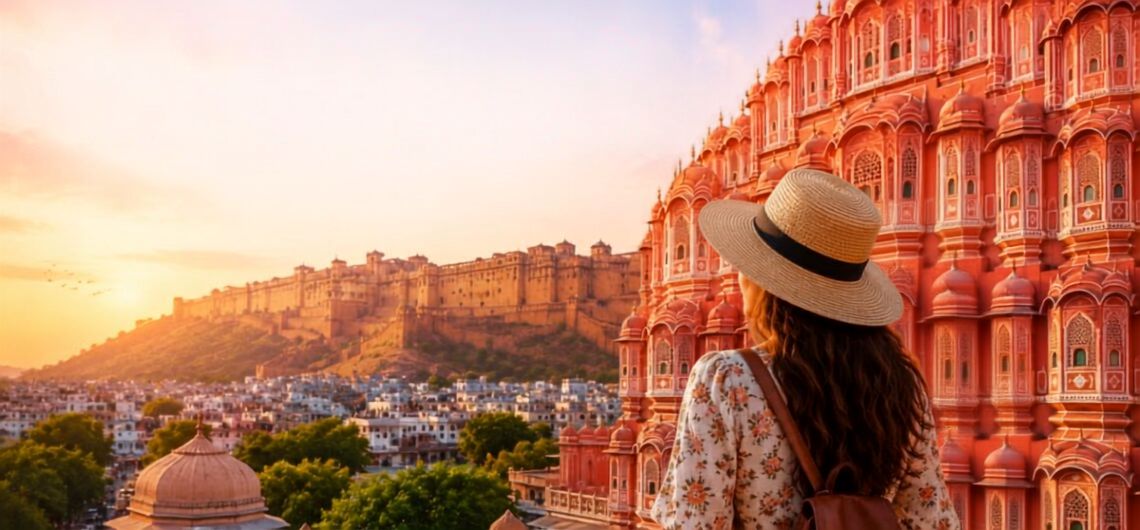
<p>If you're planning your <strong>first-time in Jaipur</strong>, you're in for a treat. Known as the Pink City of India, Jaipur is one of the most visited destinations on the country's tourist map, and for good reason. Its rose-hued facades, towering forts, and bustling bazaars make it feel like a living museum, yet the city is warm, walkable, and easy to navigate even for someone visiting India for the very first time.</p>
<!-- /wp:paragraph -->
<!-- wp:paragraph -->
<p>This Jaipur travel guide is built for exactly that traveler. Whether you're a solo backpacker, part of a couple's getaway, traveling with family, or ticking Jaipur off as a stop on the Golden Triangle, this guide covers everything you need: the best attractions, the best time to visit, where to eat, where to shop, how to get around, and a practical one-day itinerary you can actually follow.</p>
<!-- /wp:paragraph -->
<!-- wp:paragraph -->
<p>By the end of this guide, you'll know exactly how to plan a smooth, memorable trip to Jaipur — and how to avoid the mistakes most first-time visitors make.</p>
<!-- /wp:paragraph -->
<!-- wp:heading -->
<h2 class="wp-block-heading"><strong>Why Jaipur Should Be on Every First-Time Visitor's India Itinerary</strong></h2>
<!-- /wp:heading -->
<!-- wp:paragraph -->
<p>Jaipur isn't just another stop on the tourist trail. It's the capital of Rajasthan and one of the three points of India's famous Golden Triangle, alongside Delhi and Agra.</p>
<!-- /wp:paragraph -->
<!-- wp:paragraph -->
<p>Here's what makes it so special:</p>
<!-- /wp:paragraph -->
<!-- wp:list -->
<ul class="wp-block-list"><!-- wp:list-item -->
<li><strong>Royal heritage</strong> — Founded in 1727 by Maharaja Sawai Jai Singh II, the city still feels like it belongs to a royal family, with palaces, forts, and havelis everywhere.</li>
<!-- /wp:list-item -->
<!-- wp:list-item -->
<li><strong>UNESCO attractions</strong> — Jaipur's planned urban core, along with sites like Amber Fort and Jantar Mantar, are recognized as <a href="https://whc.unesco.org/en/list/1338/">UNESCO World Heritage</a> properties.</li>
<!-- /wp:list-item -->
<!-- wp:list-item -->
<li><strong>Vibrant culture</strong> — From evening folk music to traditional puppet shows, Jaipur's culture is on display almost everywhere you go.</li>
<!-- /wp:list-item -->
<!-- wp:list-item -->
<li><strong>Architecture</strong> — Pink sandstone buildings, latticed windows, and a Rajput-Mughal design blend unlike anything else in India.</li>
<!-- /wp:list-item -->
<!-- wp:list-item -->
<li><strong>Shopping</strong> — A haven for handicrafts, textiles, and jewelry, especially precious and semi-precious stones.</li>
<!-- /wp:list-item -->
<!-- wp:list-item -->
<li><strong>Local food</strong> — Rajasthani cuisine is hearty, flavorful, and distinct from what you'll find elsewhere in the country.</li>
<!-- /wp:list-item -->
<!-- wp:list-item -->
<li><strong>Photography</strong> — Between the forts, colors, and street life, Jaipur is one of the most photogenic cities in India.</li>
<!-- /wp:list-item -->
<!-- wp:list-item -->
<li><strong>Friendly atmosphere</strong> — Locals are used to tourists and generally welcoming, which makes first-time navigation far less intimidating.</li>
<!-- /wp:list-item --></ul>
<!-- /wp:list -->
<!-- wp:paragraph -->
<p>If you're building a Jaipur itinerary for your first visit, these strengths help you prioritize what matters most, whether that's history, food, shopping, or photography.</p>
<!-- /wp:paragraph -->
<!-- wp:heading -->
<h2 class="wp-block-heading"><strong>Best Time to Visit Jaipur</strong></h2>
<!-- /wp:heading -->
<!-- wp:paragraph -->
<p>Choosing the right season can make or break your trip. Here's a season-by-season breakdown to help with your Jaipur trip planning.</p>
<!-- /wp:paragraph -->
<!-- wp:heading {"level":3} -->
<h3 class="wp-block-heading"><strong>Winter (Best Season)</strong></h3>
<!-- /wp:heading -->
<!-- wp:paragraph -->
<p>Winter, roughly October to March, is widely considered the best time to visit Jaipur. Days are pleasant and sunny, nights are cool, and it's comfortable enough to spend hours outdoors exploring forts and markets. December and January can get chilly in the early mornings, so pack a light jacket.</p>
<!-- /wp:paragraph -->
<!-- wp:heading {"level":3} -->
<h3 class="wp-block-heading"><strong>Summer</strong></h3>
<!-- /wp:heading -->
<!-- wp:paragraph -->
<p>Summer runs from April to June and gets extremely hot, with daytime temperatures often crossing 40°C (104°F). Sightseeing is best planned around early mornings and evenings, with plenty of hydration in between. The upside: thinner crowds and lower hotel rates.</p>
<!-- /wp:paragraph -->
<!-- wp:heading {"level":3} -->
<h3 class="wp-block-heading"><strong>Monsoon</strong></h3>
<!-- /wp:heading -->
<!-- wp:paragraph -->
<p>Monsoon, from July to September, brings relief from the heat along with occasional heavy rainfall. The forts and gardens turn green, and the light is beautiful for photography, though sudden showers can disrupt outdoor plans, so keep your itinerary flexible.</p>
<!-- /wp:paragraph -->
<!-- wp:heading -->
<h2 class="wp-block-heading"><strong>How to Reach Jaipur</strong></h2>
<!-- /wp:heading -->
<!-- wp:paragraph -->
<p>Jaipur is well connected to the rest of India, which is part of why it's such a popular first stop for international tourists.</p>
<!-- /wp:paragraph -->
<!-- wp:paragraph -->
<p><strong>By Flight</strong> Jaipur International Airport (Sanganer Airport) has regular domestic flights from Delhi, Mumbai, Bengaluru, and other major cities, plus a handful of international connections.</p>
<!-- /wp:paragraph -->
<!-- wp:paragraph -->
<p><strong>By Train</strong> Jaipur Junction is a major railway hub with frequent trains from Delhi, Agra, and Mumbai. The Delhi–Jaipur route is especially convenient, with express trains covering the distance in around 4.5 to 5 hours.</p>
<!-- /wp:paragraph -->
<!-- wp:paragraph -->
<p><strong>By Road</strong> Jaipur is roughly 280 km from Delhi and 240 km from Agra, both reachable by well-maintained expressways in 4–5 hours. Many first-time visitors combine Jaipur with Delhi and Agra as part of a Golden Triangle trip, and a <a href="https://www.mytajtour.com/tours/same-day-trip-delhi-jaipur-tour/">Same Day Delhi to Jaipur Tour</a> is popular among travelers short on time who still want to experience the Pink City without an overnight stay.</p>
<!-- /wp:paragraph -->
<!-- wp:heading -->
<h2 class="wp-block-heading"><strong>Top Places to Visit in Jaipur for First-Time Travelers</strong></h2>
<!-- /wp:heading -->
<!-- wp:paragraph -->
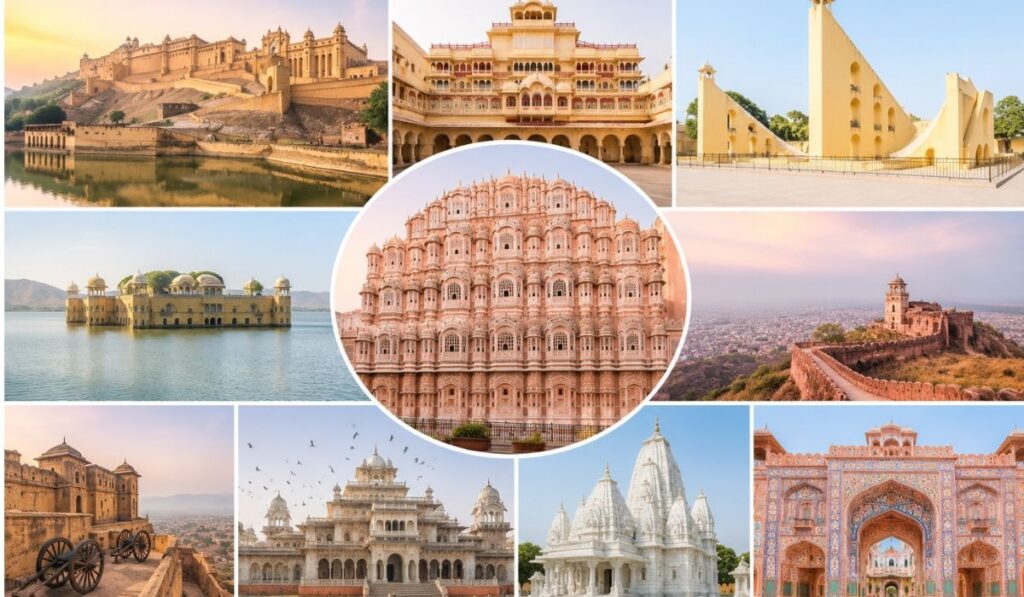
<p>These are the sights that consistently top every Jaipur sightseeing list, and for good reason.</p>
<!-- /wp:paragraph -->
<!-- wp:image {"id":2109,"sizeSlug":"large","linkDestination":"none"} -->
<figure class="wp-block-image size-large"><img src="https://www.mytajtour.com/wp-content/uploads/2026/08/image-1024x597.jpeg" alt="Collage of Jaipur's top tourist attractions including Hawa Mahal, Amber Fort, City Palace, Jantar Mantar, Jal Mahal, Nahargarh Fort, Albert Hall Museum, Birla Mandir, and Patrika Gate in the Pink City." class="wp-image-2109" title="Top Tourist Places to Visit in Jaipur – Complete Sightseeing Guide"/></figure>
<!-- /wp:image -->
<!-- wp:heading {"level":3} -->
<h3 class="wp-block-heading"><strong>Amber Fort</strong></h3>
<!-- /wp:heading -->
<!-- wp:paragraph -->
<p>Perched on a hilltop above Maota Lake, Amber Fort is Jaipur's most iconic monument, built from pale yellow and pink sandstone that blends Rajput and Mughal architecture. Don't miss the Sheesh Mahal (Mirror Palace) inside. Plan for 2–3 hours, and arrive early to beat the heat and crowds — the golden morning light on the facade is a photographer's dream.</p>
<!-- /wp:paragraph -->
<!-- wp:heading {"level":3} -->
<h3 class="wp-block-heading"><strong>Hawa Mahal</strong></h3>
<!-- /wp:heading -->
<!-- wp:paragraph -->
<p>The "Palace of Winds" is Jaipur's most photographed building, with its honeycomb facade of 953 small windows designed to let royal women observe street life without being seen. View it from outside in 15–20 minutes, or go inside for about an hour to explore the corridors. Early morning light hits the pink facade beautifully.</p>
<!-- /wp:paragraph -->
<!-- wp:heading {"level":3} -->
<h3 class="wp-block-heading"><strong>City Palace</strong></h3>
<!-- /wp:heading -->
<!-- wp:paragraph -->
<p>Still partly home to Jaipur's royal family, City Palace is a sprawling complex of courtyards, museums, and gardens showcasing royal artifacts, textiles, and weaponry. Budget 1.5–2 hours. The Peacock Gate and inner courtyards are among the most photographed corners.</p>
<!-- /wp:paragraph -->
<!-- wp:heading {"level":3} -->
<h3 class="wp-block-heading"><strong>Jantar Mantar</strong></h3>
<!-- /wp:heading -->
<!-- wp:paragraph -->
<p>Right next to City Palace, Jantar Mantar is a UNESCO-listed astronomical observatory housing the world's largest stone sundial and several other instruments for tracking celestial movements. An hour is usually enough, ideally with a guide, since the science isn't obvious at first glance.</p>
<!-- /wp:paragraph -->
<!-- wp:heading {"level":3} -->
<h3 class="wp-block-heading"><strong>Jal Mahal</strong></h3>
<!-- /wp:heading -->
<!-- wp:paragraph -->
<p>The "Water Palace" sits dramatically in the middle of Man Sagar Lake, with only its top floor visible above the water. You can't go inside, but it's worth a 20–30 minute stop for photos, especially at sunset.</p>
<!-- /wp:paragraph -->
<!-- wp:heading {"level":3} -->
<h3 class="wp-block-heading"><strong>Nahargarh Fort</strong></h3>
<!-- /wp:heading -->
<!-- wp:paragraph -->
<p>Perched on the Aravalli hills overlooking the city, Nahargarh Fort is best known for panoramic sunset views. Plan for about an hour, timed for late afternoon.</p>
<!-- /wp:paragraph -->
<!-- wp:heading {"level":3} -->
<h3 class="wp-block-heading"><strong>Jaigarh Fort</strong></h3>
<!-- /wp:heading -->
<!-- wp:paragraph -->
<p>Connected to Amber Fort by a walking path, Jaigarh Fort is home to Jaivana, the world's largest cannon on wheels, and is less crowded than Amber Fort. An hour is generally enough to explore the ramparts.</p>
<!-- /wp:paragraph -->
<!-- wp:heading {"level":3} -->
<h3 class="wp-block-heading"><strong>Albert Hall Museum</strong></h3>
<!-- /wp:heading -->
<!-- wp:paragraph -->
<p>Located in Ram Niwas Garden, this Indo-Saracenic building houses Rajasthan's oldest museum, with collections ranging from Egyptian mummies to Rajasthani miniature paintings. Give it about an hour — the building itself, lit up at night, is as much a highlight as what's inside.</p>
<!-- /wp:paragraph -->
<!-- wp:heading {"level":3} -->
<h3 class="wp-block-heading"><strong>Birla Mandir</strong></h3>
<!-- /wp:heading -->
<!-- wp:paragraph -->
<p>A striking white marble temple dedicated to Lord Vishnu and Goddess Lakshmi, Birla Mandir is peaceful and open to visitors of all faiths. A 30-minute visit is usually enough, and it's especially beautiful when illuminated in the evening.</p>
<!-- /wp:paragraph -->
<!-- wp:heading {"level":3} -->
<h3 class="wp-block-heading"><strong>Patrika Gate</strong></h3>
<!-- /wp:heading -->
<!-- wp:paragraph -->
<p>One of Jaipur's newer landmarks, this vividly painted, ornately decorated gateway has become a favorite for photographers. A quick 15–20 minute stop is enough to admire the artwork.</p>
<!-- /wp:paragraph -->
<!-- wp:heading -->
<h2 class="wp-block-heading"><strong>Suggested One-Day Jaipur Itinerary</strong></h2>
<!-- /wp:heading -->
<!-- wp:paragraph -->
<p>If you only have one day, here's a practical timeline that covers Jaipur's essentials without overpacking your schedule.</p>
<!-- /wp:paragraph -->
<!-- wp:paragraph -->
<p><strong>Morning (8:00 AM – 1:00 PM)</strong> Start early at Amber Fort for cooler temperatures and lighter crowds, then head to Jaigarh Fort, a 15-minute drive or scenic walk away. By late morning, move to Jantar Mantar and City Palace, which sit next to each other in the city center.</p>
<!-- /wp:paragraph -->
<!-- wp:paragraph -->
<p><strong>Afternoon (1:00 PM – 4:00 PM)</strong> Break for lunch and shade during the hottest hours, then take in Hawa Mahal (from outside) and Albert Hall Museum, both centrally located.</p>
<!-- /wp:paragraph -->
<!-- wp:paragraph -->
<p><strong>Evening (4:00 PM – 8:00 PM)</strong> Head to Nahargarh Fort for sunset over the city, then wind down at Jal Mahal as the light fades over the lake. End with dinner and a stroll through one of Jaipur's bazaars.</p>
<!-- /wp:paragraph -->
<!-- wp:paragraph -->
<p>Given how much ground this covers, many first-time visitors prefer joining a structured <a href="https://www.mytajtour.com/tours/jaipur-local-sightseeing-from-jaipur/">Jaipur Local Sightseeing Tour</a> that handles the routing and timing for you, so you're not worrying about traffic or travel time between stops.</p>
<!-- /wp:paragraph -->
<!-- wp:heading -->
<h2 class="wp-block-heading"><strong>Best Local Food to Try</strong></h2>
<!-- /wp:heading -->
<!-- wp:paragraph -->
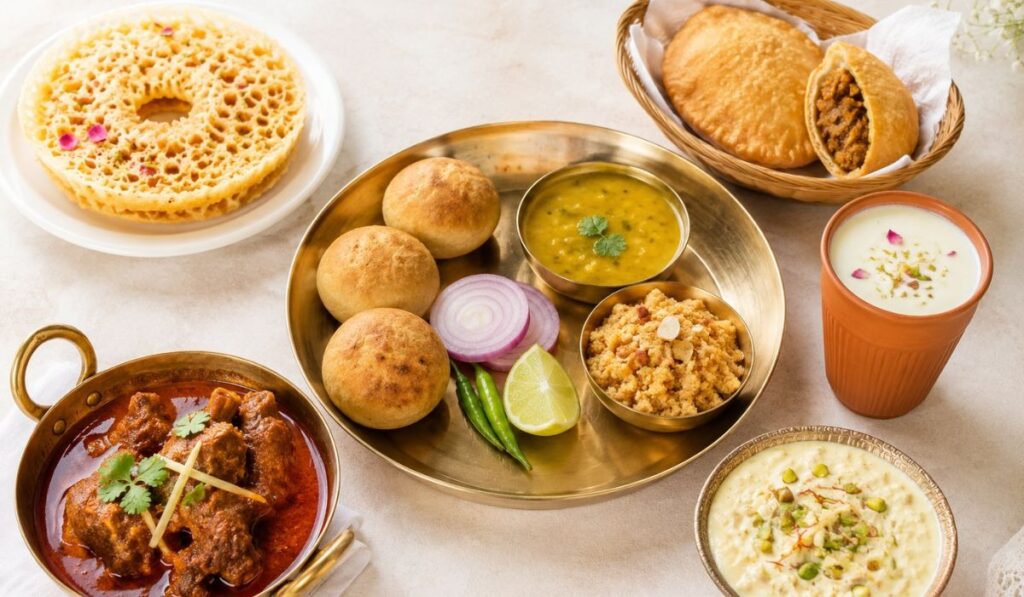
<p>No Jaipur trip is complete without diving into Rajasthani cuisine, which is bold, rich, and built to satisfy.</p>
<!-- /wp:paragraph -->
<!-- wp:image {"id":2110,"sizeSlug":"large","linkDestination":"none"} -->
<figure class="wp-block-image size-large"><img src="https://www.mytajtour.com/wp-content/uploads/2026/08/image-1-1024x597.jpeg" alt="Traditional Rajasthani food platter featuring Dal Baati Churma, Ghewar, Kachori, Laal Maas, Lassi, and Rabri, showcasing the best local food to try in Jaipur." class="wp-image-2110" title="Must-Try Local Food in Jaipur – Authentic Rajasthani Dishes"/></figure>
<!-- /wp:image -->
<!-- wp:list -->
<ul class="wp-block-list"><!-- wp:list-item -->
<li><strong>Dal Baati Churma</strong> — Jaipur's signature dish: baked wheat balls served with spiced lentils and a sweet, crumbled wheat-and-jaggery mixture.</li>
<!-- /wp:list-item -->
<!-- wp:list-item -->
<li><strong>Ghewar</strong> — A disc-shaped, syrup-soaked sweet, especially popular during festival season.</li>
<!-- /wp:list-item -->
<!-- wp:list-item -->
<li><strong>Pyaaz Kachori</strong> — A crispy, deep-fried pastry stuffed with a spiced onion filling, best eaten hot as a street-side snack.</li>
<!-- /wp:list-item -->
<!-- wp:list-item -->
<li><strong>Lassi</strong> — A thick, chilled yogurt drink, perfect for cooling down after a hot day of sightseeing.</li>
<!-- /wp:list-item -->
<!-- wp:list-item -->
<li><strong>Laal Maas</strong> — A fiery, red chili-based mutton curry that's a Rajasthani classic for non-vegetarian travelers.</li>
<!-- /wp:list-item -->
<!-- wp:list-item -->
<li><strong>Rabri</strong> — A dense, sweetened, thickened milk dessert often served alongside other sweets.</li>
<!-- /wp:list-item --></ul>
<!-- /wp:list -->
<!-- wp:heading -->
<h2 class="wp-block-heading"><strong>Best Shopping Places in Jaipur</strong></h2>
<!-- /wp:heading -->
<!-- wp:paragraph -->
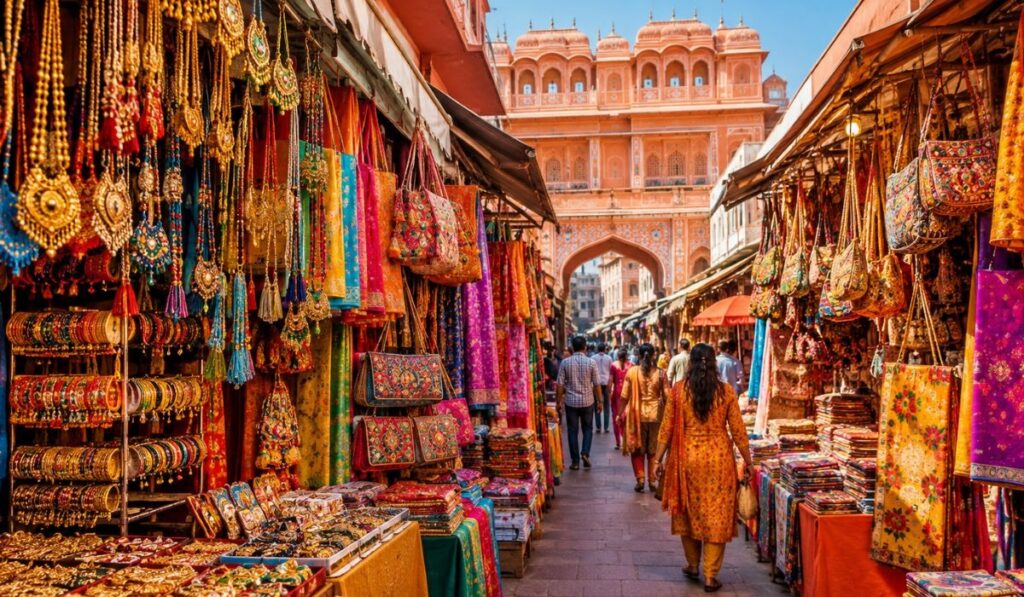
<p>Jaipur's markets are as much an experience as its monuments.</p>
<!-- /wp:paragraph -->
<!-- wp:image {"id":2111,"sizeSlug":"large","linkDestination":"none"} -->
<figure class="wp-block-image size-large"><img src="https://www.mytajtour.com/wp-content/uploads/2026/08/image-2-1024x597.jpeg" alt="Colorful Jaipur local market near Hawa Mahal featuring traditional Rajasthani textiles, jewelry, handicrafts, bags, and souvenirs, showcasing the best shopping experience in Jaipur." class="wp-image-2111" title="Jaipur Local Market Shopping Guide – Best Bazaars in the Pink City"/></figure>
<!-- /wp:image -->
<!-- wp:list -->
<ul class="wp-block-list"><!-- wp:list-item -->
<li><strong>Johari Bazaar</strong> — Famous for traditional Rajasthani jewelry, gemstones, and bridal wear.</li>
<!-- /wp:list-item -->
<!-- wp:list-item -->
<li><strong>Bapu Bazaar</strong> — Known for textiles, juttis (traditional footwear), and block-printed fabrics.</li>
<!-- /wp:list-item -->
<!-- wp:list-item -->
<li><strong>Tripolia Bazaar</strong> — A go-to spot for brassware, lac bangles, and traditional handicrafts.</li>
<!-- /wp:list-item -->
<!-- wp:list-item -->
<li><strong>Chandpole Bazaar</strong> — Popular for marble idols, handicrafts, and religious artifacts.</li>
<!-- /wp:list-item --></ul>
<!-- /wp:list -->
<!-- wp:paragraph -->
<p>Bargaining is expected in most of these markets, so don't hesitate to negotiate politely, especially if you're buying in bulk.</p>
<!-- /wp:paragraph -->
<!-- wp:heading -->
<h2 class="wp-block-heading"><strong>How to Travel Around Jaipur</strong></h2>
<!-- /wp:heading -->
<!-- wp:paragraph -->
<p>Getting around Jaipur is straightforward once you know your options.</p>
<!-- /wp:paragraph -->
<!-- wp:list -->
<ul class="wp-block-list"><!-- wp:list-item -->
<li><strong>Taxi</strong> — Convenient for door-to-door travel, especially for families or those short on time.</li>
<!-- /wp:list-item -->
<!-- wp:list-item -->
<li><strong>Auto</strong> — Auto-rickshaws are cheap and ideal for shorter distances within the city.</li>
<!-- /wp:list-item -->
<!-- wp:list-item -->
<li><strong>Metro</strong> — Jaipur Metro covers a limited stretch of the city and is useful mainly for specific routes near the main bazaars.</li>
<!-- /wp:list-item -->
<!-- wp:list-item -->
<li><strong>Walking</strong> — The old city's core attractions are close enough to explore on foot, especially around City Palace and Hawa Mahal.</li>
<!-- /wp:list-item -->
<!-- wp:list-item -->
<li><strong>Private Cab</strong> — For a full day of sightseeing across multiple forts, hiring a private cab for the day is often the most efficient and comfortable option.</li>
<!-- /wp:list-item --></ul>
<!-- /wp:list -->
<!-- wp:heading -->
<h2 class="wp-block-heading"><strong>Travel Tips for First-Time Visitors</strong></h2>
<!-- /wp:heading -->
<!-- wp:paragraph -->
<p>A few practical Jaipur travel tips that make a real difference on the ground:</p>
<!-- /wp:paragraph -->
<!-- wp:list -->
<ul class="wp-block-list"><!-- wp:list-item -->
<li><strong>Dress comfortably</strong> — Light, breathable fabrics work best, and modest clothing is appreciated at temples and forts.</li>
<!-- /wp:list-item -->
<!-- wp:list-item -->
<li><strong>Carry cash & UPI options</strong> — While many places accept digital payments, smaller vendors and markets often prefer cash.</li>
<!-- /wp:list-item -->
<!-- wp:list-item -->
<li><strong>Stay hydrated</strong> — Especially important during summer months when temperatures soar.</li>
<!-- /wp:list-item -->
<!-- wp:list-item -->
<li><strong>Start sightseeing early</strong> — Beats both the heat and the crowds at major attractions.</li>
<!-- /wp:list-item -->
<!-- wp:list-item -->
<li><strong>Respect local customs</strong> — Ask before photographing people, and dress modestly at religious sites.</li>
<!-- /wp:list-item -->
<!-- wp:list-item -->
<li><strong>Bargain politely</strong> — Haggling is normal in Jaipur's markets, but keep it friendly.</li>
<!-- /wp:list-item -->
<!-- wp:list-item -->
<li><strong>Book monuments online where available</strong> — Saves time standing in ticket lines, especially at Amber Fort and City Palace.</li>
<!-- /wp:list-item -->
<!-- wp:list-item -->
<li><strong>Avoid peak afternoon heat</strong> — Plan indoor activities like museum visits or shopping between 1 PM and 4 PM.</li>
<!-- /wp:list-item --></ul>
<!-- /wp:list -->
<!-- wp:heading -->
<h2 class="wp-block-heading"><strong>Common Mistakes First-Time Visitors Make</strong></h2>
<!-- /wp:heading -->
<!-- wp:paragraph -->
<p>Even well-planned trips can go sideways with a few avoidable missteps:</p>
<!-- /wp:paragraph -->
<!-- wp:list -->
<ul class="wp-block-list"><!-- wp:list-item -->
<li><strong>Trying to visit everything in one day</strong> — Jaipur has more to see than a single day allows; prioritize based on your interests.</li>
<!-- /wp:list-item -->
<!-- wp:list-item -->
<li><strong>Ignoring travel time</strong> — Distances between forts often take longer than expected due to traffic.</li>
<!-- /wp:list-item -->
<!-- wp:list-item -->
<li><strong>Missing early morning attractions</strong> — Skipping the early slot at Amber Fort means larger crowds and more heat later.</li>
<!-- /wp:list-item -->
<!-- wp:list-item -->
<li><strong>Shopping without comparing prices</strong> — Prices vary significantly between shops selling similar items.</li>
<!-- /wp:list-item -->
<!-- wp:list-item -->
<li><strong>Not carrying sunscreen or water</strong> — Jaipur's sun is intense for much of the year, and dehydration is common among tourists.</li>
<!-- /wp:list-item --></ul>
<!-- /wp:list -->
<!-- wp:heading -->
<h2 class="wp-block-heading"><strong>Extend Your Jaipur Trip</strong></h2>
<!-- /wp:heading -->
<!-- wp:paragraph -->
<p>If you have an extra day or two, consider pairing your Pink City visit with a wildlife experience. A <a href="https://www.mytajtour.com/tours/jaipur-to-ranthambore-tour/">Jaipur to Ranthambore Tour</a> lets you combine Jaipur's heritage sites with a tiger safari in one of India's most famous national parks, a great option for travelers who want more than just forts and palaces on their itinerary.</p>
<!-- /wp:paragraph -->
<!-- wp:heading -->
<h2 class="wp-block-heading"><strong>Frequently Asked Questions</strong></h2>
<!-- /wp:heading -->
<!-- wp:heading {"level":3} -->
<h3 class="wp-block-heading"><strong>Is one day enough for Jaipur?</strong> </h3>
<!-- /wp:heading -->
<!-- wp:paragraph -->
<p>One day is enough to cover the major highlights like Amber Fort, City Palace, Hawa Mahal, and Jantar Mantar, but two to three days let you explore at a more relaxed pace and add in shopping and food experiences.</p>
<!-- /wp:paragraph -->
<!-- wp:heading {"level":3} -->
<h3 class="wp-block-heading"><strong>What is Jaipur famous for?</strong> </h3>
<!-- /wp:heading -->
<!-- wp:paragraph -->
<p>Jaipur is famous for its pink-hued architecture, royal forts and palaces, vibrant bazaars, and rich Rajasthani culture and cuisine.</p>
<!-- /wp:paragraph -->
<!-- wp:heading {"level":3} -->
<h3 class="wp-block-heading"><strong>Which month is best to visit Jaipur?</strong> </h3>
<!-- /wp:heading -->
<!-- wp:paragraph -->
<p>November through February typically offers the most comfortable weather, with cool mornings and pleasant daytime temperatures.</p>
<!-- /wp:paragraph -->
<!-- wp:heading {"level":3} -->
<h3 class="wp-block-heading"><strong>Is Jaipur safe for tourists?</strong> </h3>
<!-- /wp:heading -->
<!-- wp:paragraph -->
<p>Yes, Jaipur is generally considered safe for tourists, including solo and international travelers, though standard travel precautions like avoiding poorly lit areas at night are always recommended.</p>
<!-- /wp:paragraph -->
<!-- wp:heading {"level":3} -->
<h3 class="wp-block-heading"><strong>How much budget is needed for a Jaipur trip?</strong> </h3>
<!-- /wp:heading -->
<!-- wp:paragraph -->
<p>Budgets vary widely depending on accommodation and travel style, but Jaipur is generally affordable compared to many international destinations, with options ranging from budget guesthouses to luxury heritage hotels.</p>
<!-- /wp:paragraph -->
<!-- wp:heading {"level":3} -->
<h3 class="wp-block-heading"><strong>What should I wear in Jaipur?</strong> </h3>
<!-- /wp:heading -->
<!-- wp:paragraph -->
<p>Light, breathable, and modest clothing works best, especially for visits to temples and forts. A light jacket is useful during winter mornings and evenings.</p>
<!-- /wp:paragraph -->
<!-- wp:heading {"level":3} -->
<h3 class="wp-block-heading"><strong>Is Jaipur suitable for families?</strong> </h3>
<!-- /wp:heading -->
<!-- wp:paragraph -->
<p>Yes, Jaipur's mix of forts, museums, and markets makes it engaging for both kids and adults, with plenty of options for shorter, family-friendly sightseeing routes.</p>
<!-- /wp:paragraph -->
<!-- wp:heading {"level":3} -->
<h3 class="wp-block-heading"><strong>Do I need a guide for Jaipur's monuments?</strong> </h3>
<!-- /wp:heading -->
<!-- wp:paragraph -->
<p>A guide isn't essential, but it does add valuable historical context, especially at sites like Jantar Mantar and City Palace where the significance isn't always obvious at first glance.</p>
<!-- /wp:paragraph -->
<!-- wp:heading -->
<h2 class="wp-block-heading"><strong>Conclusion</strong></h2>
<!-- /wp:heading -->
<!-- wp:paragraph -->
<p>Jaipur has a rare ability to be both grand and approachable at once. Its forts and palaces tell centuries of royal history, while its markets and street food offer something more personal and immediate. For any first-time visitor, it's a city that rewards a little planning, from choosing the right season to mapping out realistic travel times between attractions.</p>
<!-- /wp:paragraph -->
<!-- wp:paragraph -->
<p>Whether you're covering it in a single day or spending a few, aim to balance the big-ticket landmarks with quieter moments in the bazaars and local eateries. That's where Jaipur's character really comes through.</p>
<!-- /wp:paragraph -->
<!-- wp:paragraph -->
<p>Ready to start planning? With the right itinerary and a bit of local know-how, your first trip to the Pink City is bound to be one you'll want to repeat.</p>
<!-- /wp:paragraph -->
<!-- wp:paragraph -->
<p></p>
<!-- /wp:paragraph -->
If you’re planning your first-time in Jaipur, you’re in for a treat. Known as the Pink City of India, Jaipur is one of the most visited destinations on the country’s tourist map, and for good reason. Its rose-hued facades, towering forts, and bustling bazaars make it feel like a living museum, yet the city is warm, walkable, and easy to navigate even for someone visiting India for the very first time.
This Jaipur travel guide is built for exactly that traveler. Whether you’re a solo backpacker, part of a couple’s getaway, traveling with family, or ticking Jaipur off as a stop on the Golden Triangle, this guide covers everything you need: the best attractions, the best time to visit, where to eat, where to shop, how to get around, and a practical one-day itinerary you can actually follow.
By the end of this guide, you’ll know exactly how to plan a smooth, memorable trip to Jaipur — and how to avoid the mistakes most first-time visitors make.
Why Jaipur Should Be on Every First-Time Visitor’s India Itinerary
Jaipur isn’t just another stop on the tourist trail. It’s the capital of Rajasthan and one of the three points of India’s famous Golden Triangle, alongside Delhi and Agra.
Here’s what makes it so special:
Royal heritage — Founded in 1727 by Maharaja Sawai Jai Singh II, the city still feels like it belongs to a royal family, with palaces, forts, and havelis everywhere.
UNESCO attractions — Jaipur’s planned urban core, along with sites like Amber Fort and Jantar Mantar, are recognized as UNESCO World Heritage properties.
Vibrant culture — From evening folk music to traditional puppet shows, Jaipur’s culture is on display almost everywhere you go.
Architecture — Pink sandstone buildings, latticed windows, and a Rajput-Mughal design blend unlike anything else in India.
Shopping — A haven for handicrafts, textiles, and jewelry, especially precious and semi-precious stones.
Local food — Rajasthani cuisine is hearty, flavorful, and distinct from what you’ll find elsewhere in the country.
Photography — Between the forts, colors, and street life, Jaipur is one of the most photogenic cities in India.
Friendly atmosphere — Locals are used to tourists and generally welcoming, which makes first-time navigation far less intimidating.
If you’re building a Jaipur itinerary for your first visit, these strengths help you prioritize what matters most, whether that’s history, food, shopping, or photography.
Best Time to Visit Jaipur
Choosing the right season can make or break your trip. Here’s a season-by-season breakdown to help with your Jaipur trip planning.
Winter (Best Season)
Winter, roughly October to March, is widely considered the best time to visit Jaipur. Days are pleasant and sunny, nights are cool, and it’s comfortable enough to spend hours outdoors exploring forts and markets. December and January can get chilly in the early mornings, so pack a light jacket.
Summer
Summer runs from April to June and gets extremely hot, with daytime temperatures often crossing 40°C (104°F). Sightseeing is best planned around early mornings and evenings, with plenty of hydration in between. The upside: thinner crowds and lower hotel rates.
Monsoon
Monsoon, from July to September, brings relief from the heat along with occasional heavy rainfall. The forts and gardens turn green, and the light is beautiful for photography, though sudden showers can disrupt outdoor plans, so keep your itinerary flexible.
How to Reach Jaipur
Jaipur is well connected to the rest of India, which is part of why it’s such a popular first stop for international tourists.
By Flight Jaipur International Airport (Sanganer Airport) has regular domestic flights from Delhi, Mumbai, Bengaluru, and other major cities, plus a handful of international connections.
By Train Jaipur Junction is a major railway hub with frequent trains from Delhi, Agra, and Mumbai. The Delhi–Jaipur route is especially convenient, with express trains covering the distance in around 4.5 to 5 hours.
By Road Jaipur is roughly 280 km from Delhi and 240 km from Agra, both reachable by well-maintained expressways in 4–5 hours. Many first-time visitors combine Jaipur with Delhi and Agra as part of a Golden Triangle trip, and a Same Day Delhi to Jaipur Tour is popular among travelers short on time who still want to experience the Pink City without an overnight stay.
Top Places to Visit in Jaipur for First-Time Travelers
These are the sights that consistently top every Jaipur sightseeing list, and for good reason.
Amber Fort
Perched on a hilltop above Maota Lake, Amber Fort is Jaipur’s most iconic monument, built from pale yellow and pink sandstone that blends Rajput and Mughal architecture. Don’t miss the Sheesh Mahal (Mirror Palace) inside. Plan for 2–3 hours, and arrive early to beat the heat and crowds — the golden morning light on the facade is a photographer’s dream.
Hawa Mahal
The “Palace of Winds” is Jaipur’s most photographed building, with its honeycomb facade of 953 small windows designed to let royal women observe street life without being seen. View it from outside in 15–20 minutes, or go inside for about an hour to explore the corridors. Early morning light hits the pink facade beautifully.
City Palace
Still partly home to Jaipur’s royal family, City Palace is a sprawling complex of courtyards, museums, and gardens showcasing royal artifacts, textiles, and weaponry. Budget 1.5–2 hours. The Peacock Gate and inner courtyards are among the most photographed corners.
Jantar Mantar
Right next to City Palace, Jantar Mantar is a UNESCO-listed astronomical observatory housing the world’s largest stone sundial and several other instruments for tracking celestial movements. An hour is usually enough, ideally with a guide, since the science isn’t obvious at first glance.
Jal Mahal
The “Water Palace” sits dramatically in the middle of Man Sagar Lake, with only its top floor visible above the water. You can’t go inside, but it’s worth a 20–30 minute stop for photos, especially at sunset.
Nahargarh Fort
Perched on the Aravalli hills overlooking the city, Nahargarh Fort is best known for panoramic sunset views. Plan for about an hour, timed for late afternoon.
Jaigarh Fort
Connected to Amber Fort by a walking path, Jaigarh Fort is home to Jaivana, the world’s largest cannon on wheels, and is less crowded than Amber Fort. An hour is generally enough to explore the ramparts.
Albert Hall Museum
Located in Ram Niwas Garden, this Indo-Saracenic building houses Rajasthan’s oldest museum, with collections ranging from Egyptian mummies to Rajasthani miniature paintings. Give it about an hour — the building itself, lit up at night, is as much a highlight as what’s inside.
Birla Mandir
A striking white marble temple dedicated to Lord Vishnu and Goddess Lakshmi, Birla Mandir is peaceful and open to visitors of all faiths. A 30-minute visit is usually enough, and it’s especially beautiful when illuminated in the evening.
Patrika Gate
One of Jaipur’s newer landmarks, this vividly painted, ornately decorated gateway has become a favorite for photographers. A quick 15–20 minute stop is enough to admire the artwork.
Suggested One-Day Jaipur Itinerary
If you only have one day, here’s a practical timeline that covers Jaipur’s essentials without overpacking your schedule.
Morning (8:00 AM – 1:00 PM) Start early at Amber Fort for cooler temperatures and lighter crowds, then head to Jaigarh Fort, a 15-minute drive or scenic walk away. By late morning, move to Jantar Mantar and City Palace, which sit next to each other in the city center.
Afternoon (1:00 PM – 4:00 PM) Break for lunch and shade during the hottest hours, then take in Hawa Mahal (from outside) and Albert Hall Museum, both centrally located.
Evening (4:00 PM – 8:00 PM) Head to Nahargarh Fort for sunset over the city, then wind down at Jal Mahal as the light fades over the lake. End with dinner and a stroll through one of Jaipur’s bazaars.
Given how much ground this covers, many first-time visitors prefer joining a structured Jaipur Local Sightseeing Tour that handles the routing and timing for you, so you’re not worrying about traffic or travel time between stops.
Best Local Food to Try
No Jaipur trip is complete without diving into Rajasthani cuisine, which is bold, rich, and built to satisfy.
Dal Baati Churma — Jaipur’s signature dish: baked wheat balls served with spiced lentils and a sweet, crumbled wheat-and-jaggery mixture.
Ghewar — A disc-shaped, syrup-soaked sweet, especially popular during festival season.
Pyaaz Kachori — A crispy, deep-fried pastry stuffed with a spiced onion filling, best eaten hot as a street-side snack.
Lassi — A thick, chilled yogurt drink, perfect for cooling down after a hot day of sightseeing.
Laal Maas — A fiery, red chili-based mutton curry that’s a Rajasthani classic for non-vegetarian travelers.
Rabri — A dense, sweetened, thickened milk dessert often served alongside other sweets.
Best Shopping Places in Jaipur
Jaipur’s markets are as much an experience as its monuments.
Johari Bazaar — Famous for traditional Rajasthani jewelry, gemstones, and bridal wear.
Bapu Bazaar — Known for textiles, juttis (traditional footwear), and block-printed fabrics.
Tripolia Bazaar — A go-to spot for brassware, lac bangles, and traditional handicrafts.
Chandpole Bazaar — Popular for marble idols, handicrafts, and religious artifacts.
Bargaining is expected in most of these markets, so don’t hesitate to negotiate politely, especially if you’re buying in bulk.
How to Travel Around Jaipur
Getting around Jaipur is straightforward once you know your options.
Taxi — Convenient for door-to-door travel, especially for families or those short on time.
Auto — Auto-rickshaws are cheap and ideal for shorter distances within the city.
Metro — Jaipur Metro covers a limited stretch of the city and is useful mainly for specific routes near the main bazaars.
Walking — The old city’s core attractions are close enough to explore on foot, especially around City Palace and Hawa Mahal.
Private Cab — For a full day of sightseeing across multiple forts, hiring a private cab for the day is often the most efficient and comfortable option.
Travel Tips for First-Time Visitors
A few practical Jaipur travel tips that make a real difference on the ground:
Dress comfortably — Light, breathable fabrics work best, and modest clothing is appreciated at temples and forts.
Carry cash & UPI options — While many places accept digital payments, smaller vendors and markets often prefer cash.
Stay hydrated — Especially important during summer months when temperatures soar.
Start sightseeing early — Beats both the heat and the crowds at major attractions.
Respect local customs — Ask before photographing people, and dress modestly at religious sites.
Bargain politely — Haggling is normal in Jaipur’s markets, but keep it friendly.
Book monuments online where available — Saves time standing in ticket lines, especially at Amber Fort and City Palace.
Avoid peak afternoon heat — Plan indoor activities like museum visits or shopping between 1 PM and 4 PM.
Common Mistakes First-Time Visitors Make
Even well-planned trips can go sideways with a few avoidable missteps:
Trying to visit everything in one day — Jaipur has more to see than a single day allows; prioritize based on your interests.
Ignoring travel time — Distances between forts often take longer than expected due to traffic.
Missing early morning attractions — Skipping the early slot at Amber Fort means larger crowds and more heat later.
Shopping without comparing prices — Prices vary significantly between shops selling similar items.
Not carrying sunscreen or water — Jaipur’s sun is intense for much of the year, and dehydration is common among tourists.
Extend Your Jaipur Trip
If you have an extra day or two, consider pairing your Pink City visit with a wildlife experience. A Jaipur to Ranthambore Tour lets you combine Jaipur’s heritage sites with a tiger safari in one of India’s most famous national parks, a great option for travelers who want more than just forts and palaces on their itinerary.
Frequently Asked Questions
Is one day enough for Jaipur?
One day is enough to cover the major highlights like Amber Fort, City Palace, Hawa Mahal, and Jantar Mantar, but two to three days let you explore at a more relaxed pace and add in shopping and food experiences.
What is Jaipur famous for?
Jaipur is famous for its pink-hued architecture, royal forts and palaces, vibrant bazaars, and rich Rajasthani culture and cuisine.
Which month is best to visit Jaipur?
November through February typically offers the most comfortable weather, with cool mornings and pleasant daytime temperatures.
Is Jaipur safe for tourists?
Yes, Jaipur is generally considered safe for tourists, including solo and international travelers, though standard travel precautions like avoiding poorly lit areas at night are always recommended.
How much budget is needed for a Jaipur trip?
Budgets vary widely depending on accommodation and travel style, but Jaipur is generally affordable compared to many international destinations, with options ranging from budget guesthouses to luxury heritage hotels.
What should I wear in Jaipur?
Light, breathable, and modest clothing works best, especially for visits to temples and forts. A light jacket is useful during winter mornings and evenings.
Is Jaipur suitable for families?
Yes, Jaipur’s mix of forts, museums, and markets makes it engaging for both kids and adults, with plenty of options for shorter, family-friendly sightseeing routes.
Do I need a guide for Jaipur’s monuments?
A guide isn’t essential, but it does add valuable historical context, especially at sites like Jantar Mantar and City Palace where the significance isn’t always obvious at first glance.
Conclusion
Jaipur has a rare ability to be both grand and approachable at once. Its forts and palaces tell centuries of royal history, while its markets and street food offer something more personal and immediate. For any first-time visitor, it’s a city that rewards a little planning, from choosing the right season to mapping out realistic travel times between attractions.
Whether you’re covering it in a single day or spending a few, aim to balance the big-ticket landmarks with quieter moments in the bazaars and local eateries. That’s where Jaipur’s character really comes through.
Ready to start planning? With the right itinerary and a bit of local know-how, your first trip to the Pink City is bound to be one you’ll want to repeat.