
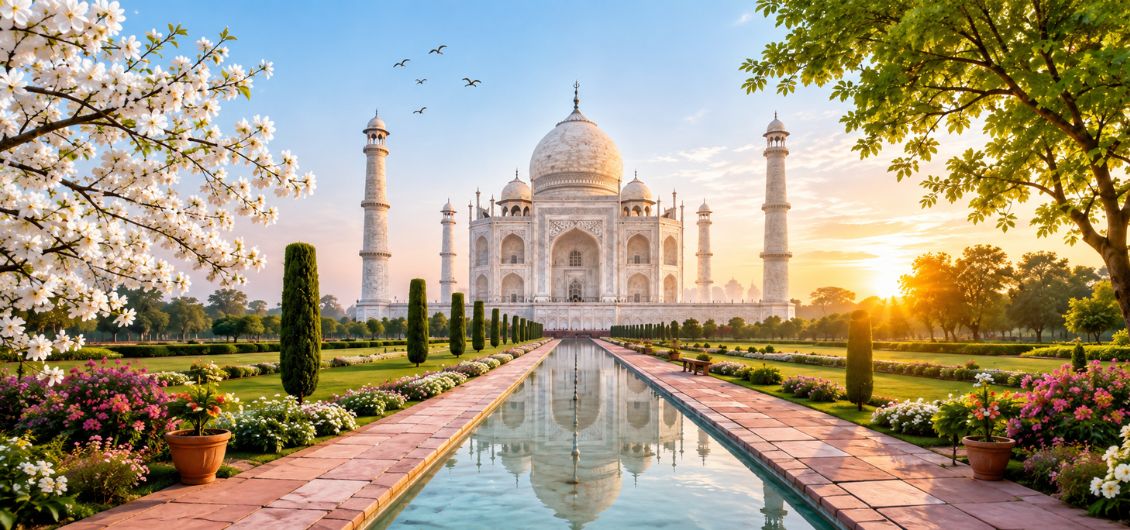
The Taj Mahal is one of the most visited landmarks in the world and remains the crown jewel of Indian tourism. Recognized as a UNESCO World Heritage Site, this magnificent monument attracts millions of visitors every year. However, choosing the right time to visit can significantly impact your overall experience.
Whether you’re planning an Agra Day Trip from Delhi, a luxury getaway, or a photography-focused visit, understanding the weather, crowd levels, and seasonal conditions will help you make the most of your journey.
In this complete Taj Mahal Travel Guide, we’ll explore the best seasons, ideal months, and practical travel tips for visiting the Taj Mahal in 2026.
Best Season to Visit Taj Mahal

Winter Season (October to March)
Winter is widely considered the best time to visit the Taj Mahal. During these months, temperatures range from 8°C to 25°C, creating pleasant conditions for sightseeing.
Why visit in winter?
- Comfortable weather for walking and exploring
- Clear skies for photography
- Ideal for sunrise and sunset views
- Pleasant conditions for Agra sightseeing
The months of November, December, February, and March are particularly popular among international tourists. If you’re booking Taj Mahal Tour Packages from Delhi, winter is often the preferred season.
Summer Season (April to June)
Summer in Agra can be extremely hot, with temperatures frequently exceeding 40°C.
Advantages of summer travel:
- Fewer crowds
- Easier hotel availability
- Lower accommodation prices
Challenges:
- Intense heat during daytime
- Less comfortable sightseeing experience
If visiting during summer, plan your visit early in the morning, preferably at sunrise.
Monsoon Season (July to September)
Monsoon transforms Agra into a greener destination. Occasional rain showers can create beautiful photography opportunities around the monument.
Benefits of visiting during monsoon:
- Reduced tourist crowds
- Cooler temperatures than summer
- Dramatic cloud formations for photography
Keep an umbrella handy and monitor weather forecasts before your visit.
Month-by-Month Guide to Visiting the Taj Mahal
| Month | Weather & Travel Conditions |
| January | Cool temperatures and morning fog are common. Excellent for sightseeing, although sunrise views may occasionally be obscured by mist. |
| February | One of the most pleasant months. Clear skies and comfortable weather make it ideal for photography and sightseeing. |
| March | Mild temperatures and vibrant spring conditions create a great atmosphere for visitors. |
| April | The heat begins to increase. Early morning visits become more important. |
| May | Very hot weather. Sunrise visits are strongly recommended. |
| June | High temperatures continue, but crowds remain relatively low. |
| July | Beginning of the monsoon season with occasional rain showers. |
| August | Green landscapes and fewer visitors make August attractive for budget-conscious travelers. |
| September | Weather starts improving as the monsoon gradually retreats. |
| October | One of the best months to visit. Pleasant temperatures return, and visibility improves significantly. |
| November | Excellent weather and ideal conditions for Delhi-to-Agra travel. |
| December | Peak tourist season. Comfortable temperatures and a festive travel atmosphere attract visitors from around the world. |
Best Time of Day to Visit the Taj Mahal

Sunrise Visit
For most travelers, sunrise offers the most magical Taj Mahal experience.
Benefits include:
- Soft golden light
- Fewer tourists
- Pleasant temperatures
- Exceptional photography opportunities
The marble monument changes color as the sun rises, creating unforgettable views.
Morning Visit
A morning visit after sunrise still offers comfortable weather and good visibility.
Advantages:
- Convenient timing
- Good lighting
- Moderate crowd levels
Sunset Visit
Sunset creates a romantic atmosphere as the white marble reflects warm orange and pink hues.
Ideal for:
- Couples
- Photographers
- Leisure travelers
Why a Sunrise Visit Offers the Best Experience
Many travel experts consider sunrise the absolute best time to visit the Taj Mahal.
A Taj Mahal Sunrise Tour from Delhi allows travelers to reach Agra before large crowds arrive. During sunrise, the monument appears peaceful, and visitors can enjoy unobstructed views of the architecture.
Photographers particularly appreciate the soft morning light that highlights intricate marble carvings and gemstone inlay work.
For first-time visitors, sunrise offers a more memorable and immersive experience compared to visiting later in the day.
How to Reach the Taj Mahal from Delhi
Delhi and Agra are well connected by road and rail, making travel convenient for domestic and international tourists.

By Car
A Taj Mahal Tour by Car from Delhi remains one of the most popular travel options.
Benefits include:
- Flexible schedule
- Private transportation
- Comfortable journey
- Easy access to additional attractions
The journey via the Yamuna Expressway typically takes around 3 to 4 hours.
By Gatimaan Express Train
The Taj Mahal Tour by Gatimaan Train is ideal for travelers seeking speed and comfort.
Advantages:
- Fast travel time
- Comfortable seating
- Onboard services
- Reliable schedule
The train connects Delhi and Agra in approximately 100 minutes.
Overnight Tour Options
An Overnight Taj Mahal Tour from Delhi provides a more relaxed experience.
Benefits:
- No rushing through attractions
- Opportunity to visit Agra Fort
- Time to explore local markets
- Enhanced cultural experience
Many travelers combine the Taj Mahal with nearby attractions for a comprehensive Agra tourism experience.
Travel Tips for First-Time Visitors
Book Tickets in Advance
Purchase Taj Mahal tickets online whenever possible to avoid long queues.
Know the Entry Gates
The monument has multiple entry gates:
- East Gate
- West Gate
- South Gate
The East and West Gates are generally preferred by tourists.
Follow Security Regulations
Certain items are restricted inside the complex.
Avoid carrying:
- Large bags
- Drones
- Food items
- Tobacco products
Photography Tips
For the best photographs:
- Arrive early
- Use natural light
- Explore different angles
- Visit during winter months for clear visibility
Check Taj Mahal Timings
The Taj Mahal is generally open from sunrise to sunset and remains closed on Fridays.
Always verify current Taj Mahal timings before your trip.
Suggested Taj Mahal Itineraries from Delhi
Same-Day Tour
Ideal for travelers with limited time.
Sample itinerary:
- Early departure from Delhi
- Visit Taj Mahal
- Explore Agra Fort
- Lunch in Agra
- Return to Delhi
This option is commonly included in many Taj Mahal Tour Packages from Delhi.
Sunrise Tour
Perfect for photography enthusiasts.
Sample itinerary:
- Depart Delhi before dawn
- Arrive at Taj Mahal for sunrise
- Explore Agra attractions
- Return to Delhi in the evening
Overnight Tour
Best for travelers seeking a comprehensive experience.
Day 1:
- Travel to Agra
- Visit Agra Fort
- Explore local markets
Day 2:
- Sunrise visit to Taj Mahal
- Breakfast
- Additional sightseeing
- Return to Delhi
Frequently Asked Questions
1. Is winter the best season to visit the Taj Mahal?
Yes. October through March generally offers the most comfortable weather and ideal sightseeing conditions.
2. What is the best month to visit the Taj Mahal?
February, November, and December are often considered the best months.
3. Is sunrise better than sunset at the Taj Mahal?
Sunrise usually provides fewer crowds, cooler temperatures, and superior photography conditions.
4. How many hours are needed to visit the Taj Mahal?
Most visitors spend between 2 and 3 hours exploring the monument.
5. Can I visit the Taj Mahal in one day from Delhi?
Yes. An Agra Day Trip from Delhi is one of the most popular travel options.
6. Is the Taj Mahal open every day?
No. The monument remains closed on Fridays.
7. Which is better: train or car travel from Delhi?
Both options are excellent. Travelers seeking flexibility often choose a Taj Mahal Tour by Car from Delhi, while those preferring speed select the Gatimaan Express.
8. Is an overnight tour worth it?
Absolutely. An Overnight Taj Mahal Tour from Delhi allows visitors to explore Agra more comfortably and enjoy additional attractions.
Conclusion
The Best Time to Visit Taj Mahal is during the winter season from October to March when the weather is pleasant and ideal for sightseeing. Among all experiences, a sunrise visit remains the most rewarding, offering breathtaking views, comfortable temperatures, and exceptional photography opportunities.
Whether you choose a Taj Mahal Sunrise Tour from Delhi, a Taj Mahal Tour by Car from Delhi, a Taj Mahal Tour by Gatimaan Train, or an Overnight Taj Mahal Tour from Delhi, careful planning will ensure a memorable journey to one of the world’s most iconic monuments.
For first-time travelers, February, November, and December offer the perfect balance of weather, visibility, and overall travel experience.

Comments