
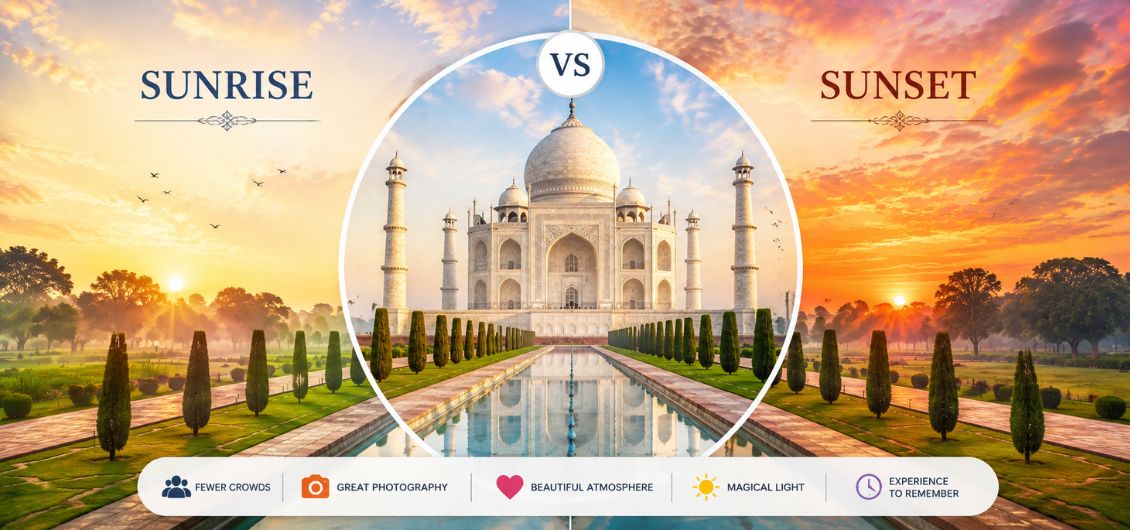
The Taj Mahal rarely looks the same twice. Its white marble changes beautifully with the light, taking on soft pink and golden hues at sunrise and warmer amber tones as the sun begins to set. This natural transformation often leaves travelers wondering about the Taj Mahal Sunrise vs Sunset experience and which time is better for planning their Agra trip.
The honest answer depends on what you’re after. Sunrise generally means fewer crowds, cooler air, a peaceful atmosphere and excellent photography conditions. Sunset brings warmer light, a more relaxed pace and a romantic mood that many couples enjoy. And if you don’t want to choose at all, an overnight stay in Agra lets you experience both. Let’s break down how they actually compare.
Taj Mahal Sunrise vs Sunset at a Glance
| Factor | Sunrise | Sunset |
| Crowds | Usually lower | Usually higher |
| Temperature | Cooler | Warmer, depending on season |
| Lighting | Soft morning light | Warm evening light |
| Photography | Excellent | Excellent |
| Atmosphere | Quiet and peaceful | Romantic and lively |
| Best for | Photographers, first-time visitors | Couples, leisure travelers |
| Travel from Delhi | Requires a very early departure | Easier departure time |
| Overall experience | Peaceful and immersive | Warm and atmospheric |
Visiting the Taj Mahal at Sunrise
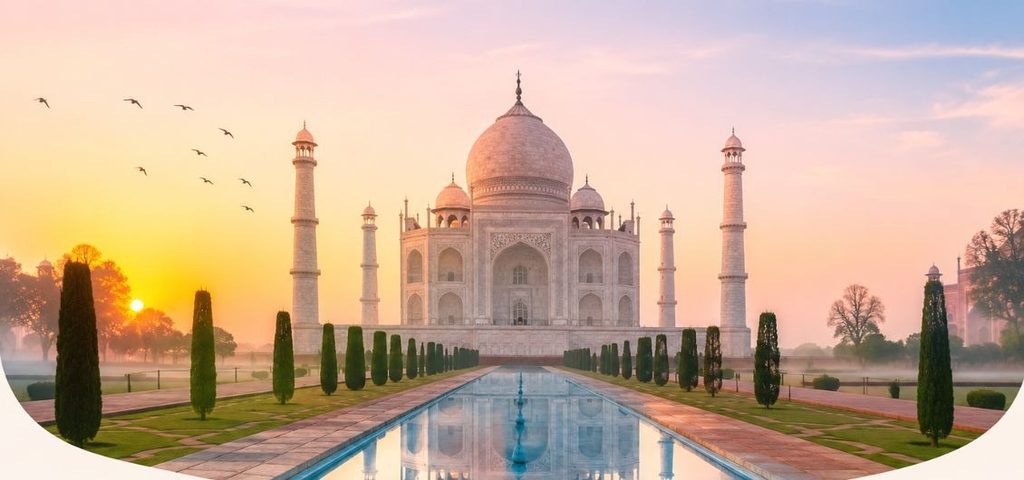
Fewer Crowds and a Quieter Atmosphere
The gates open early, and in those first hours the complex is noticeably calmer. With fewer tour groups moving through the grounds, you get more room to walk, pause and actually take in the monument rather than navigate around other visitors.
Cooler Temperatures
Agra can get hot, especially from late spring through summer. Arriving at sunrise means walking the grounds while temperatures are still comfortable, which makes for a far more pleasant visit than exploring the same space at midday.
Beautiful Morning Light
As the sun rises, the white marble takes on soft pink and golden hues before settling into its familiar bright white. This gradual shift is one of the reasons early visitors often describe the Taj Mahal as looking different from how it appears in typical daytime photos.
Better Photography Opportunities
Sunrise tends to be the stronger choice for photography, for a few reasons:
- Soft, diffused natural light with fewer harsh shadows
- Noticeably fewer people in the frame
- Calmer reflections in the water channel leading up to the monument
- A marble surface that visibly changes tone as daylight increases
- Favorable conditions for both portraits and architectural shots
The Main Disadvantage of Sunrise
Sunrise isn’t without trade-offs. Travelers coming from Delhi need to leave very early, often well before dawn, and that early wake-up isn’t for everyone. In winter, morning fog can occasionally reduce visibility. Exact sunrise timing also shifts with the season, so it’s worth checking current timings before you plan your morning.
For travelers who want the dawn experience without figuring out the logistics themselves, a dedicated Taj Mahal Sunrise Tour is built specifically around an early departure from Delhi that gets you to the complex as it opens.
Visiting the Taj Mahal at Sunset
Sunset shouldn’t be thought of as the “backup” option — it offers a genuinely different experience with its own appeal.
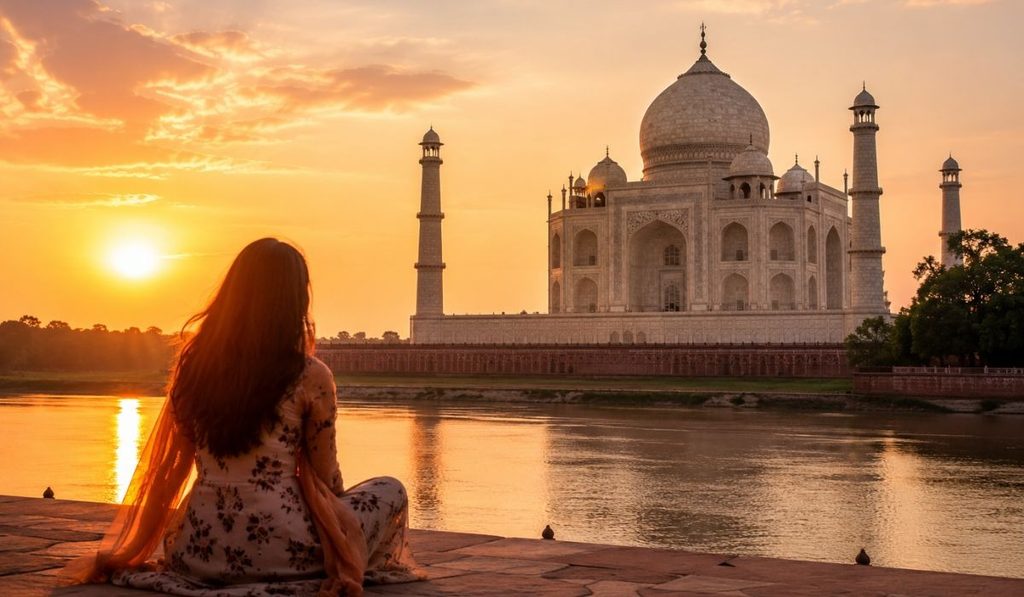
Warm and Romantic Lighting
In the late afternoon and early evening, the light turns warmer, casting orange and amber tones across the marble. The monument takes on a softer, more golden appearance that contrasts with the crisp white look of midday.
Why Couples May Prefer Sunset
The slower pace of an evening visit, combined with warm light and a more relaxed schedule, tends to appeal to couples who aren’t necessarily chasing the quietest possible crowd levels. It’s a more leisurely way to experience the monument.
Sunset Photography
Sunset photography leans into a different mood:
- Warm, golden tones across the marble
- Longer, more dramatic shadows
- Strong opportunities for silhouettes against the sky
- Reflections that pick up the evening color
- Architectural details that stand out under angled light
The Main Disadvantages of Sunset
Sunset visits generally see more visitors than sunrise, since it’s an easier time for most people to reach. Temperatures can still be warm depending on the season, and if you’re on a tight same-day itinerary from Delhi, an evening visit leaves less flexibility for your return journey. As with sunrise, exact sunset timing changes throughout the year.
Sunrise vs Sunset for Photography
Photography is often the deciding factor for travelers researching this topic, so it’s worth comparing directly.
Sunrise photography tends to offer soft light, cooler tones, occasional morning mist, and far fewer people working their way into your shots — all of which make for a quieter, more atmospheric set of images.
Sunset photography brings warm, golden hues, dramatic shadows, a more romantic overall feel, and strong conditions for silhouette shots against the sky.
For fewer distractions and a peaceful photographic experience, sunrise is generally the stronger choice. For warm, dramatic and romantic images, sunset can be equally appealing. Neither produces universally “better” photos — it comes down to the style you’re going for.
Sunrise vs Sunset for Couples
If you’re planning this as a couple, both options have something to offer. Sunrise suits couples who value quiet surroundings and want the complex largely to themselves for photos. Sunset appeals to couples looking for warmer light and a more unhurried evening experience.
If you’d rather not choose, staying overnight in Agra means you don’t have to. The Overnight Taj Mahal Tour is built around exactly this — a sunset visit followed by a sunrise visit the next morning, so you can compare the monument under both kinds of light without rushing.
Sunrise vs Sunset for Travelers Coming From Delhi
The time of day you choose has a real effect on how your day trip from Delhi actually plays out.
Sunrise from Delhi means a very early pickup and a highway journey before dawn, so you arrive around opening time. The upside is that it leaves you with more of the day free for additional Agra sightseeing once the visit is done.
Sunset from Delhi allows for a far more conventional departure time and a less demanding morning. The trade-off is that you’ll want to plan your return transportation carefully, since you’ll be heading back to Delhi after dark. If a private vehicle matters to your comfort on either route, a Taj Mahal Tour by Car offers more flexibility over pickup times and the pace of the day than a fixed group departure.
Exact travel times will vary depending on traffic and the specific tour you book, so it’s worth confirming these details directly rather than assuming a fixed schedule.
Which Is Better in Different Seasons?
Winter brings pleasant daytime temperatures, but mornings can occasionally bring dense fog that affects sunrise visibility.
Summer makes sunrise the more comfortable option, since midday and afternoon heat can be intense.
Monsoon season often brings cloudy skies, which can create dramatic, moody photography, though conditions can change quickly.
Autumn generally offers comfortable sightseeing weather for both sunrise and sunset visits.
For a deeper look at how weather and timing shift throughout the year, the best time to visit the Taj Mahal covers seasonal planning in more detail.
Is Sunrise Really Better Than Sunset at the Taj Mahal?
For most first-time visitors, sunrise is the better choice if the priority is fewer crowds, cooler conditions, peaceful surroundings and photography.
That said, sunset may be preferable if you’re traveling as a couple, you’d rather avoid a very early morning, you’re already staying in Agra, or you simply prefer warm evening light over soft morning tones. Neither is objectively “correct” — it comes down to which experience matches your priorities.
What If You Want to Experience Both?
If choosing between sunrise and sunset feels impossible, staying overnight in Agra gives you the opportunity to experience both lighting conditions without rushing through a same-day itinerary. The Overnight Taj Mahal Tour is designed around exactly this, pairing an evening visit with a following sunrise so you see the monument transform between the two.
Tips for Choosing Between Sunrise and Sunset
Choose sunrise if you:
- Want fewer crowds
- Prefer cooler temperatures
- Love photography
- Want a peaceful atmosphere
- Are comfortable waking very early
- Are visiting the Taj Mahal for the first time
Choose sunset if you:
- Prefer a relaxed morning
- Want warm evening light
- Are traveling as a couple
- Are staying in Agra
- Prefer evening-style photography
Choose both if you:
- Have an overnight itinerary
- Are passionate about photography
- Want to compare the monument under different lighting
- Want a slower-paced Agra experience
How to Plan Your Taj Mahal Visit From Delhi
- Decide sunrise or sunset based on your priorities above.
- Check the current Taj Mahal opening and visiting rules before you travel.
- Look up seasonal sunrise and sunset times for your travel dates.
- Build in extra time for security screening and entry.
- Carry only permitted items — restrictions apply inside the complex.
- Wear comfortable, easy-to-remove footwear.
- Check the weather forecast the day before.
- Consider pairing your visit with other Agra attractions.
- Plan your return journey to Delhi before you start the visit, not after.
Taj Mahal Sunrise vs Sunset — Final Verdict
If your priority is the most peaceful atmosphere, comfortable temperatures, fewer distractions and excellent photography, sunrise is generally the better choice. If you prefer warm evening light, a romantic atmosphere and a slower start to the day, sunset can be the better option.
And if you don’t want to choose at all, an overnight Agra itinerary lets you experience the Taj Mahal at both sunrise and sunset.
Ready to plan your Taj Mahal visit? Explore Taj Mahal tour options from Delhi and choose a sunrise, sunset, same-day or overnight experience based on your travel style.
Frequently Asked Questions
Is sunrise or sunset better at the Taj Mahal?
Sunrise is generally better for fewer crowds, cooler temperatures and peaceful photography, while sunset is attractive for its warm light and romantic atmosphere. The right choice depends on your priorities.
Is the Taj Mahal beautiful at sunset?
Yes. Evening light gives the marble warm, golden tones that create a noticeably different look from its bright white daytime appearance.
Is sunrise worth waking up early for?
For most visitors, yes — the quieter atmosphere, cooler air and softer light are hard to replicate later in the day. It does require an early start, particularly if you’re traveling from Delhi.
Which is better for Taj Mahal photography, sunrise vs sunset?
Both work well but for different styles. Sunrise offers softer light and fewer people in your shots, while sunset offers warmer tones and more dramatic shadows.
Can I see the Taj Mahal at both sunrise and sunset?
Yes, if you stay overnight in Agra. An overnight itinerary lets you catch an evening visit and a sunrise visit the next morning, rather than choosing just one.
What is the best time of day to visit the Taj Mahal?
It depends on what you value most. Sunrise generally offers the more peaceful overall experience, while sunset suits travelers who prefer a relaxed schedule and warm light.
Is sunrise better for visiting the Taj Mahal from Delhi?
Sunrise gets you into Agra early and leaves more of the day free for other sightseeing, though it does require a very early departure from Delhi.
Does fog affect Taj Mahal sunrise visits?
It can, particularly in winter, when dense fog occasionally reduces visibility. Lighter mist, on the other hand, can actually add to the atmosphere in photographs.

Comments