
Old Delhi Street Food Walk: What to Eat in Chandni Chowk
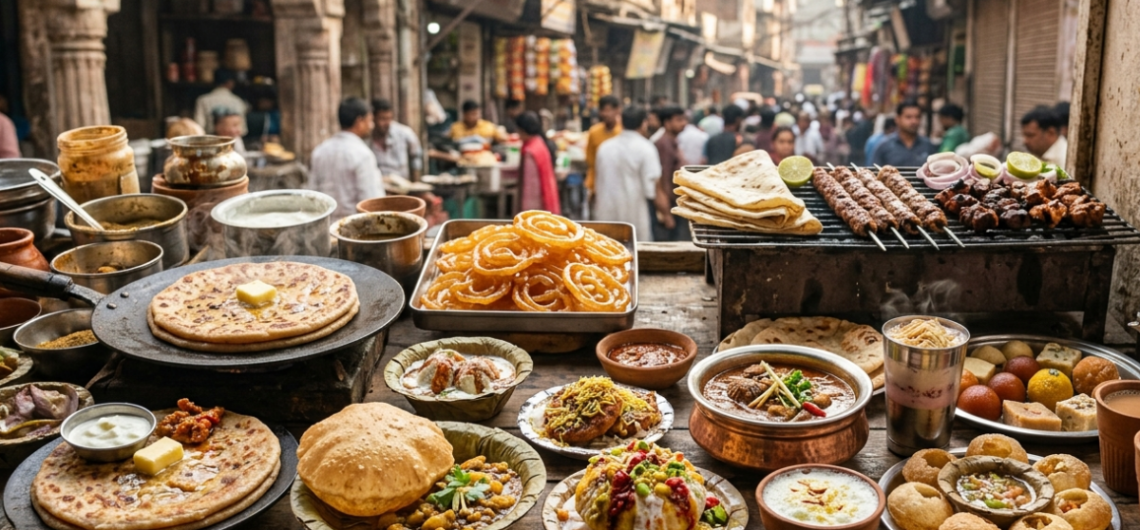
Ask a Delhiite where to eat the city’s most iconic food and you will almost always hear the same answer: Chandni Chowk. This crowded, noisy, wonderfully chaotic market in Old Delhi has fed travellers, traders and royal households for nearly four centuries. It was built in the 17th century under Emperor Shah Jahan, the same ruler who built the Taj Mahal, and it grew up around the Red Fort. The lanes that once served the Mughal court are now packed with sweet shops, kebab stalls and chaat carts.
If you are planning a trip to India, an Old Delhi street food walk is one of the most memorable things you can add to your itinerary. This guide covers what to eat, how to plan your route, how to enjoy it safely and how to fit it into a longer trip through Delhi, Agra and Jaipur.
Why Chandni Chowk Is Delhi’s Food Capital
Many of the dishes here trace back to the Mughal kitchens, the traders who settled in the old walled city and the migrant communities who arrived over the centuries. The result is a mix of rich meat dishes, crispy fried snacks, tangy chaats and syrupy sweets, often served from shops that have stayed in the same family for generations.
Many stalls make just one dish and make it all day. That is why the food tastes so focused, and why locals will happily queue for it.
12 Must-Try Foods in Chandni Chowk: A Foreigner’s Guide
Indian street food can feel overwhelming if you have never tried it. The menus are unfamiliar, the stalls are crowded and everything smells amazing. This guide explains each dish in simple terms, so you know what to expect before your first bite.
Quick spice guide: 🌶 = mild, 🌶🌶 = medium, 🌶🌶🌶 = properly spicy
1. Stuffed Parathas from Paranthe Wali Gali 🌶
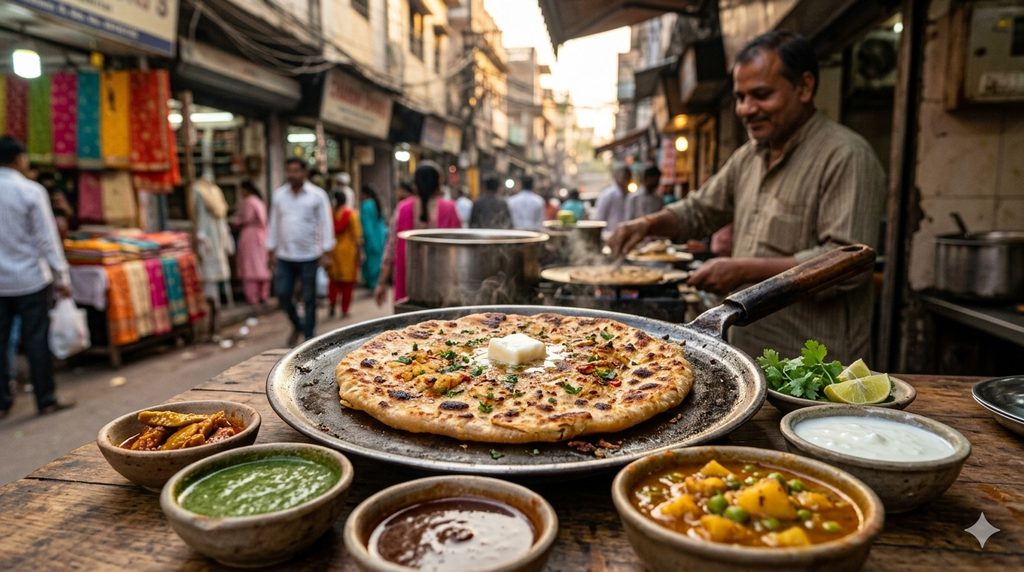
What it is: A thick, golden flatbread stuffed like a savoury pancake, then fried on a flat griddle until crisp outside and soft inside.
What it tastes like: Warm, buttery and comforting. A potato paratha tastes a bit like a crispy, spiced hash brown wrapped in bread. Paneer (fresh Indian cheese) parathas are mild, creamy and slightly salty. Cauliflower and radish parathas have a gentle, earthy taste.
Served with: Small bowls of tangy pickle, mint or tamarind chutney, a vegetable curry and often a spoonful of yoghurt or butter on top.
How to eat it: Tear off a piece with your right hand, scoop up some curry or chutney and eat. Do not worry about being neat, because nobody else is.
Tip for first-timers: Parathas here are rich and filling. Order one to share and save room for the other stops. This is a good mild choice for day one.
2. Bedmi Puri with Aloo Sabzi 🌶🌶
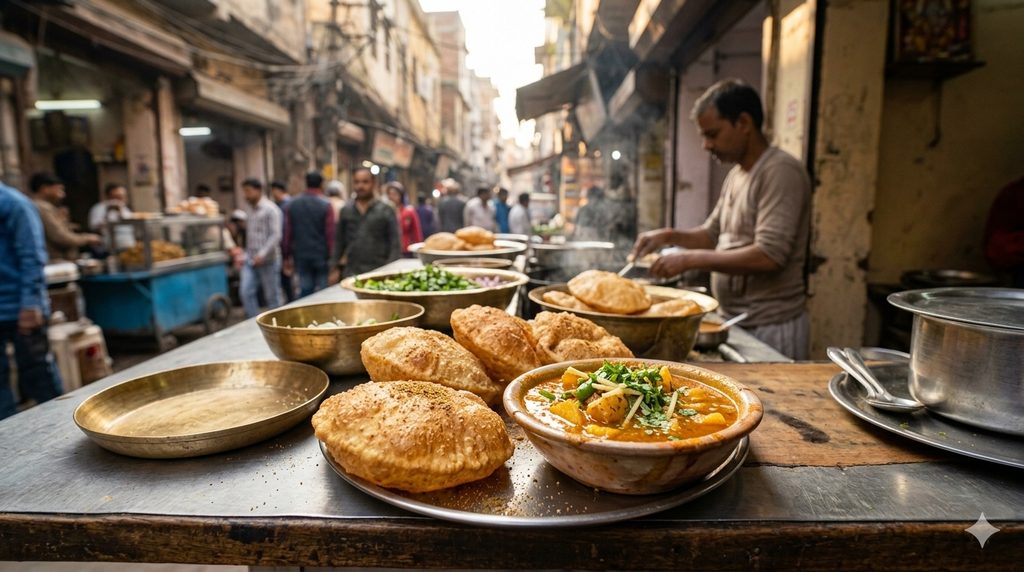
What it is: A puffed, deep-fried bread made with wheat flour and a filling of ground lentils and spices, served with a thin, tangy, orange-red potato curry.
What it tastes like: The puri is crisp and airy outside with a soft, slightly nutty, savoury middle. The curry is where the flavour lives: tangy from tomatoes and spices, warming from ginger and chilli. Think of it as the Delhi version of a curry-and-bread breakfast, only far more exciting.
How to eat it: Break the puri into pieces, dip it in the potato curry and eat. It is normal to ask for extra curry.
Tip for first-timers: The curry can be hotter than it looks. Ask for “kam teekha” (less spicy) if you are unsure. Eat it in the morning when it is freshest.
3. Jalebi, Fresh from the Kadhai 🌶 (not spicy, very sweet)
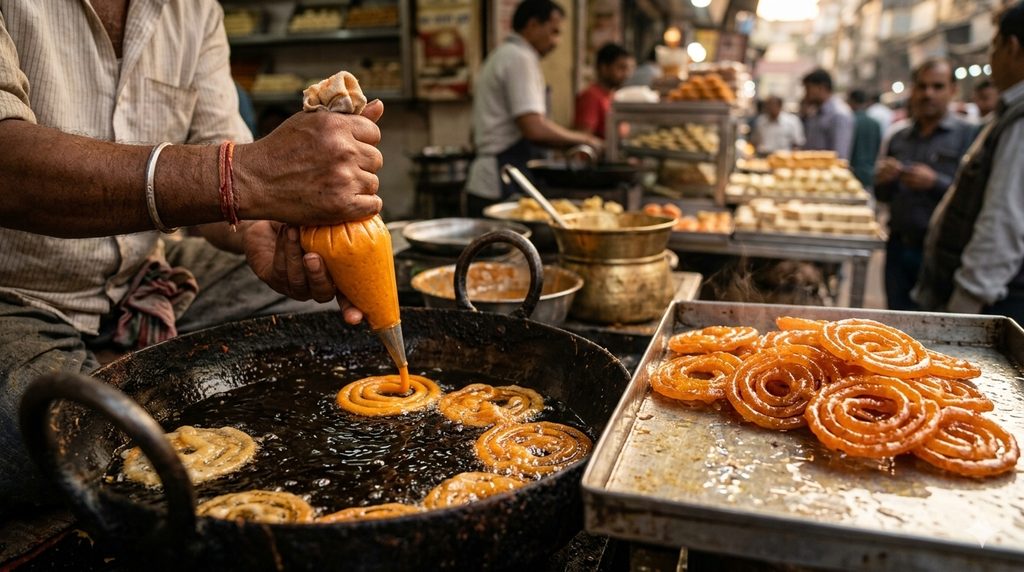
What it is: Bright orange swirls of batter fried in hot oil and soaked in sugar syrup. If you have had funnel cake or churros dipped in syrup, you are already close.
What it tastes like: Crunchy outside, juicy inside and intensely sweet, with a slight tang from fermentation. Fresh, hot jalebi is a completely different experience from the cold ones sold in packets.
How to eat it: Watch it being made, get it hot and eat it while the syrup is still warm. It is sticky, so grab a napkin. Locals often pair it with a glass of milk or a bowl of rabri, a thick, sweet, reduced-milk dessert.
Tip for first-timers: One or two pieces are enough because it is very sweet. Buy from a stall that is busy and frying constantly, so you know it is fresh.
4. Dahi Bhalla and Aloo Tikki Chaat 🌶🌶
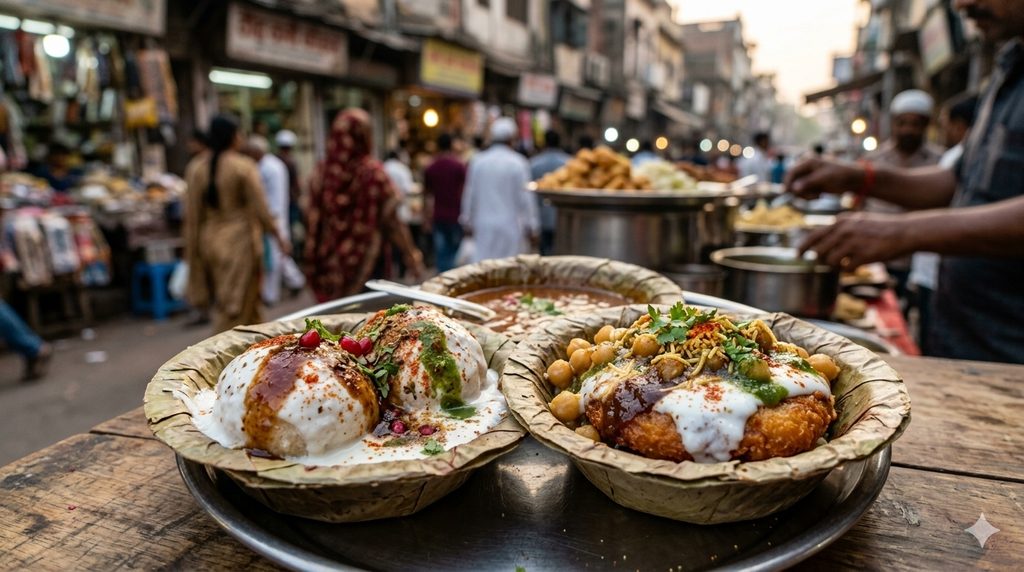
What it is: “Chaat” means a savoury snack with layers of texture and flavour, usually crunchy, creamy, sweet, sour and spicy at the same time.
- Dahi bhalla: Soft, fluffy lentil dumplings soaked in cool, creamy yoghurt and topped with sweet tamarind chutney, green mint chutney and spice powder.
- Aloo tikki: A crisp, golden potato patty, a bit like a spiced hash brown or croquette, topped with yoghurt, chutneys and sometimes chickpeas.
What it tastes like: A mix of cool and hot, creamy and crunchy, sweet and tangy. Your first bite may surprise you because there is so much happening, but by the third bite most people are hooked.
How to eat it: Eat it with a small spoon, or from a leaf bowl, right at the stall. Chaat is best eaten immediately, before it gets soggy.
Tip for first-timers: Dahi bhalla is cooling and gentle on the palate, so it is a good introduction. If you are sensitive to dairy, ask what is in it first.
5. Raj Kachori 🌶🌶
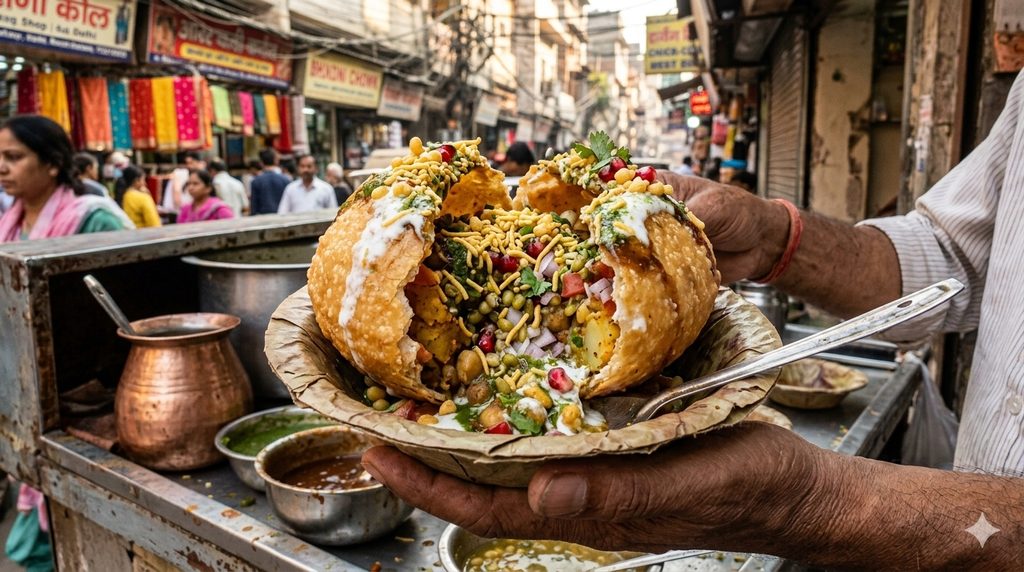
What it is: The “king of kachoris.” A large, hollow, crisp shell about the size of a small fist, filled with potato, chickpeas, sprouts, yoghurt, chutneys and crunchy toppings.
What it tastes like: A crunchy edible bowl full of cool yoghurt, tangy sauces and warm spiced potato. It is crunchy, creamy, sweet, sour and savoury in every bite.
How to eat it: The vendor cracks the top open and fills it. Eat it with a spoon or your hands. It is messy, so accept that and enjoy it.
Tip for first-timers: It is big and filling, so share one between two people. If you like loaded nachos or a big salad-style snack, you will love this.
6. Kebabs and Mughlai Dishes Near Jama Masjid 🌶🌶🌶
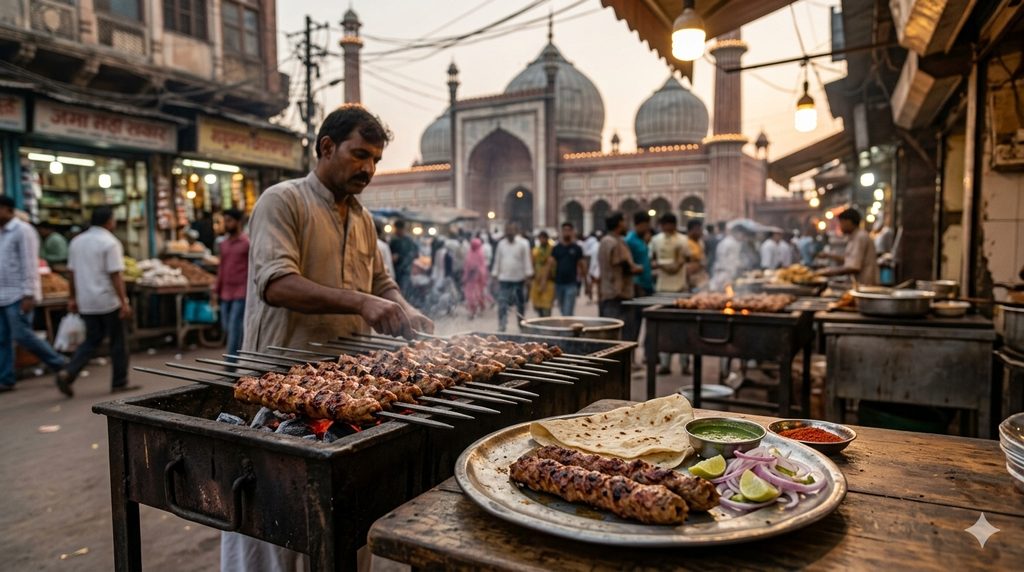
What it is: The lanes near Jama Masjid are famous for kebabs, meat curries and breads that come from the Mughal royal kitchens. These are not the kebabs you find at a takeaway shop in Europe or America. They are smoky, spiced and cooked over coals or on a hot griddle.
What it tastes like: Tender, juicy meat with smoky, garlicky and warm spice flavours. The breads served alongside, such as naan or rumali roti (a very thin bread often described as a handkerchief), are soft and perfect for wrapping meat.
How to eat it: Tear the bread, wrap a piece of meat and eat it with the sauces or onions on the side.
Tip for first-timers: This is the area for meat lovers. If you have a sensitive stomach, choose a busy, popular place with high turnover and start with a small portion. Vegetarians can skip this stop.
7. Nihari 🌶🌶🌶
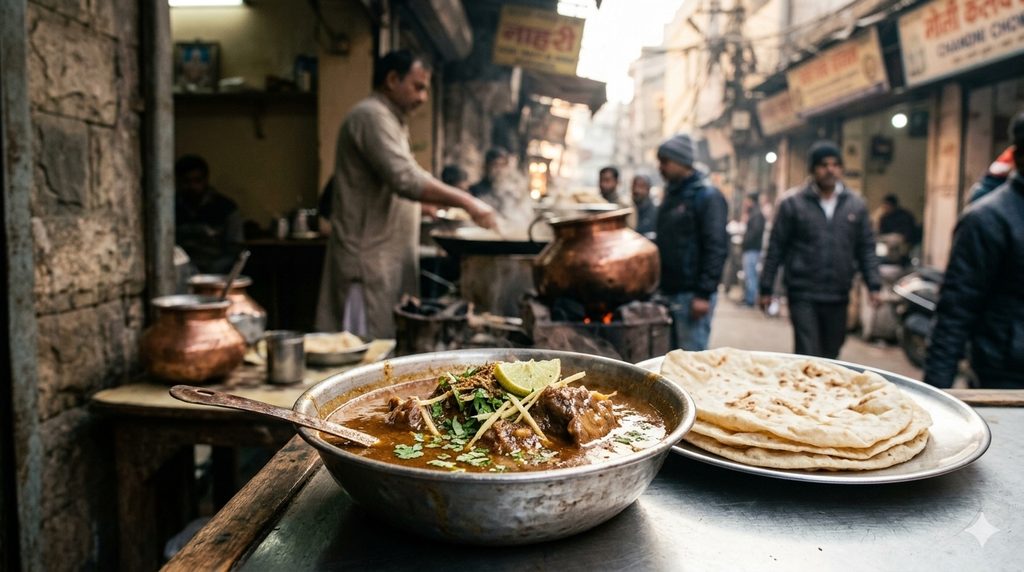
What it is: A slow-cooked meat stew that traditionally simmers for many hours. It has a thick, rich, brown gravy and is often eaten for breakfast, especially in colder months.
What it tastes like: Deep, rich and warming, similar to a slow-braised stew, with tender meat that falls apart. The spices are warming rather than sharp, with ginger, pepper and aromatic spices that make it feel comforting.
How to eat it: Scoop it up with bread, and add a squeeze of lemon, some sliced ginger and fresh coriander on top if offered.
Tip for first-timers: This is a heavy dish, best for adventurous eaters who love hearty stews. Eat it in the morning or as a main meal, not as a light snack.
8. Daulat Ki Chaat (Winter Only) 🌶 (sweet)
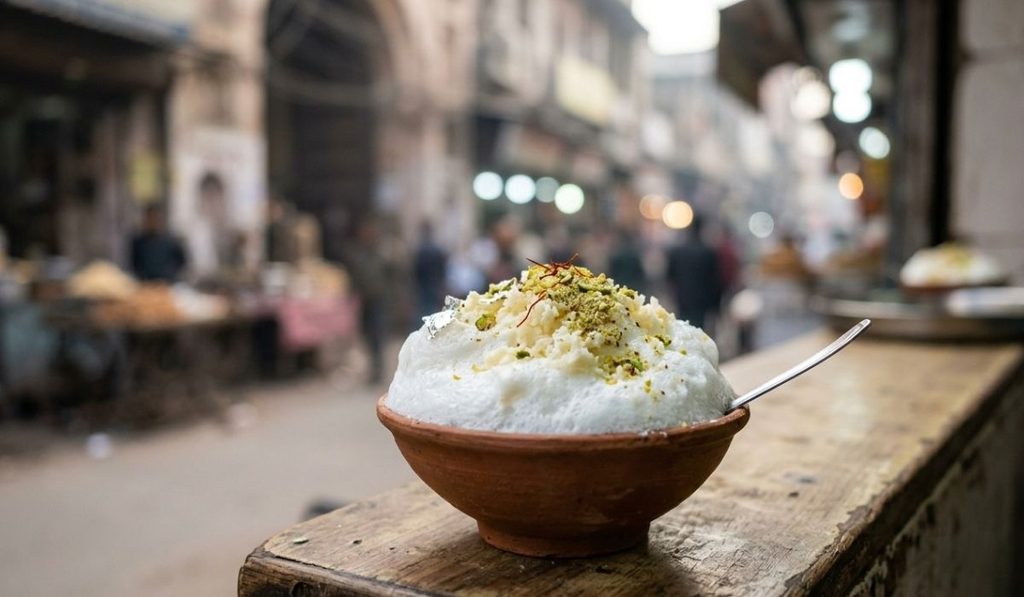
What it is: A delicate dessert that looks like a cloud. It is made from milk that is whipped into a light foam overnight in the cold air, then topped with khoya (a milk solid), pistachios and sometimes saffron.
What it tastes like: Sweet, airy milk clouds that melt on your tongue, a little like a cross between a milk foam, a soft meringue and a light custard. It is not heavy at all.
How to eat it: Eat it straight away with a spoon, because it does not last.
Tip for first-timers: It is a seasonal winter treat, generally available between about November and February. If you are lucky enough to be in Delhi in winter, do not miss it.
9. Kulfi and Falooda 🌶 (sweet)
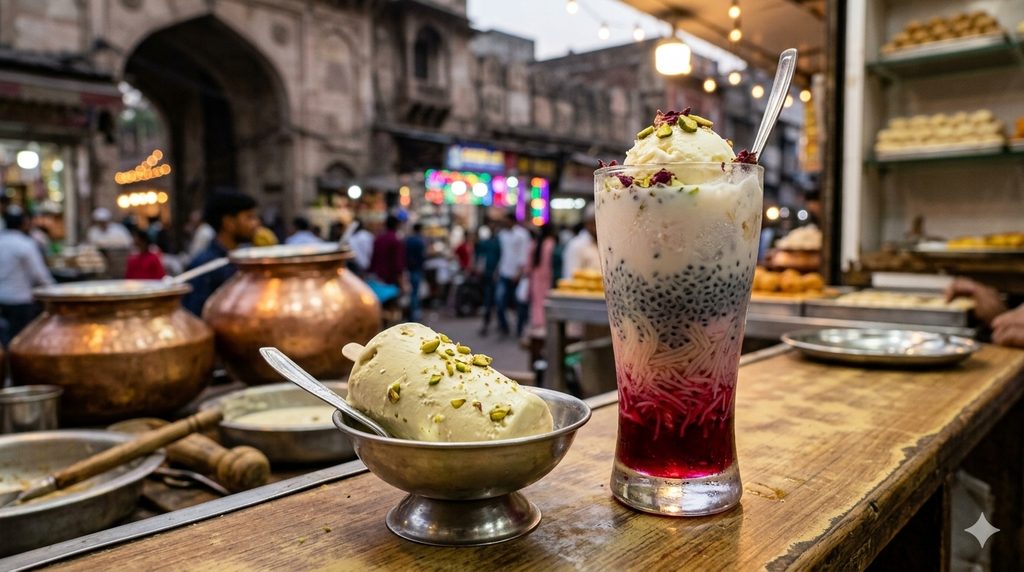
What it is: Kulfi is traditional Indian ice cream that is denser, creamier and slower to melt than Western ice cream, often flavoured with pistachio, saffron or mango. Falooda is a dessert drink or bowl made with rose syrup, vermicelli noodles, basil seeds and ice cream.
What it tastes like: Kulfi is rich and milky with a slightly caramelised flavour, like frozen condensed milk. Falooda adds a floral rose flavour and interesting textures from the noodles and seeds, which sounds strange but tastes wonderful.
How to eat it: Eat kulfi from a stick or plate before it melts. Spoon or sip the falooda and enjoy the mix of textures.
Tip for first-timers: Choose a busy shop where the kulfi is freshly cut and served. It is a perfect cool-down after hot, spicy food.
10. Old Delhi Sweets (Mithai) 🌶 (sweet)
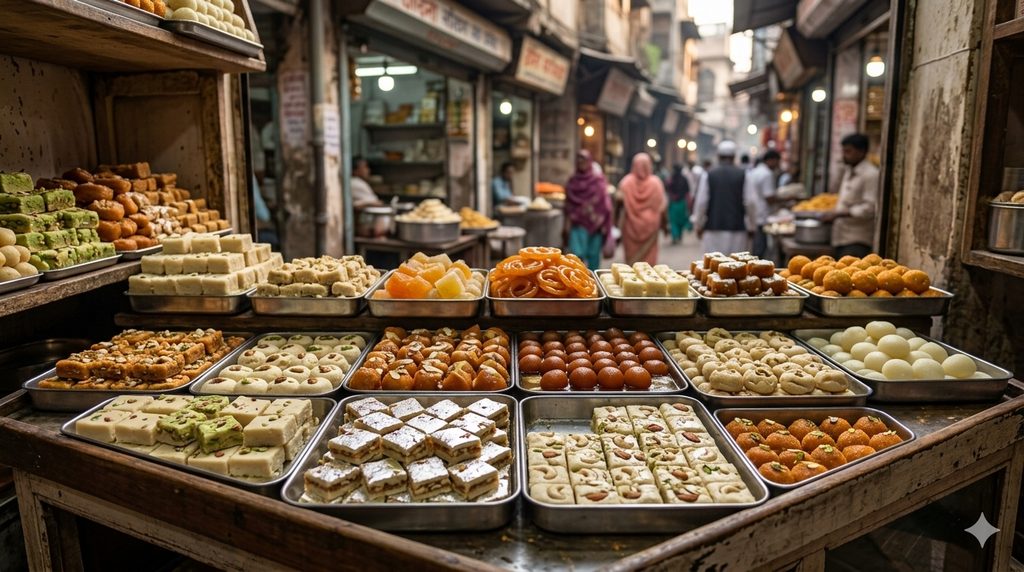
What it is: Indian sweets, called mithai, are colourful and varied. They are usually made with milk, sugar, nuts, lentils and ghee (clarified butter), and sold by the piece or in boxes. Some of the old shops in Chandni Chowk have been in the same family for generations.
What it tastes like: Very sweet, dense and rich. Some are soft and milky like fudge, some are syrupy like a warm doughnut hole, and some are nutty and crumbly like shortbread.
How to eat it: Try a small piece of a few different kinds. Ask the shopkeeper what is popular or freshly made that day.
Tip for first-timers: One small piece is usually enough. A neatly packed box also makes an excellent gift to take home.
11. Golgappa (Pani Puri) 🌶🌶🌶
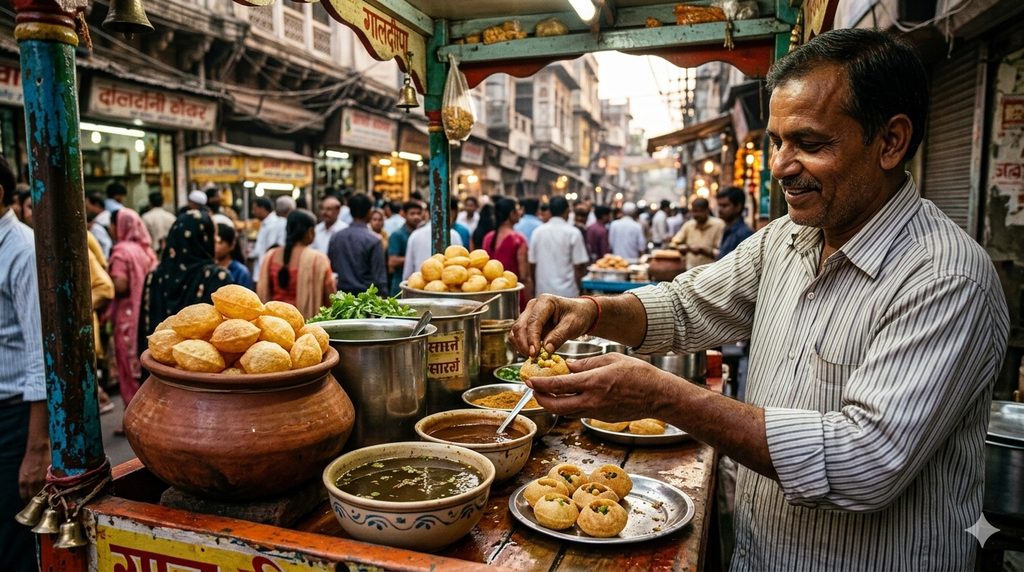
What it is: A small, crisp, hollow ball filled with spiced potato and chickpeas and topped with cold, tangy, mint-flavoured water. You eat the whole thing in one go.
What it tastes like: An explosion of cold, sour, spicy and salty flavours with a satisfying crunch. First-timers are often surprised, and many say it is one of the most fun food experiences in India.
How to eat it: The vendor hands you one at a time, and you eat it whole in a single bite. Do not try to bite it in half, or the water will run down your chin. Most stalls serve six to eight at once, and you can say “bas” (enough) when you have had enough.
Tip for first-timers: This is one of the spicier street foods, so ask for a milder version if you prefer. Eat it only at a very busy stall, and be cautious if you have a sensitive stomach, since it is served with water.
12. Masala Chai in a Kulhad 🌶 (mild spice)
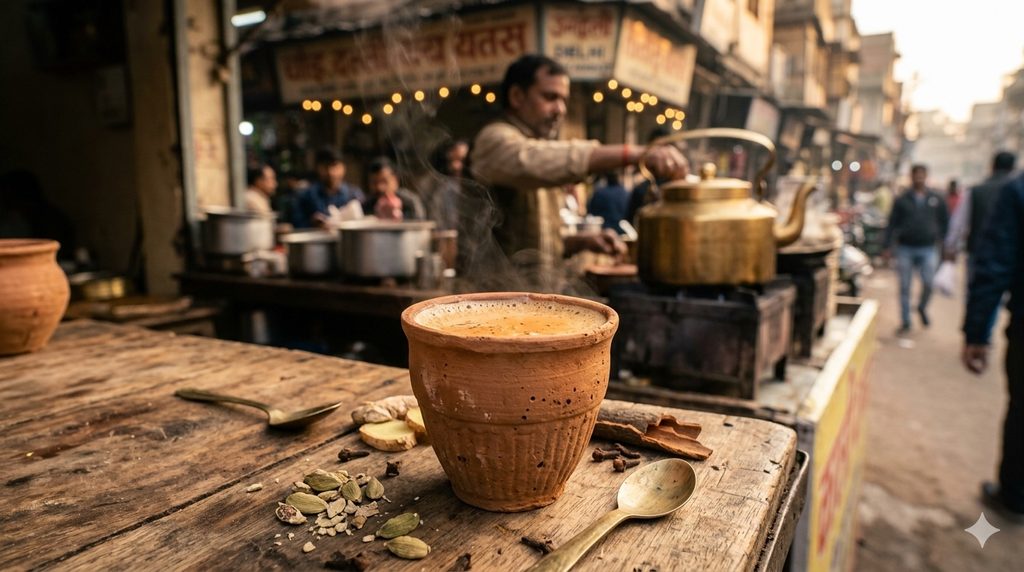
What it is: Indian tea boiled with milk, sugar and warming spices such as ginger and cardamom, served in a small, unglazed clay cup called a kulhad.
What it tastes like: Sweet, milky, creamy and gently spiced, very different from a teabag cup of tea. The clay cup adds a subtle earthy flavour, and the experience feels special.
How to eat it: Sip it slowly while it is hot. When you finish, leave the cup in the container provided, since it is made from clay and is biodegradable.
Tip for first-timers: It is very sweet by default, so ask for “kam cheeni” (less sugar) if you prefer. It is the ideal way to end your food walk.
Quick Cheat Sheet for Foreign Visitors
If you are nervous about spice, start with: parathas, dahi bhalla, jalebi, kulfi and masala chai.
If you love spice, try: bedmi puri curry, golgappa, kebabs and nihari.
If you are vegetarian: almost everything except the kebabs and nihari is vegetarian, and Chandni Chowk is excellent for vegetarians.
If you like sweet things: jalebi, daulat ki chaat (winter), kulfi, falooda and mithai.
Useful words to know:
- Kam teekha = less spicy
- Kam cheeni = less sugar
- Bas = enough
- Shakahari = vegetarian
- Thoda aur = a little more
A Simple Walking Route for First-Timers
You can do a good food walk in about three to four hours. Here is an easy order:
- Start at Chandni Chowk Metro Station (Yellow Line). It is the easiest way to reach the area and avoids traffic.
- Begin with breakfast: bedmi puri or parathas.
- Walk towards the Red Fort side and try chaat, such as dahi bhalla or aloo tikki.
- Move through the market lanes for jalebi and sweets.
- Continue towards Jama Masjid for kebabs or a Mughlai lunch if you eat meat.
- Finish with kulfi, falooda or chai before heading back.
Shops change their timings, and some close on certain days, so check current opening times before you go.
Best Time to Go
- Season: October to March is the most comfortable, with cooler weather that makes walking easier. You will also find winter specialities like daulat ki chaat.
- Time of day: Morning is good for breakfast dishes and thinner crowds. Late afternoon and evening are livelier and more stalls are open, but the market gets very crowded.
- Avoid: Peak summer afternoons, when the heat is intense, and heavy monsoon days, when lanes can be wet and slippery.
Street Food Safety Tips for Travellers
Eating street food in India is very doable if you use a little common sense:
- Choose busy stalls. High turnover means fresher food.
- Eat food served hot, straight from the fryer or pan.
- Drink bottled water and check that the seal is intact. Avoid tap water and ice of unknown origin.
- Be careful with raw items and cut fruit if you have a sensitive stomach.
- Start mild. Your stomach needs time to adjust to spices.
- Carry hand sanitiser and tissues, and avoid touching your face while eating.
- Pack basic medicines for an upset stomach, and consult your doctor before travelling.
- Watch your belongings. Chandni Chowk is crowded, so keep bags zipped and in front of you.
How to Get Around
The lanes are too narrow for cars. The best options are walking, a cycle rickshaw for short hops and the Delhi Metro to reach the area. If you would rather not navigate the crowds alone, a local guide makes the experience easier and helps you find the best stalls.
Combine the Food Walk with Sightseeing
Chandni Chowk sits right beside some of Delhi’s biggest landmarks:
- Red Fort, the Mughal-era fort that dominates the area
- Jama Masjid, one of India’s largest mosques
- Fatehpuri Masjid at the end of the main street
- Spice and bazaar lanes like Khari Baoli, often described as Asia’s largest wholesale spice market
You can see the Red Fort in the morning, walk and eat through the lanes in the afternoon, and be back at your hotel by evening. That makes the old city a great part of any Delhi sightseeing tour, where a local guide can help you pair Old Delhi with the other sights of the capital in a single trip.
Add It to Your India Trip
Most international visitors land in Delhi, so it makes a natural first stop. Spend a day in the old city, then continue to Agra and Jaipur. If you are short on time, the Golden Triangle 3 Days 2 Nights tour starts and ends in Delhi and covers Agra and Jaipur in between. Add an Old Delhi food walk on the day you arrive or the day you leave, and you get a full introduction to India’s food, history and culture.
Only want to see the Taj Mahal from the capital? A Taj Mahal tour by car from Delhi picks you up in Delhi and brings you back the same day, which pairs well with a food-focused morning in Chandni Chowk on another day of your trip.
Get in touch with our team to plan your Delhi days, and let us help you build an itinerary that fits your dates and interests.
Frequently Asked Questions
Is Chandni Chowk street food safe for tourists?
Most travellers eat there without problems if they choose busy stalls, eat hot food and drink bottled water. If you have a sensitive stomach, start with mild dishes.
How long does an Old Delhi food walk take?
Around three to four hours is comfortable, including sightseeing stops.
Is there vegetarian food in Chandni Chowk?
Yes, plenty. Parathas, chaat, jalebi, kachori and sweets are all vegetarian.
How much money should I carry?
Street food is inexpensive by international standards, but carry small notes and some cash or UPI, as many stalls do not accept cards.
Can I visit Chandni Chowk on a Sunday?
Some shops in the area close on certain days, and the market can be quieter. Check before you go.
What is the best month for an Old Delhi food walk?
October to March, when the weather is cooler and winter specialities like daulat ki chaat are available.

Comments