
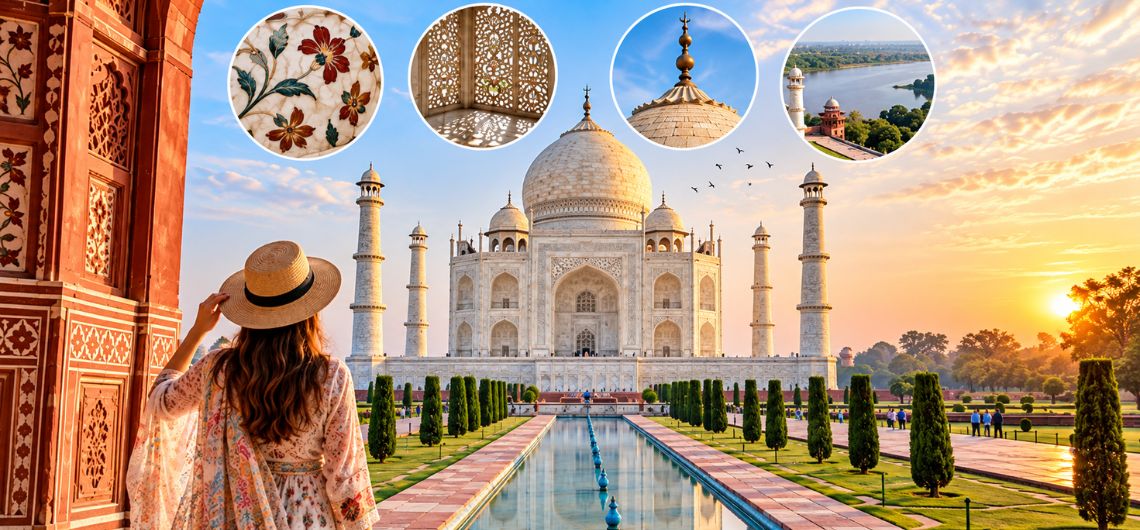
You may have seen thousands of photographs of the Taj Mahal, but how much of the monument have you actually noticed?
Behind its famous white marble façade are carefully planned perspectives, symbolic architecture, intricate stone inlay, hidden burial chambers, delicate jali screens, and historical details that are easy to miss during a quick visit. The Taj Mahal is a 17th-century Mughal mausoleum commissioned by Emperor Shah Jahan for his wife, Mumtaz Mahal. UNESCO records the main mausoleum’s construction between 1631 and 1648, with the surrounding buildings and gardens completed a few years later.
Some stories surrounding the Taj Mahal are well documented. Others are legends that have been repeated for generations without much evidence behind them. This piece separates the two, walking through 10 details worth looking for, whether you’re planning a visit or simply curious about what the postcard shot leaves out. If you do want to see these details in person, working them into a proper Taj Mahal tour gives you enough time to look past the central dome and into the specifics.
1. The Taj Mahal Is More Than One Building
Most photographs show a single white dome, but that’s only the centerpiece of a much larger complex. The full site includes the main mausoleum, a grand entrance gateway, a mosque, a matching guest house (built purely for architectural symmetry), a charbagh-style garden divided into quadrants, and several connecting courtyards.
The Taj Mahal’s official heritage documentation describes it as an integrated complex rather than a single structure, with the principal mausoleum finished in 1648 and the surrounding buildings and gardens completed in the years that followed. Understanding this changes how you experience a visit. The gateway, the garden, and the mosque are part of the story, not just scenery on the way to the main event.
2. The Famous Symmetry Has One Fascinating Exception
The Taj Mahal looks almost perfectly symmetrical from the outside. Step inside, however, and one historical event quietly changes that balance.
Every element of the complex—the garden quadrants, flanking mosque and guest house, and four minarets—follows strict bilateral symmetry. Mumtaz Mahal’s cenotaph sits at the exact center of the main chamber, precisely where the original design intended it. Shah Jahan’s cenotaph, however, breaks this otherwise meticulously balanced design. Historical accounts say that builders added it later and placed it beside hers rather than in a mirrored, symmetrical position because they buried Shah Jahan there after his death.
3. The Graves You See Are Not the Actual Graves
Here’s a detail that surprises a lot of visitors: the ornate marble structures inside the main chamber aren’t the actual graves.
Did you know? The decorative marble cenotaphs visitors see and photograph inside the central chamber are symbolic markers. According to UNESCO’s documentation of the site, the actual burial chambers containing Mumtaz Mahal and Shah Jahan sit in a quieter, plainer crypt below, largely closed to general visitors. What you’re looking at upstairs is a ceremonial representation, not the final resting place itself.
4. The Marble Jali Is a Masterpiece Hidden in Plain Sight
Surrounding the cenotaphs is an octagonal marble lattice screen, carved directly from single slabs of marble rather than assembled from separate pieces. UNESCO’s technical documentation describes this jali screen as exceptionally crafted and richly decorated with inlay work along its borders.
Because the Taj Mahal’s scale is so overwhelming, this screen is easy to walk past without really examining it. Up close, the hand-carved geometric patterns let light filter through in shifting patterns, changing subtly as the sun moves outside. It’s one of the more labor-intensive elements of the entire monument, and also one of the most overlooked.
5. The Taj Mahal Uses Optical and Perspective Tricks
A lot of what makes the Taj Mahal feel so dramatic on approach comes down to deliberate architectural framing rather than accident.
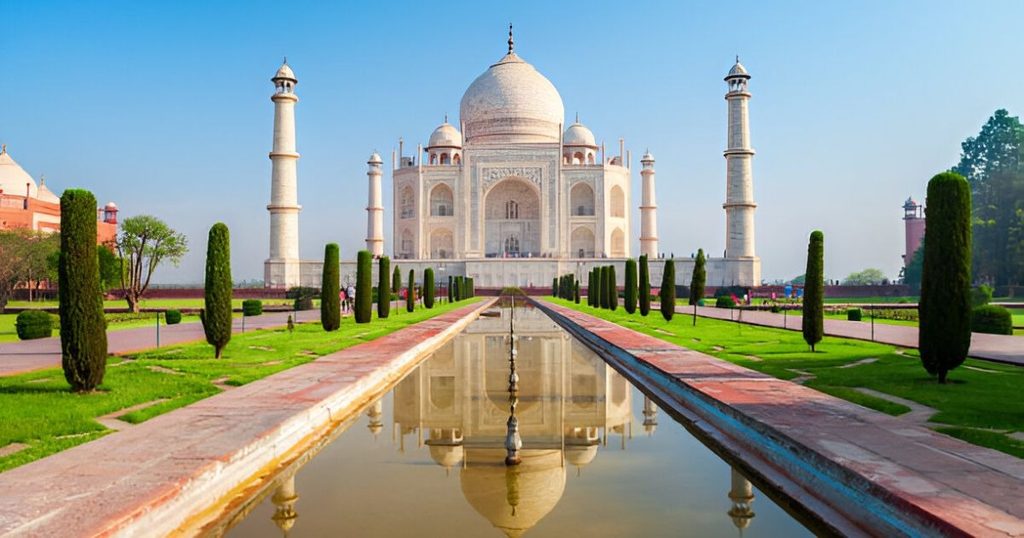
The main gateway frames your first view of the mausoleum, compressing the distance and drawing your eye directly down the long central axis toward the dome. As you walk the length of the garden and reflecting pool, the proportions of the building appear to shift, a calculated effect of the relationship between the garden’s geometry, the water, and the mausoleum’s placement. None of this is a magic trick; it’s careful Mughal design working exactly as intended, using perspective and axis rather than illusion.
6. The Four Minarets Are More Than Decorative Towers
The four freestanding minarets at each corner of the marble platform do more architectural work than they get credit for. UNESCO’s documentation notes that these towers introduced an important dimension to Mughal architectural design, providing spatial reference points and a three-dimensional effect against the dome’s rounded mass.
Practically, they also frame the mausoleum from every angle, so wherever you’re standing in the garden, the building appears anchored rather than floating awkwardly in space. Some accounts note that builders gave the minarets a slight outward lean as a precaution, so they would fall away from the main structure rather than onto it during an earthquake.
7. The Taj Mahal Changes With Light
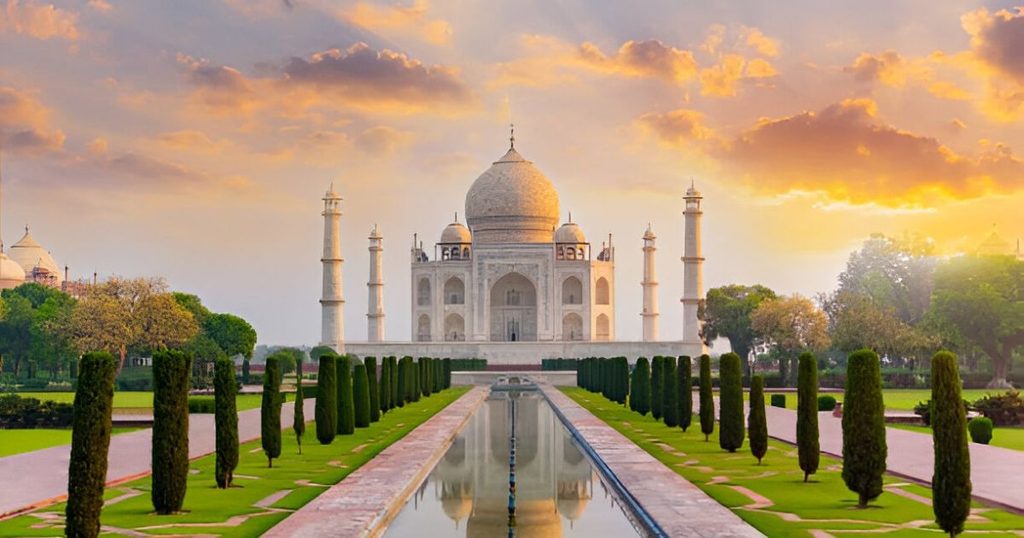
White marble reacts dramatically to changing light. The Taj Mahal can appear different throughout the day. Its appearance also changes with the weather and time of your visit. Early morning light tends to bring out a soft, warm glow; the harsher midday sun flattens the marble into a stark, bright white; late afternoon and sunset bring back warmer tones and longer shadows across the platform and reflecting pool.
It’s worth being precise here: the marble isn’t scientifically changing color, but the interaction between its surface and shifting daylight genuinely alters how it appears to the eye. For travelers interested in observing these changes firsthand, a Taj Mahal sunrise visit offers a noticeably different visual experience compared to a midday stop, both in color and in the quality of shadow across the carved surfaces.
8. The Floral Decorations Are Made With More Than Paint
What looks like painted detail from a distance is often something considerably more labor-intensive: pietra dura, known locally as parchin kari. This technique involves cutting semi-precious stones into precise shapes and inlaying them into the marble to form floral and geometric patterns.
Historical and gemological documentation of the site describes materials including lapis lazuli, jade, carnelian, and jasper used throughout this inlay work, some patterns running continuously across multiple stone blocks. This craft tradition didn’t end with the monument’s completion. Artisan families in Agra’s Taj Ganj neighborhood still practice the same marble-inlay techniques today, creating a living link between the 17th-century project and the craftsmen working just a few streets away.
9. The Taj Mahal’s Location Was Part of Its Architectural Story
One of the Taj Mahal’s most interesting design decisions is something you might not notice at first glance: where the tomb sits in relation to its garden.
Rather than placing the mausoleum at the exact center of the charbagh garden, as might seem the obvious symmetrical choice, Shah Jahan’s planners positioned it at one end, along the riverbank. Heritage documentation attributes this decision to a deliberate design choice, one that added depth and perspective to the view of the monument from across the garden. Positioned this way, the Yamuna River itself becomes part of the composition, offering unobstructed reflections and views that a purely central placement wouldn’t have allowed.
10. Some Taj Mahal “Mysteries” Are Actually Legends
Not everything commonly repeated about the Taj Mahal holds up to scrutiny, and it’s worth separating fact from popular storytelling.
Documented — supported by historical or official sources: Historical records establish the main mausoleum’s construction dates as 1631–1648. Historical records also confirm the identities of the two people entombed there. Heritage documentation supports the use of pietra dura and jali craftsmanship.
Historically debated — evidence is incomplete or interpretations differ: Historians have not precisely documented the role of every architect and craftsman. Some attributions therefore remain uncertain. Guidebooks should present them as informed traditions rather than settled facts.
Popular legend — widely repeated, but not established as historical fact: Some stories claim that Shah Jahan planned a “Black Taj Mahal” across the river. Other legends say craftsmen had their hands cut off to prevent them from copying the design. Guidebooks and tour narratives often repeat these stories. However, credible historical evidence does not support these claims.
Why These Hidden Details Change the Way You See the Taj Mahal
Taken together, these ten points shift the Taj Mahal from “famous building” to something considerably more layered. Its significance does not come from scale alone. It comes from precise architecture and deliberate geometry. Mughal garden planning also plays an important role. So do marble craftsmanship, calligraphy, perspective, and symbolism. These elements work together to create a balanced design. Heritage assessments highlight this harmony, symmetry, and craftsmanship. Together, they support the Taj Mahal’s recognition as a masterpiece. No single feature defines its importance.
How to Look for These Details During Your Taj Mahal Visit
Before entering
- Take a moment at the main gateway before walking through
- Notice how the structure frames your first view of the mausoleum
In the garden
- Walk the central axis deliberately rather than cutting across
- Watch how the reflecting pool and mausoleum relate to each other
At the mausoleum
- Get close enough to actually see the marble inlay, not just photograph it from a distance
- Look for the jali screen’s carved detail
- Notice the minarets and how they’re angled
- Look up at the calligraphy bordering the entrance
Inside
- Remember that the visible cenotaphs aren’t the actual graves
- Examine the marble screen surrounding them up close
Take your time
- Don’t spend the whole visit photographing the main façade
- Set aside time specifically to look at smaller details you’d otherwise walk past
Frequently Asked Questions
What is the biggest mystery about the Taj Mahal?
Popular culture often mentions the “Black Taj Mahal” legend. However, historians focus on more documented details. One example is the deliberate asymmetry created by Shah Jahan’s cenotaph. Another is the difference between the visible cenotaphs and the actual graves below. These details offer a more historically grounded view of the Taj Mahal.
Are the graves inside the Taj Mahal real?
The ornate structures visitors see inside the main chamber are cenotaphs, symbolic markers rather than actual graves. The real burial chambers are located in a lower crypt, generally closed to general public access.
Why is Shah Jahan’s cenotaph not perfectly symmetrical with Mumtaz Mahal’s?
Mumtaz Mahal’s cenotaph occupies the planned central position under the dome. Shah Jahan’s cenotaph was added after his death. It was placed beside Mumtaz Mahal’s cenotaph. This created the only deliberate break in the complex’s otherwise strict symmetry.
What is hidden inside the Taj Mahal?
Beyond the symbolic cenotaphs, the main chamber houses an intricately carved marble jali screen and inlaid calligraphy. The actual graves sit in a separate crypt beneath the visible chamber.
Why does the Taj Mahal appear different in different light?
White marble reacts strongly to changing daylight, appearing warmer at sunrise and sunset and starker under direct midday sun. The material isn’t changing color scientifically, but the visual effect of shifting light is genuinely noticeable.
What is Pietra Dura in the Taj Mahal?
Pietra dura, or parchin kari, is a stone-inlay technique using cut semi-precious stones such as lapis lazuli, jade, and carnelian set into marble to form floral and geometric patterns. The technique is still practiced by artisans in Agra today.
What are some Taj Mahal legends that historians question?
Stories about a planned “Black Taj Mahal,” craftsmen having their hands cut off, and hidden secret rooms are widely repeated but not supported by credible historical evidence. They’re best treated as folklore rather than documented history.
Planning a Taj Mahal Visit?
If these details have you rethinking a quick photo-stop visit, it’s worth planning enough time to actually look for them.A private Taj Mahal tour by car gives you more flexibility. You can spend time at the gateway, garden, and jali screen without following a fixed schedule.
You can also choose an overnight Agra tour if you prefer a two-day visit. This gives you time to see the Taj Mahal at both sunset and sunrise. You can enjoy the experience without feeling rushed.
However you plan your visit, the goal remains the same. Spend less time photographing the famous front view. Take more time to notice the details built into the walls around you.

Comments