
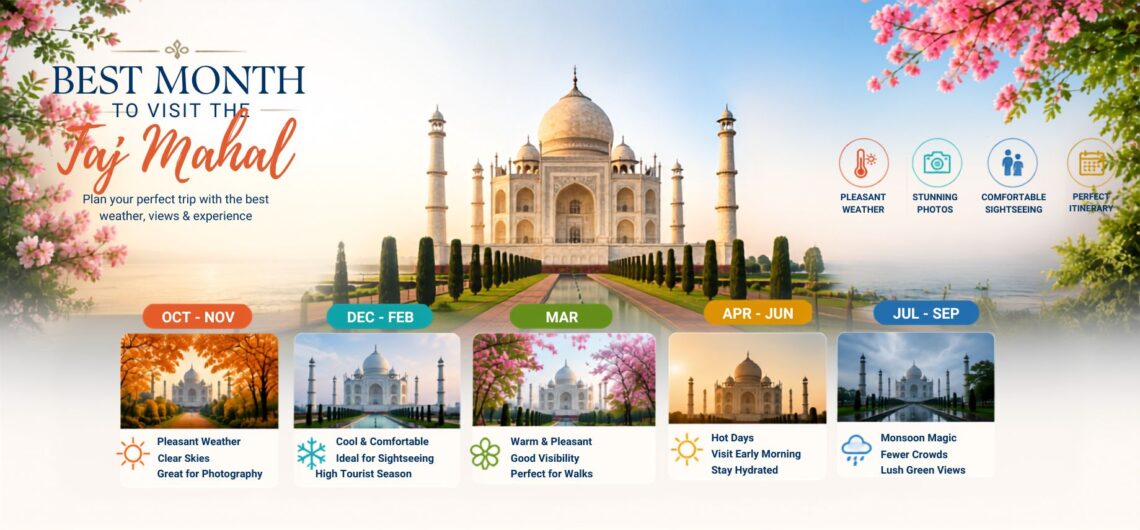
The best month to visit the Taj Mahal generally falls between October and March, when Agra’s weather is cool enough for comfortable sightseeing without the summer heat or monsoon humidity. Within that window, November to February is the most popular stretch for travelers who prioritize mild temperatures, while October and March offer a useful middle ground of pleasant weather and somewhat lighter crowds.
That said, there isn’t a single month that works best for everyone. Your ideal travel window depends on how you weigh weather comfort against crowd levels, whether photography or sunrise viewing is a priority, whether you’re traveling with family, and how flexible your budget and schedule are. This guide breaks down the weather season by season and month by month, and helps you match your own travel priorities to the right time to go.
What Is the Best Month to Visit the Taj Mahal?
If you only have time for a quick answer: November through February offers the most consistently comfortable conditions for walking around the Taj Mahal complex, with cool mornings and mild afternoons. October and March are close runners-up, trading a few extra degrees of warmth for slightly thinner crowds. Winter fog, especially in late December and January, can occasionally soften early-morning visibility, which is worth factoring in if sunrise photography is your main goal. Summer months are still visitable, but they demand more planning around heat and hydration.
Quick Answer Table
| Month/Period | Weather | Crowds | Photography | Overall |
| October | Pleasant | Moderate | Excellent | Excellent |
| November | Cool/Pleasant | Moderate | Excellent | Excellent |
| December | Cool | Higher | Good | Very Good |
| January | Cold/Foggy | Higher | Variable | Very Good |
| February | Pleasant | Moderate/High | Excellent | Excellent |
| March | Warm/Pleasant | Moderate | Good | Very Good |
| April–June | Hot | Lower | Challenging | Fair |
| July–September | Humid/Monsoon | Lower/Moderate | Variable | Fair–Good |
Best Season to Visit the Taj Mahal
Agra’s year breaks down into four broad seasons, each with its own character. Here’s how they compare.
Winter — November to February
Winter is the best time to visit the Taj Mahal for most travelers, and it’s when Agra sees its heaviest tourist traffic. Daytime temperatures stay comfortable enough for extended walking around the complex, and the cooler air makes the marble itself more pleasant to explore at length rather than rushing between shaded spots.
The trade-off is that mornings can be genuinely cold, particularly in late December and January, and a layer of fog sometimes settles over the monument at sunrise. This fog can add atmosphere to photos, but it can also delay clear views of the dome until later in the morning. Because winter is peak season, expect more visitors, more advance planning around tickets, and higher demand for accommodation, especially around the holidays.
Spring — March
March is often overlooked, but it strikes a useful balance. Mornings are still cool, afternoons warm up without becoming uncomfortable, and the crowds that build through December and January begin to ease. For travelers who want winter-like sightseeing conditions without competing with peak-season visitor numbers, March is one of the more underrated windows. Photography conditions remain good, with clearer skies than the foggier winter mornings.
Summer — April to June
Summer brings Agra’s most intense heat, with afternoon temperatures climbing high enough that outdoor sightseeing needs to be planned around the cooler parts of the day. This isn’t a reason to rule the season out entirely — it’s simply a season that rewards early starts. A sunrise visit is far more comfortable than a midday one, and staying hydrated and sun-protected matters more here than at any other time of year. Some travelers actively choose summer because flights and hotels are more available and the monument itself is less crowded.
Monsoon — July to September
Monsoon season brings humidity and periods of rainfall, but it also transforms the surrounding landscape into a noticeably greener setting than the dusty conditions of peak summer. Rain doesn’t fall constantly; it tends to arrive in spells, which means sightseeing is workable if you build some flexibility into your plans. Crowds thin out considerably during this stretch, and the changing light and cloud cover can produce photography conditions quite different from the clear winter skies most images of the Taj Mahal are known for. Monsoon travel suits visitors who don’t mind unpredictable weather in exchange for a quieter, less touristy experience.
Best Month to Visit the Taj Mahal for Different Travelers
Not every traveler is optimizing for the same thing. Here’s how the calendar breaks down by priority.
Best Month for First-Time Visitors
If this is your first trip to Agra, November, February, or October offer the most forgiving combination of comfortable weather, manageable logistics, and reliable visibility. These months let you focus on the monument itself rather than working around extreme heat or unpredictable rain.
Best Month for Photography
Photographers generally get the clearest, most consistent results from October through March, when skies tend to be cleaner and the light is softer than during the harsh midday summer sun. Late December and January are the exceptions worth noting, since morning fog can obscure the dome for the first hour or so after sunrise — a trade-off some photographers actually seek out for the atmospheric effect.
Best Month for Sunrise at the Taj Mahal
Cooler months bring a particular kind of stillness to early mornings at the Taj Mahal, with soft light and thinner crowds than later in the day. The one caveat is winter fog, which can occasionally delay a clear view of the monument until the sun has fully risen. Travelers who specifically want to experience the monument during the early morning can consider a Taj Mahal Sunrise Tour, particularly when sunrise photography and cooler sightseeing conditions are priorities.
Best Month for Families
Families with young children or older relatives generally do best avoiding both peak heat and heavy fog. November to March offers comfortable daytime temperatures for walking the complex without the scheduling pressure of extreme summer heat, making it easier to move at a relaxed pace.
Best Month for Budget Travelers
Prices and availability shift with demand, so travelers watching their budget can look at shoulder and off-season periods — roughly March, and the summer or monsoon months — when accommodation and tour availability tend to be less constrained by peak-season demand. It’s worth confirming current pricing and availability directly, since these can vary by year and by provider.
Taj Mahal Month-by-Month Travel Guide
| Month | Conditions | Notes |
| January | Cold mornings, possible fog | Fog can affect early visibility; good for atmospheric photography |
| February | Cool to pleasant | Strong all-round month; moderate to high crowds |
| March | Warming afternoons | Good balance of comfort and easing crowds |
| April | Rising heat | Early morning or sunrise visits recommended |
| May | Very hot | Plan sightseeing for early morning; hydration essential |
| June | Hot, building toward monsoon | Early starts strongly advised |
| July | Monsoon begins | Rain spells possible; flexible scheduling helps |
| August | Humid, rain likely | Greener surroundings; changeable photography light |
| September | Monsoon tapering off | Improving conditions toward month’s end |
| October | Pleasant transition | Start of the main travel season |
| November | Cool and comfortable | One of the strongest overall months |
| December | Cool with possible fog | Higher demand around the holiday period |
January
January sits in the heart of winter, with cold mornings and a real chance of fog softening early sunrise views. Crowds remain elevated from the December holiday season. It suits travelers who don’t mind bundling up and who appreciate the moodier, atmospheric look fog can give to photos.
February
February often delivers some of the year’s most reliable sightseeing weather — cool but not bitter, with generally good visibility. Crowds stay moderate to high, but conditions are comfortable enough that many consider this one of the best all-round months to visit.
March
By March, mornings are still cool while afternoons warm up noticeably. Crowds from peak winter begin to ease, making it a good compromise month for travelers who want comfortable conditions without the busiest crowds.
April
Heat starts building in April, and afternoon sightseeing becomes noticeably less comfortable. Early morning visits are the better strategy from this point through early summer.
May
May is one of the hottest months in Agra. Sightseeing works best in the early morning hours, with sun protection and hydration as genuine priorities rather than optional extras.
June
June carries forward the intense heat of May, with humidity beginning to build as the season turns toward monsoon. Early starts remain the most comfortable approach.
July
Monsoon arrives in July, bringing periodic rain and rising humidity. Sightseeing is still possible, but a flexible itinerary that can shift around rain spells makes for a smoother trip.
August
August tends to be humid with a real chance of rain, though the surrounding landscape turns notably greener than in the dry summer months. Photography conditions shift with the cloud cover, offering a different look than the classic clear-sky shots.
September
By September, monsoon rains begin to taper off, and conditions gradually improve heading into the more popular autumn season.
October
October marks the start of the main travel season, with pleasant temperatures and improving visibility. It’s a strong choice for travelers who want good weather just ahead of the busier winter months.
November
November is widely considered one of the best months to visit, combining cool, comfortable weather with generally clear conditions and manageable crowds before the peak of the December–January rush.
December
December brings cool, comfortable daytime weather, but also the year’s highest demand, driven by holiday travel. Morning fog becomes more likely as the month goes on, so plan sunrise visits with some flexibility.
Best Time of Day to Visit the Taj Mahal
Beyond choosing a month, the time of day you visit changes the experience considerably.
Sunrise brings the softest light, the coolest temperatures, and the thinnest crowds of the day, making it the preferred slot for photographers and anyone who wants a quieter first impression of the monument. Morning hours after sunrise still offer good light and manageable temperatures, though crowds build steadily. Afternoon visits mean warmer, harsher light and the day’s largest crowds, particularly in the cooler months when midday is the most comfortable time to be outdoors. Late afternoon, as the light softens again and temperatures ease, can offer a second good window for both comfort and photography, especially in the warmer months.
Is Winter Really the Best Time to Visit the Taj Mahal?
Winter earns its reputation, but it’s worth weighing both sides before assuming it’s automatically right for your trip.
Advantages
- Comfortable daytime temperatures for extended walking
- Pleasant overall sightseeing conditions
- Generally strong photography light outside of foggy mornings
- Easier pacing for families and older travelers
Limitations
- Morning fog, especially in late December and January, can delay clear views
- Early mornings can be cold enough to require warm layers
- Higher visitor demand can mean busier ticket lines and fuller accommodation
Winter is a strong default choice for most travelers, but it isn’t automatically superior to October or March for anyone specifically trying to avoid crowds or fog.
What to Consider Before Choosing Your Travel Month
- Weather — how much heat, cold, or humidity you’re comfortable with
- Visibility — winter fog versus cleaner skies in shoulder months
- Crowds — peak winter demand versus quieter shoulder and off-season periods
- Photography — light quality, haze, and seasonal atmosphere
- Travel budget — how pricing and availability shift with demand
- Trip duration — how much time you have to work around weather
- Sunrise vs. daytime visit — which experience matters more to you
- Family requirements — pacing needs for children or older travelers
- Clothing — layers for winter mornings, breathable fabrics for summer
- Local transportation — how weather affects travel between Delhi and Agra
How Many Days Should You Spend in Agra?
How much time you need in Agra depends on how deeply you want to explore beyond the Taj Mahal itself.
A same-day visit works for travelers on a tight schedule, typically combining the Taj Mahal with one or two other major sights before returning to Delhi the same evening. If your itinerary allows only one day in Agra, a Same Day Taj Mahal Tour can be a practical option for combining the Taj Mahal with other major sights without staying overnight.
An overnight stay gives you room to see the Taj Mahal at sunrise, rest during the hottest part of the day, and explore additional monuments without rushing. Travelers visiting during the cooler months may also prefer an Overnight Taj Mahal Tour, giving them more time to explore Agra instead of fitting every attraction into a single day.
Extended sightseeing over two or more days suits travelers who want to slow down further, revisit the Taj Mahal at a different time of day, or explore Agra’s markets and craft workshops at a relaxed pace.
What Else Can You See in Agra Besides the Taj Mahal?
Agra’s Mughal history extends well beyond its most famous monument. Agra Fort, a UNESCO World Heritage Site in its own right, offers sweeping views back toward the Taj Mahal and a sense of the empire that built it. Itmad-ud-Daulah, sometimes called the “Baby Taj,” is a smaller marble tomb often credited as an architectural precursor to the Taj Mahal’s design. Mehtab Bagh, a garden across the river, gives one of the best unobstructed sunset views of the monument. Beyond the monuments, Agra’s local markets are worth a visit for their marble inlay craftsmanship — a technique directly tied to the decoration of the Taj Mahal itself — as well as regional food worth trying while you’re in the city.
If you have additional time in the city, Agra local sightseeing can help you explore important Mughal monuments and cultural attractions beyond the Taj Mahal.
How to Plan Your Taj Mahal Trip
A practical planning sequence looks something like this:
- Choose your travel month based on your weather and crowd preferences
- Check the expected weather closer to your travel dates
- Decide between a sunrise or daytime visit
- Choose between a same-day trip or an overnight stay
- Plan any additional Agra sightseeing you want to include
- Arrange transportation between Delhi and Agra
- Check current ticket and visitor information before traveling
- Build in buffer time for traffic and crowds, especially during peak season
Travelers who want transportation, sightseeing, and itinerary planning handled together can compare different Taj Mahal Tour Packages based on their preferred travel style and available time.
Best Month to Visit the Taj Mahal — Quick Decision Guide
| Your Priority | Recommended Period |
| Best overall weather | November–February |
| Pleasant weather + fewer peak crowds | October / March |
| Sunrise experience | October–March |
| Photography | October–March |
| Avoiding extreme heat | October–March |
| Lower-season travel | Summer/Monsoon |
| Comfortable family sightseeing | November–March |
Weather conditions can vary from year to year, so it’s worth checking current forecasts as your travel dates approach.
Frequently Asked Questions
What is the best month to visit the Taj Mahal?
November through February generally offers the most comfortable weather for sightseeing, with October and March as strong alternatives that balance pleasant temperatures against lighter crowds.
Which month has the best weather in Agra?
February and November tend to offer the most reliably comfortable combination of cool mornings, mild afternoons, and clear visibility, without the heaviest fog or the biggest crowds of peak winter.
Is January a good month to visit the Taj Mahal?
Yes, though mornings are cold and fog is more likely, which can delay clear sunrise views. January still offers comfortable daytime sightseeing and a distinct, atmospheric look for photography.
Is February a good time to visit the Taj Mahal?
February is one of the strongest overall months, with cool but comfortable temperatures and generally good visibility, making it a favorite among travelers who want reliable conditions.
Is October a good month for the Taj Mahal?
Yes. October marks the start of the pleasant season, with improving weather and moderate crowds ahead of the busier winter months.
Is summer a good time to visit the Taj Mahal?
Summer works best for early risers, since afternoon heat can be intense. A sunrise or early-morning visit keeps sightseeing comfortable, and crowds tend to be noticeably lighter than in winter.
Can you visit the Taj Mahal during the monsoon?
Yes. Rain tends to arrive in spells rather than constantly, so a flexible schedule makes monsoon visits workable, with the bonus of greener surroundings and thinner crowds.
What is the best time of day to visit the Taj Mahal?
Sunrise offers the coolest temperatures, softest light, and smallest crowds, making it the preferred time for most first-time visitors and photographers.
Is sunrise better than sunset at the Taj Mahal?
Sunrise is generally considered the stronger choice for crowd levels and light quality, though sunset — especially viewed from Mehtab Bagh across the river — offers its own distinct atmosphere.
How many days are enough for Agra?
A single day is enough to see the Taj Mahal and one or two other major sights, but an overnight stay allows for a sunrise visit plus more relaxed exploration of Agra’s other monuments.
Conclusion
There’s no single universally “best” month to visit the Taj Mahal — but for most travelers, November to February offers the most comfortable overall experience, while October and March provide an excellent middle ground of pleasant weather and somewhat lighter crowds. Summer and monsoon months remain viable for travelers willing to plan around heat or rain, often in exchange for a quieter, less crowded visit.
The right choice ultimately comes down to your own priorities — weather comfort, photography light, sunrise timing, or how many days you can spend in Agra. Once you’ve settled on a season, the next step is choosing the itinerary that fits: whether that’s a same-day visit, a sunrise-focused trip, additional local sightseeing, or an overnight stay that lets you experience Agra at a slower pace.

Comments